AI Stocks Face Reality Check: Is the Tech Bubble About to Burst?

The American Spark: AI Stocks Lose Their Shine
It appears the music has stopped at the AI-fueled party on Wall Street. The celebration began to lose steam in the United States, which had been the epicenter of the AI boom. On Thursday, the tech-heavy Nasdaq and the broader S&P 500 experienced a significant downturn as investors grew apprehensive and started to take profits.
For months, the market has been infatuated with artificial intelligence, particularly with companies like Nvidia—the leading manufacturer of processors for AI systems. Their stock prices soared to unprecedented heights. But now, a market correction seems to be underway. The very AI stocks that were the darlings of the market are now facing a sharp decline.
This abrupt reversal suggests that investors are scrutinizing the high valuations of these companies, questioning whether the prices are justified. While no one doubts that AI is a transformative technology, there’s a growing sentiment that the market may have become overzealous, pricing in future profits that are years away.
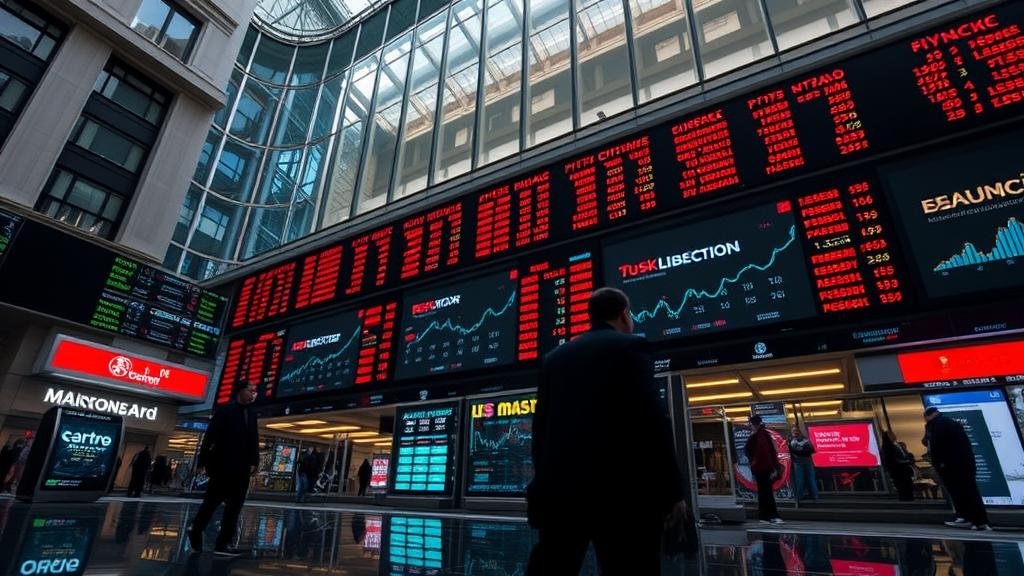
A Ripple Effect Across the Globe: European and Asian Markets Follow Suit
This wave of uncertainty has spread globally. As trading commenced on Friday, European investors reacted to the tech sell-off in the U.S. with their own risk-off approach. Lingering concerns about interest rates further contributed to a market dip that even positive economic news couldn’t mend.
In Asia, the narrative was similar. The “tech rout” returned, with investors feeling the aftershocks of Nvidia’s instability. When a market leader like Nvidia falters, it sends tremors throughout the entire global supply chain, a significant portion of which is based in Asia.

Is the “AI Bubble” Starting to Deflate?
The major question now is whether the AI bubble is beginning to lose air. The term “bubble” is being used more frequently, and for good reason.
This situation is reminiscent of the dot-com bubble of the late 1990s. Back then, any company with a “.com” in its name attracted massive investment. When the bubble burst, the consequences were severe.
However, today’s scenario is not a direct parallel. Many of the leading AI companies are profitable, unlike many of their dot-com counterparts. But the similarities are difficult to overlook. The concern is that “irrational exuberance” has inflated stock prices beyond their intrinsic value. This week’s sell-off might be the market’s attempt to find its footing.

What This Means for You
So, what does this global market volatility mean for your financial well-being? At Creditnewsinsider, we believe it’s time for some straightforward advice.
- First, do not panic-sell. Market downturns are a normal part of the investment cycle. Making impulsive decisions is almost always a mistake.
- Second, this is a crucial moment to assess your portfolio’s diversification. If a large portion of your investments is in high-growth tech stocks, you’ve just seen how quickly that sector can be affected by a tech bubble.
- Third, maintain a long-term perspective. Instead of trying to predict short-term market movements, focus on investing in fundamentally sound companies with solid business models that are not solely dependent on the AI hype.
The Road Ahead: Caution is the Watchword
This recent market activity has taught us that valuations can’t grow indefinitely. The AI rally has been exciting, but it has also led to stretched valuations.
The market is now in a “wait and see” phase. Investors are looking for tangible profits to justify the high stock prices.
For now, a cautious approach is prudent. This is a time for careful analysis rather than speculative investing. By staying informed, remaining disciplined, and focusing on the long-term, you can navigate this market volatility and emerge in a stronger position.