Europe’s Seat at the Table: Securing a Role in Ukraine’s Geopolitical Future
A high-stakes geopolitical drama is unfolding, and Europe is refusing to be a mere spectator. EU and NATO leaders are signaling that they will not be sidelined from negotiations that will define the continent’s future. They are demanding a seat at the table, insisting that their voice is heard in the final outcome.
Europe’s Stake in the Ukraine War: A Continent Invested
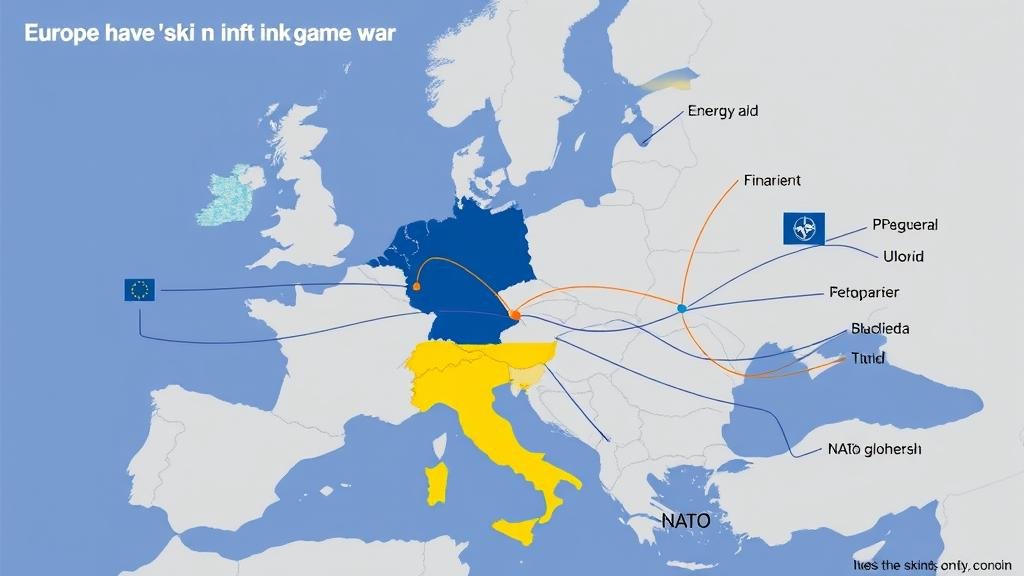
The term “skin in the game” is often overused, but for Europe, its meaning is profoundly literal. The continent has fundamentally reshaped its policies and priorities in response to the conflict. Millions of Ukrainian refugees have been integrated into communities from Lisbon to Helsinki. National energy strategies, once heavily reliant on Russian gas, have undergone radical transformation, accelerating the shift towards energy independence. Furthermore, long-dormant defense budgets have been revitalized to address the new security reality.
For Europe, this is not a distant proxy war. The economic tremors and the geopolitical impact have been felt most acutely across the continent, with rising inflation and an energy crisis impacting households and industries alike. As former NATO chief Anders Fogh Rasmussen has warned, Europe must enhance its own defense capabilities to avoid a “forever war” that drains its resources. The continent’s security can no longer be a subscription service managed by Washington; it requires direct European leadership and investment.
The Risks of a Peace Deal Without European Input
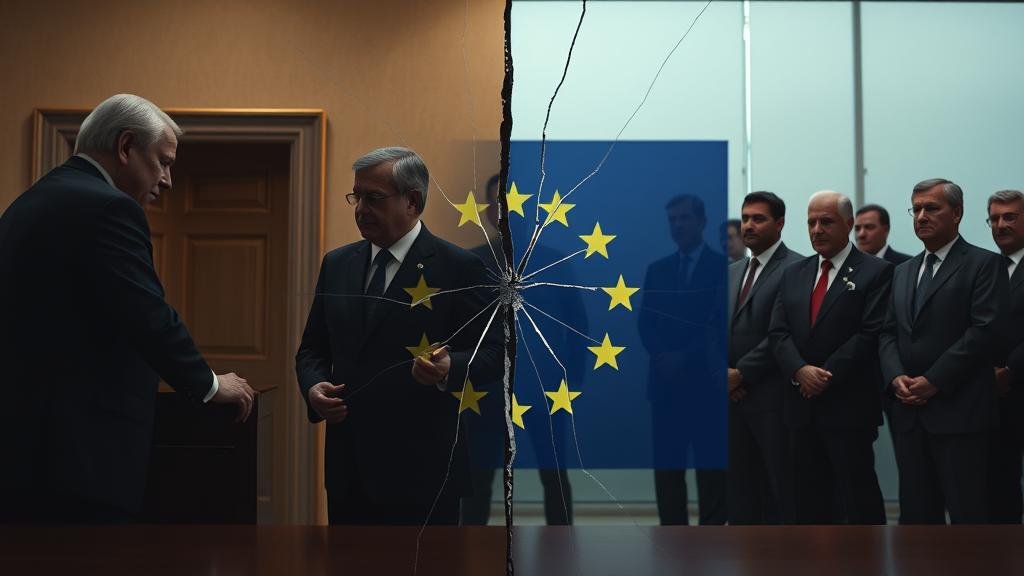
The anxiety in Brussels is palpable, fueled by concerns over back-channel deals being brokered without its participation. A peace process that excludes key European stakeholders presents significant risks:
- A Fractured United Front: Any perceived division between the United States and Europe is a strategic victory for Putin. A fractured diplomatic front could embolden future aggression and undermine the West’s collective security.
- Critical Details and Long-Term Commitments: The terms of any peace agreement—from security guarantees for Ukraine to financing its reconstruction and ensuring accountability for war crimes—directly affect Europe’s economic and security interests. These are not minor details; they are foundational questions that require European input.
- Russia’s Core Demands: Reports suggest that Putin’s demands include a permanent halt to NATO expansion. For Eastern European nations that view the alliance as a cornerstone of their security against Russian aggression, such a concession would represent an existential threat.
The Washington-Kyiv-Brussels Triangle
The Biden administration has consistently reiterated its “nothing about you without you” policy, affirming Ukraine’s sovereignty. While the U.S. leadership role is undeniable, effective long-term solutions require genuine consultation and partnership with European allies.
Ultimately, Ukraine, as a sovereign nation, will have the final say in any settlement. However, its ability to secure a lasting peace depends entirely on robust, long-term security and economic commitments from its partners. A peace deal without the full and unified backing of both the United States and a united Europe would be fundamentally unstable.
The Economic Fallout and the Path to Prosperity
The persistent uncertainty is a significant drag on the global economy, with European markets being particularly sensitive to the instability. A prolonged war or a fragile peace deal will continue to spook investors, create chaos in energy markets, and fuel inflation.
Conversely, a durable and comprehensive peace, underwritten by a united transatlantic alliance, would be a major catalyst for economic recovery. It would unlock vast reconstruction funds and private investment in Ukraine, creating a positive ripple effect across the European economy. This isn’t a matter of pride; it’s a prerequisite for prosperity.
The Road Ahead: A Unified Chorus for European Security
This war represents a defining moment for a generation of European leaders, shattering the post-Cold War illusion of permanent peace and forcing a critical re-evaluation of European security architecture.
As the world navigates a path toward resolving this conflict, it is clear that the solution cannot be a solo performance. It must be a chorus of unified voices. Europe’s demand for a seat at the table is not a power grab but an essential condition for securing a stable and prosperous future for the entire continent.