Gaza’s Day After: Why the World is Reworking the US Blueprint
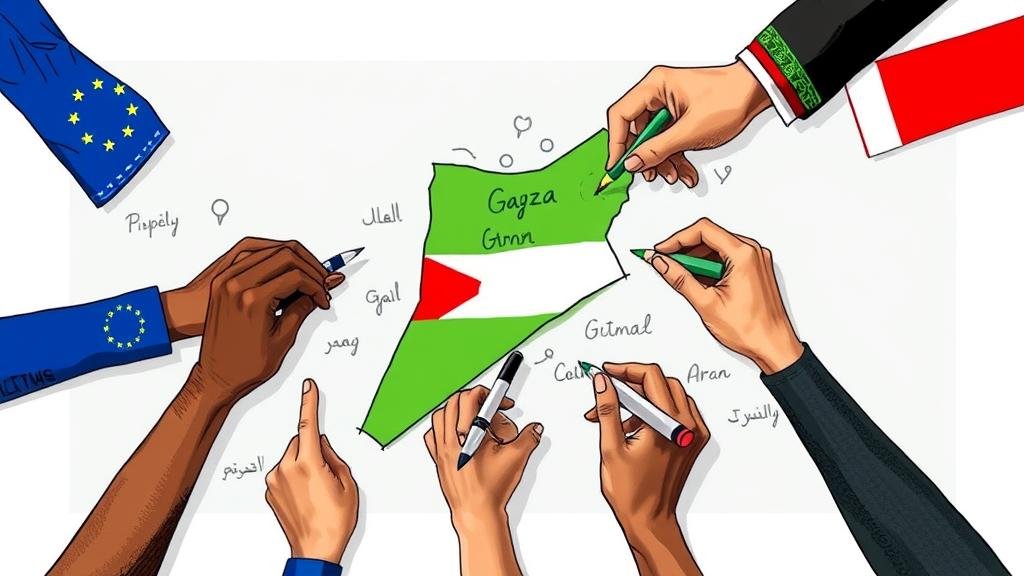
Imagine turning in a group project, but you’re the United States, and the project is the future of the Middle East. You confidently present a blueprint, only for your group members to view it with skepticism. This scenario mirrors the current diplomatic discussions in Geneva, where the US plan for post-conflict Gaza is under intense scrutiny.
Behind closed doors, international diplomats are dissecting America’s ambitious proposal for Gaza’s future. The atmosphere is fraught with tension as the international community weighs in on a plan that could reshape the region. Let’s break down the complexities of this diplomatic standoff.

The US Blueprint: Grand Ambitions, Missing Details
On paper, the American plan for post-conflict Gaza is a sweeping vision for peace and stability. It proposes the removal of Hamas, the establishment of a new government, complete demilitarization, and a massive reconstruction effort. The ultimate goal is to create a stable Gaza that can be reintegrated with the West Bank, reviving the long-dormant two-state solution.
However, international partners have raised concerns about the plan’s lack of specific details. Key questions remain unanswered, leaving many to wonder about the logistical feasibility of the proposal. Here are the primary areas of concern:
- Governance: The plan suggests a “reformed Palestinian Authority” should take control, but the PA’s current credibility and capacity are subjects of intense debate. A viable governance structure is essential for long-term stability, and the US proposal offers few concrete solutions.
- Security: A critical missing piece is the composition of a peacekeeping force. Both Israel and neighboring Arab states are hesitant to commit to any security arrangement without a clear mandate. The idea of an “international stabilization force” has been floated, but who would participate and under what authority remains undefined.
- Funding: The reconstruction of Gaza is estimated to cost tens of billions of dollars. The US plan does not specify the funding sources, leaving European and Gulf nations wary of the financial commitment. These potential donors are seeking a more detailed financial architecture before pledging support.
This lack of clarity has prompted a “rearguard diplomatic move,” with international partners stepping in to collaboratively shape the post-conflict strategy.
International Reaction: A Unified Call for a Co-Authored Plan
The Geneva meeting underscores a collective desire to avoid a unilateral approach. Both European and Arab nations are insisting on a more inclusive and detailed plan that addresses their core concerns.
European Concerns: “Strategy First, Then Funding”
For European nations, the stability of Gaza is a direct security concern, with the potential for humanitarian crises and refugee flows. They are also being asked to shoulder a significant portion of the reconstruction costs. The EU’s message is clear: they will not fund a plan that lacks a coherent, long-term strategy. They are advocating for a transparent financial structure, possibly managed by an institution like the World Bank, to ensure accountability.
Arab Stakes: “A Solution for Palestinians, by Palestinians”
For neighboring countries like Egypt, Jordan, Saudi Arabia, and the UAE, the future of Gaza is deeply intertwined with their own regional stability. Egypt is focused on border security, while Saudi Arabia and the UAE are invested in a long-term vision for a stable Middle East with reduced Iranian influence.
A unanimous point of consensus among Arab nations is that any viable solution must include Palestinian leadership and buy-in. The notion of a plan dictated by Washington is a non-starter. They are pushing for a unified Palestinian government that represents the will of its people and is not perceived as an extension of foreign interests.
The Geneva Negotiations: Charting a Path Forward
The negotiators in Geneva are focused on three key areas of disagreement:
- Governance and Sovereignty: While there is agreement on removing Hamas, the question of who will govern Gaza remains contentious. Arab states are pushing for a legitimate, unified Palestinian government, rejecting any solution that perpetuates the separation of Gaza from the West Bank.
- Financial Architecture: European and Gulf nations are demanding the establishment of an international trust to manage the multi-billion dollar reconstruction fund. This would ensure transparency and prevent the misallocation of funds, a key concern for our team at Creditnewsinsider.
- Security Arrangements: A sustainable security plan is a prerequisite for any rebuilding efforts. Arab nations have made it clear that they will not deploy troops without a UN mandate and a clear roadmap toward a Palestinian state. They also oppose any long-term Israeli security presence within Gaza.

A High-Stakes Diplomatic Endgame
The ongoing talks in Geneva are a crucial test of international diplomacy. The unified front presented by European and Arab nations has transformed the US plan from a solo endeavor into a mandatory group project. The outcome of these negotiations will determine the blueprint for Gaza’s “day after.”
If a collaborative, detailed plan can be achieved, it could set a new precedent for resolving complex geopolitical challenges. Failure, on the other hand, risks creating a power vacuum and perpetuating the cycle of violence. As we continue to monitor the situation at Creditnewsinsider, the world watches to see if these high-stakes negotiations can produce a viable path to peace.