Navigating the Nasdaq’s Surge: A Deep Dive into the Federal Reserve’s Looming Rate Decision
The Nasdaq is experiencing a significant rally, and the market is abuzz with a pivotal question: will the Federal Reserve implement a much-anticipated interest rate cut this December? For months, investors have been meticulously analyzing economic data, searching for any indication of the Fed’s next move. This widespread hope for monetary easing has been the primary driver behind the Nasdaq’s recent performance. But is this optimism justified, or is the market getting ahead of itself?
This article delves into the critical signals, the underlying factors, and the potential implications for your investment portfolio.
The Intricate Dance: Tech Stocks and Interest Rates
To comprehend the Nasdaq’s current bullish sentiment, it’s essential to understand the complex relationship between tech stocks and interest rates. The Nasdaq is dominated by growth-oriented companies, whose valuations are heavily dependent on future earnings. When the Federal Reserve raises interest rates, it impacts these companies in two significant ways.
First, from a valuation perspective, higher interest rates reduce the present value of future profits. This is a direct application of the time value of money principle. Consequently, the projected long-term earnings of tech companies become less attractive in the present, leading to a downward pressure on their stock prices.
Second, higher interest rates increase the cost of borrowing. Many technology firms rely on debt to finance research and development, expansion, and other growth initiatives. Increased borrowing costs can hinder innovation and ultimately make these companies less appealing to investors.
Conversely, the prospect of an interest rate cut has the opposite effect. Future earnings are discounted at a lower rate, making them more valuable today, and borrowing becomes cheaper, providing a dual catalyst for the tech sector’s growth.

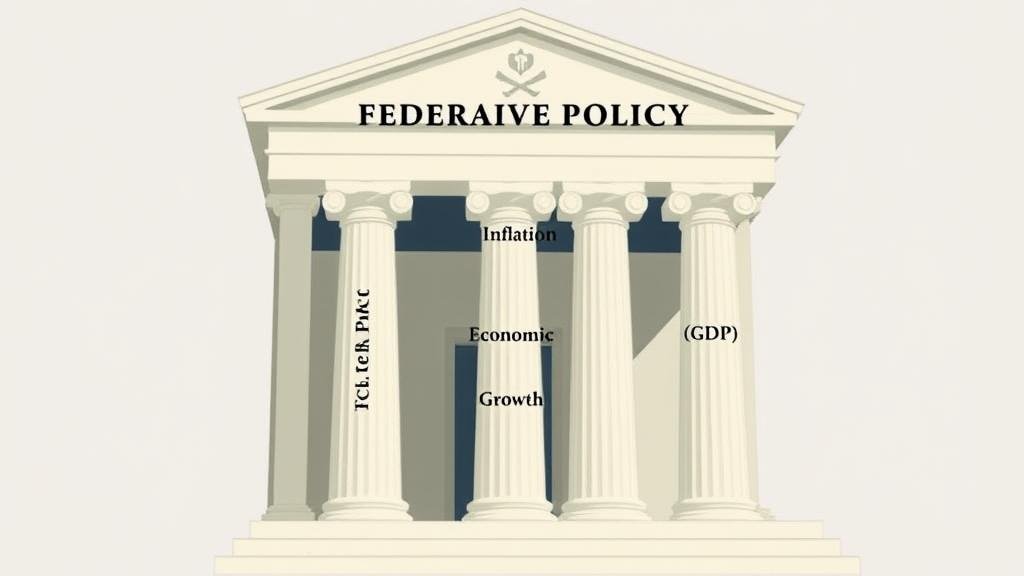
The Federal Reserve’s Policy Framework: A Three-Pillar Approach
The Federal Reserve’s decisions are not driven by a desire to boost stock market performance. Their primary objective, their dual mandate, is to maintain price stability and maximize employment. Before considering a rate cut, the Fed needs to be confident that inflation has been tamed without causing a significant economic downturn. Here’s a simplified overview of the key metrics the Fed monitors:
1. Inflation Trajectory (CPI & PCE)
Inflation is the Federal Reserve’s foremost concern. Their target is a consistent 2% inflation rate. For the past two years, they have been actively working to control escalating prices. They closely monitor the Consumer Price Index (CPI) and the Personal Consumption Expenditures (PCE) price index, with a particular focus on the latter as their preferred measure of inflation. Any unexpected increase in these indices would likely postpone any consideration of a rate cut.
2. Labor Market Conditions
The Fed aims for a balanced labor market—one that is neither too hot, which could fuel inflation through wage growth, nor too cold, which could signal a recession. Key labor market indicators include Non-Farm Payrolls and the unemployment rate. A robust job market could suggest to the Fed that the economy can withstand higher interest rates for a longer period.
3. Overall Economic Growth (GDP)
Finally, the Fed monitors the overall health of the economy, primarily through the Gross Domestic Product (GDP). The goal is to achieve a “soft landing”—slowing the economy just enough to curb inflation without triggering a recession. Strong GDP growth might give the Fed the confidence to maintain higher rates, while a faltering economy would increase the pressure for a rate cut.
The Case for Caution: Why a December Rate Cut is Not Guaranteed
Despite the current market optimism, a December rate cut is far from a certainty. Several factors could lead the Fed to maintain its current stance:
- Persistent Inflation: Inflation can be tenacious. A single unfavorable report, potentially triggered by geopolitical events or supply chain disruptions, could see the Fed revert to a more hawkish stance.
- Economic Resilience: The U.S. economy has demonstrated remarkable resilience. If consumer spending and overall economic activity remain strong, the Fed may see no immediate need to cut rates.
- Fed Communication: Federal Reserve officials have been cautious in their communications, consistently emphasizing that their decisions are “data-dependent.” This indicates a reluctance to commit to a specific course of action, and any hawkish commentary could quickly temper market expectations.
A decision by the Fed to hold rates steady could lead to a significant market correction, particularly in the tech-heavy Nasdaq.

A Prudent Investment Strategy: Navigating Market Uncertainty
Basing your entire investment strategy on predicting the Federal Reserve’s moves is a risky proposition. A more prudent approach involves the following principles:
- Diversification: Avoid over-concentrating your portfolio in a single sector, such as technology. A diversified portfolio, with exposure to various sectors and asset classes, is better equipped to handle market volatility.
- Focus on Fundamentals: Instead of trying to predict the Fed’s next move, focus on the fundamental strength of the companies you invest in. Look for businesses with solid balance sheets, strong earnings, and a sustainable competitive advantage that can thrive in any interest rate environment.
- Maintain a Long-Term Perspective: Market timing is notoriously difficult. The Nasdaq’s reaction to the December Fed meeting is just one event in a much larger economic cycle. A disciplined, long-term investment plan is far more effective than reacting to short-term market noise.
Conclusion
The market’s excitement about a potential December rate cut is understandable. However, hope is not an investment strategy. The Federal Reserve’s decision will be based on economic data, not market sentiment.
The most effective approach for investors is to remain informed, disciplined, and focused on what they can control. By building a well-diversified and fundamentally sound portfolio, you can position yourself for long-term success, regardless of the Fed’s next move.