The US-China Tech War and the High-Stakes Battle for AI Chips

The Phone Call Heard ‘Round the Tech World
Let’s be real, most of our high-stakes phone calls involve figuring out who’s supposed to pick up the pizza. But when the leaders of the US and China hop on the line, the world listens like it’s the series finale of Succession. The hot topic from their latest chat? Advanced AI chips. On one hand, it’s great they’re talking. Open communication, yay! On the other, the topic is so tense it could cut diamonds, forming a new front in the US-China tech war.
So, is this a sign of a thaw in the tech cold war, or just two dads politely arguing over who gets to use the good grill tongs? The answer, as with most things in this geopolitical struggle, is probably “it’s complicated.” The White House is basically in a staring contest with itself, trying to decide whether to sell some of its shiniest AI chips to China, and nobody can quite agree if it’s a brilliant business move or a spectacular own goal in the race for tech supremacy.
The Chips at the Center of the Storm: What are H200 and Blackwell?
Okay, before your eyes glaze over like a Krispy Kreme, let’s talk about these chips. We’re not talking about the silicon in your toaster that burns your bagel every single morning. We’re talking about Nvidia’s H200 and the upcoming Blackwell series—the undisputed heavyweight champions of the AI world. These Nvidia chips are the Infinity Stones for artificial intelligence.
Think of these things as the supercharged engines that make ChatGPT sound less like a confused robot and more like a helpful (if slightly soulless) genius. Their ability to process bajillions of data points at warp speed is what makes them so valuable—and so controversial. US-based Nvidia is the Tony Stark of this universe, and everyone wants a piece of their arc reactor tech. This is why deciding whether to sell them isn’t just about trade; it’s about who gets to yell “I am Iron Man” in the next decade of the US-China tech war.
The National Security Argument: A “Massive” Mistake?
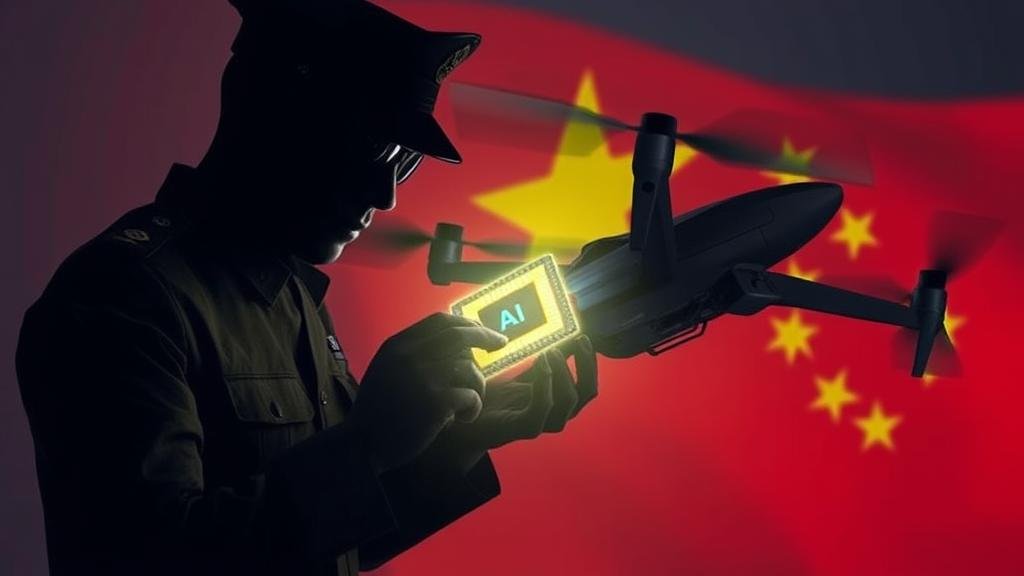
Now for the part of the movie where the dramatic music swells. On one side, you have officials warning that selling these AI chips to China would be a “massive” national security mistake. And honestly, you can see their point.
The fear is that these little silicon wizards won’t just be used to recommend new shows on Chinese Netflix, but to beef up their military. We’re talking smarter weapons, next-level surveillance (as if they need help), and better intelligence gathering. Giving your biggest strategic rival the cheat codes to the final level of the “Global Superpower” video game feels… ill-advised. Critics argue that with China aiming to be the world leader in AI by 2030, handing over the best tools is like giving your marathon competitor a piggyback ride to the finish line. You feel me?
The Economic Counterpoint: Billions on the Line
Aaaand on the other side of the debate is a little thing called… gazillions of dollars. Let’s not kid ourselves, US tech companies, especially Nvidia, are looking at the Chinese market like a kid looks at a candy store. For them, a ban on sales isn’t a matter of national security; it’s a matter of a very, very sad quarterly earnings call with significant economic impact.
Hot take coming in 3…2…1… Proponents of the sale argue that a total ban might just push China to get its act together and build its own super-chips from scratch. It’s the classic “if you tell me I can’t have it, I’ll just build my own, better one in my garage” storyline. Their argument? It’s better to have China dependent on our tech (and paying us for it) than to force them into becoming a totally independent tech powerhouse. This is a classic case of your wallet telling you one thing and your gut, guided by national security concerns, telling you another.

Our Analysis: Navigating the Tightrope of Export Controls
So, where do we land on this? The US government is basically trying to juggle active chainsaws while riding a unicycle. On a tightrope. Over a pool of sharks. A misstep in either direction in this geopolitical struggle could be… messy.
Approve the sale of Nvidia chips, and you might be fast-tracking your rival’s ambitions for tech supremacy. Block it, and you kneecap your own companies with a huge economic impact and maybe create an even bigger long-term competitor. Cue dramatic pause. The main tool they’ve been using is export controls, which is a fancy way of saying, “You can have this chip, but not that chip.” The whole debate right now is about where to draw that line. It’s like being a bouncer for a nightclub, but instead of rowdy partiers, it’s semiconductors. And the fate of the US-China tech war is at stake. No pressure.

What’s Next? A Look into the Future
My crystal ball is foggy and mostly just shows me memes, but here’s what could happen next in this geopolitical drama:
- The “Let’s Split the Difference” Scenario: The most likely outcome. Washington allows the sale of some powerful-but-not-too-powerful AI chips, keeping the really good stuff for themselves. It’s a compromise that makes everyone a little bit unhappy, which is how you know it’s good politics.
- The “You Can Look, But You Can’t Touch” Ban: The US could get specific with its export controls, banning sales to certain Chinese military-linked companies while letting others buy. A surgical strike, if you will.
- The “Okay, But My Mom Is Chaperoning” Deal: The sales are approved, but with so many strings attached—like strict monitoring to make sure the AI chips are only used for commercial stuff—that it feels like a high-school date with your parents in the back seat.
Whatever happens, the chip war is the new space race. It’s a long-term geopolitical struggle for who gets to own the future. Still reading? Wow. You’re officially my favorite.

Conclusion: The End of an Era, or a New Beginning in the US-China Tech War?
This phone call has put the world’s most complicated “will they or won’t they” relationship under a spotlight. Are we watching the end of an era of unchallenged US tech dominance, or just the pilot episode of an even more complex new season of the US-China tech war? Only time will tell. For now, keep an eye on the headlines. The future is being written in real-time, and we’re all watching to see who holds the pen in the battle for tech supremacy.
And yes, there might be a pop quiz later. Just kidding… unless?