NATO’s Pivot: From Defense to Proactive Strategy Against Russian Aggression and its Economic Fallout
Let’s delve into the escalating neighborly dispute on the global stage. It’s a familiar story: one neighbor, let’s call him “Misha,” repeatedly claims his dog is just “accidentally” digging up your prize-winning petunias, while he also “accidentally” launches disinformation campaigns and “accidentally” parks his tanks a little too close for comfort. For decades, the neighborhood watch, NATO, has largely responded with a sigh, taller fences, and a resigned…
“That’s just Misha being Misha.”
However, there’s a shift in the air. The head of the neighborhood watch is now hinting that it’s time to move beyond filing complaints and start proactively installing some very loud, very targeted sprinklers. This isn’t just chatter for military enthusiasts; for us at Creditnewsinsider, this is the kind of geopolitical drama that sends shivers down our financial spines. A move from a “deter and defend” posture to a more assertive stance has significant consequences, affecting everything from your 401(k) to the price at the pump. This shift in strategy reflects a broader understanding that Russia’s actions pose an existential threat to the rules-based international order.

The Limits of a “Stay on Your Side” Model
NATO’s traditional strategy has been clear: “deter and defend.” This is the geopolitical equivalent of stationing a very large, muscular bouncer at your door with instructions to be polite but firm. The goal is simple: appear formidable enough to prevent a fight, and if one breaks out, ensure the entire security team engages. This approach has been effective for over seventy years.
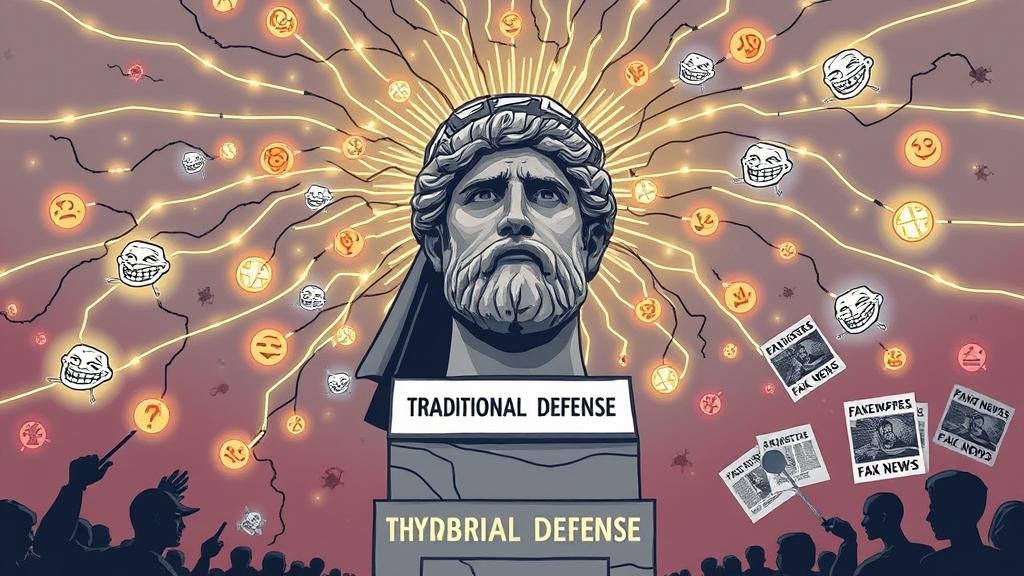
But Russia’s tactics have evolved. Instead of a frontal assault, Moscow has mastered the art of “hybrid warfare”—a sophisticated strategy of being a world-class nuisance in ways that are just below the threshold for a full-scale military response. These destabilising actions include:
- Cyberattacks: This is the modern equivalent of ringing the doorbell and running away, but after stealing your identity and draining your bank account. These attacks target everything from government agencies to hospitals, aiming to sow chaos.
- Disinformation Campaigns: Imagine your most conspiracy-minded uncle with a billion-dollar budget and a vast army of trolls. The objective is to create internal division, distracting from their larger strategic goals.
- Political Subversion: This involves meddling in elections and funding extremist political groups, akin to whispering “I heard they said you look bad in that sweater” at a party to stir up trouble.
- Economic Coercion: This is the classic bully tactic: “Nice energy supply you have there. It would be a shame if someone… turned it off.”
The reality is, you can’t invoke Article 5—NATO’s collective defense clause—over a malicious tweet or a DDoS attack. The old playbook, designed for conventional warfare, is as useful against a cyberattack as a screen door on a submarine. So, when NATO’s leadership talks about a “proactive” pivot, they are acknowledging that the current strategy is no longer sufficient.
What Does a “Proactive” NATO Look Like?
Before you start imagining SEAL Team Six descending on Moscow, let’s clarify what “proactive” means in this context. It’s not about starting a war but about seizing the initiative in the “grey zone” and forcing Russia onto the defensive.
This new approach could involve:
- Assertive Cyber Operations: Instead of merely patching vulnerabilities, this means proactively disrupting Russian hacker networks. Think less “building a better firewall” and more “Mr. Robot with a larger bureaucracy.”
- Offensive Counter-Disinformation: Rather than simply debunking false narratives, this involves launching information campaigns to show the Russian populace how their government’s actions are detrimental to their own interests. The goal is to counter their propaganda with verifiable facts that are just as compelling.
- Increased Military Presence and Exercises: This is the geopolitical equivalent of your neighbor seeing you and your most imposing friends deadlifting in your front yard. It sends a clear message. Military exercises would become more frequent, more complex, and more directly tailored to real-world scenarios, strengthening our deterrence and defence.
- Challenging Russian Military Adventurism: Think of the film Top Gun. When a Russian jet behaves recklessly in international airspace, you don’t just ignore it—you shadow it, making it clear that you are watching.

The Financial Fallout: Why Your Wallet Should Be Paying Attention
From our perspective at Creditnewsinsider, this is where the plot thickens. Geopolitical posturing has a real economic cost. The economic impact of this new strategy will be widespread.
First, the 2% of GDP defense spending target, which many NATO members have treated as a “suggestion,” is about to become a non-negotiable requirement. Countries like Poland are already exceeding this target, and the pressure on other members will intensify. This means your tax dollars may be allocated to new fighter jets instead of new infrastructure.
Second, the stock market abhors uncertainty. Increased geopolitical tensions introduce a new level of risk, making markets volatile. Companies with exposure to the region will face greater scrutiny from investors. Severe sanctions and the risk of conflict could lead to credit rating adjustments.
And then there’s energy. We all became amateur analysts of Nord Stream 2. Get ready for the sequel. Although Europe has made progress in reducing its dependence on Russian gas, any new escalation could send global energy prices on another rollercoaster. The goal is to impose unprecedented costs on Russia and weaken its economy.
The High-Stakes Balancing Act
The most significant risk, of course, is provoking the bear—a very proud, very grumpy bear with a vast nuclear arsenal. A proactive move by NATO could be misconstrued by a paranoid Kremlin as a prelude to an attack, which could lead to a catastrophic miscalculation.
Furthermore, a more “aggressive” NATO could fuel Russia’s narrative of being a besieged fortress surrounded by enemies, a story they use to justify their actions.
NATO is treading a fine line, attempting to be firm and adaptive without being reckless. The old way of doing things is clearly no longer sufficient. The coming months will be critical as NATO navigates this new “proactive” stance without stumbling into a full-blown crisis.
For our readers at Creditnewsinsider, this is more than just a headline. The decisions made in Brussels will have a ripple effect throughout the global economy. The era of a purely defensive NATO may be drawing to a close.
Buckle up. This will be on the test.