Airbus vs. the Global Supply Chain: A High-Stakes Delivery Battle
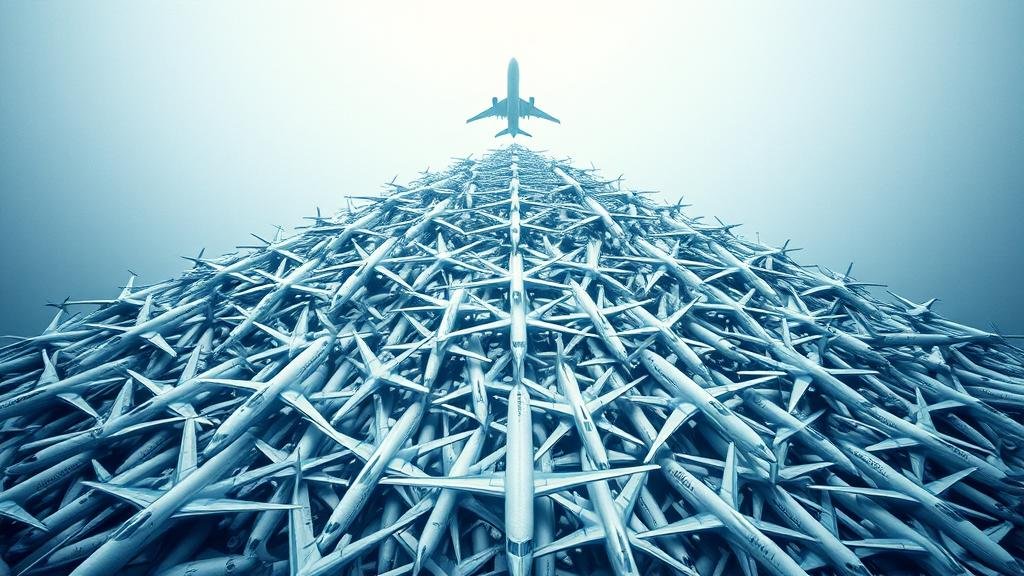
The Ambitious Goal: A Mountain of Aircraft Deliveries
To understand the pressure at Airbus HQ, you need to appreciate their goal: delivering 800 commercial aircraft in a single year. It’s a bold target driven by a few key factors:
- Surging Demand: After two years of travel restrictions, the world is eager to fly again. Airlines are desperate for new, fuel-efficient aircraft to capitalize on this travel boom.
- A Record Backlog: Airbus has a massive list of orders to fulfill. Failing to deliver these aircraft is not just bad for business; it’s a logistical nightmare.
- Market Dominance: With its main competitor, Boeing, facing its own production challenges, Airbus has a golden opportunity to solidify its position as a market leader in the aerospace industry.
Achieving this goal would be a monumental victory. However, the global supply chain is proving to be a formidable opponent.

The Persistent Challenge: A Tangled Global Supply Chain
The supply chain has become a common scapegoat for delays since 2020, but for Airbus, it’s a very real and persistent headache. The problem isn’t a single issue but a complex web of smaller disruptions.
The Engine Bottleneck
At the center of the drama are the aircraft engines. The two biggest names in the industry, CFM and Pratt & Whitney, have both struggled to keep up with demand.
Pratt & Whitney’s GTF engines, in particular, have been a source of major issues. These engines, which are critical for the popular A320neo jets, are not only slowing down the production of new aircraft but also forcing airlines to ground hundreds of existing jets for aircraft maintenance.
Raw Materials and Components
Beyond the engine troubles, sourcing the millions of parts that go into a modern airplane is a daily struggle. From seats and cabin lights to the countless microchips, a delay in a single, tiny component can bring the entire aircraft manufacturing process to a halt. October’s delivery of 78 aircraft was a strong performance, but it still leaves Airbus with a steep mountain to climb.

A New Wrinkle: The “Cosmic Distraction”
Just when things seemed complicated enough, a new, unforeseen problem emerged. Bloomberg dubbed it a “cosmic distraction,” which perfectly captures the nature of these random, last-minute issues that can disrupt even the most carefully planned production schedules. In a business where every component must be perfect, these “cosmic distractions” are a constant threat.
The Ripple Effect: Why These Delays Matter
These delays have far-reaching consequences for airlines, passengers, and the broader aviation industry.
For Airlines and Passengers
For airlines, a new plane is a revenue-generating asset. Delays mean they can’t launch new routes or have to continue flying older, less efficient aircraft. For passengers, this can result in fewer flight options, more crowded planes, and higher ticket prices.
For Airbus’s Bottom Line
Airbus doesn’t receive the bulk of its payment until an aircraft is delivered. A plane sitting on the ground waiting for a part is a very expensive paperweight. These delays directly impact revenue and can make investors nervous.
For the Competitive Landscape
Every stumble by Airbus is an opportunity for Boeing. While the American aerospace giant is dealing with its own set of challenges, any sign of weakness from its rival is a chance to gain ground. This delivery race is the main event in the aerospace manufacturing world, and both contenders are facing significant headwinds.
Conclusion: Can Airbus Navigate the Storm?
Is Airbus in trouble? Not necessarily. The company is facing a perfect storm of problems, and the coming weeks will be a major test of its ability to navigate this complex environment.
However, Airbus also has a record-breaking order book and a history of overcoming significant challenges. The demand for its aircraft is undeniable.
Here’s a quick summary:
- The delivery targets are ambitious for a reason: the world wants to fly, and Airbus wants to be the one to provide the planes.
- The supply chain is the primary obstacle, with issues ranging from engines to the smallest components.
- Unexpected problems are a constant threat in the world of complex aircraft manufacturing.
For now, the aviation industry watches with bated breath. The end-of-year numbers will reveal whether Airbus can overcome these challenges and meet its ambitious goals. The path ahead is turbulent, but Airbus remains in control of its own destiny.