Bank of Japan Signals Interest Rate Hike: What It Means for Global Markets
Japan’s central bank governor, Kazuo Ueda, recently hinted at a potential interest rate hike, a move that has sent ripples through the global financial community. For years, Japan has maintained a negative interest rate policy, creating an environment of ultra-cheap money. Now, it seems the Bank of Japan (BoJ) may be preparing to change course.
Let’s explore what Governor Ueda’s hawkish signal means for the Japanese yen, the stock market, and your investment strategy.

A Shift in Monetary Policy
For nearly a decade, the Bank of Japan has been engaged in a persistent battle against deflation, employing a loose monetary policy that included negative interest rates and significant asset purchases. This strategy aimed to stimulate the economy but contributed to a weaker yen.
However, Governor Ueda recently suggested that the BoJ could have sufficient data by the end of the year to pivot away from this accommodative stance. In financial terms, this is a “hawkish” signal, indicating a potential move towards higher interest rates to manage inflation.
A “hawk” favors raising rates to control rising prices, while a “dove” prefers to keep them low to encourage economic growth. Ueda’s recent comments suggest a shift in the BoJ’s outlook.
The Yen’s Rebound
The immediate market reaction was a surge in the Japanese yen, which climbed to a two-week high against the dollar. This response is logical: when a country signals a potential rate hike, its currency often becomes more attractive to investors seeking higher returns.
A stronger yen is beneficial for Japanese consumers purchasing imported goods, but it presents a challenge for the nation’s export-heavy industries, which have benefited from the currency’s historical weakness.
How Did the Stock Market React?
Typically, the prospect of an interest rate hike can make investors nervous, as higher borrowing costs can hinder corporate growth. One might have expected Japan’s Nikkei 225 index to decline sharply.
Instead, the market showed resilience. This muted reaction can be attributed to a few factors:
- Investor Optimism: Many are hopeful for a “Goldilocks” scenario where the BoJ raises rates just enough to signal confidence in the economy without triggering a downturn.
- The Yen’s Lingering Weakness: Although the yen has strengthened, it remains weak by historical standards. Companies have already adapted to this environment, so a minor rebound isn’t viewed as a major threat.
- Strong Corporate Financials: Many Japanese companies are profitable and hold substantial cash reserves, providing a buffer against the impact of higher borrowing costs.
Why the Potential Policy Change?
The Bank of Japan’s potential shift is driven by several key factors:
- Stubborn Inflation: Japan is finally experiencing sustained price increases, with inflation consistently hovering above the BoJ’s 2% target.
- The Downsides of a Weak Yen: A weak yen increases the cost of living for Japanese households by making imported goods like food and fuel more expensive.
- Global Central Bank Trends: Most other major central banks have already been raising interest rates to combat inflation. The BoJ is the last major player to hold out.
What Does This Mean for Investors?
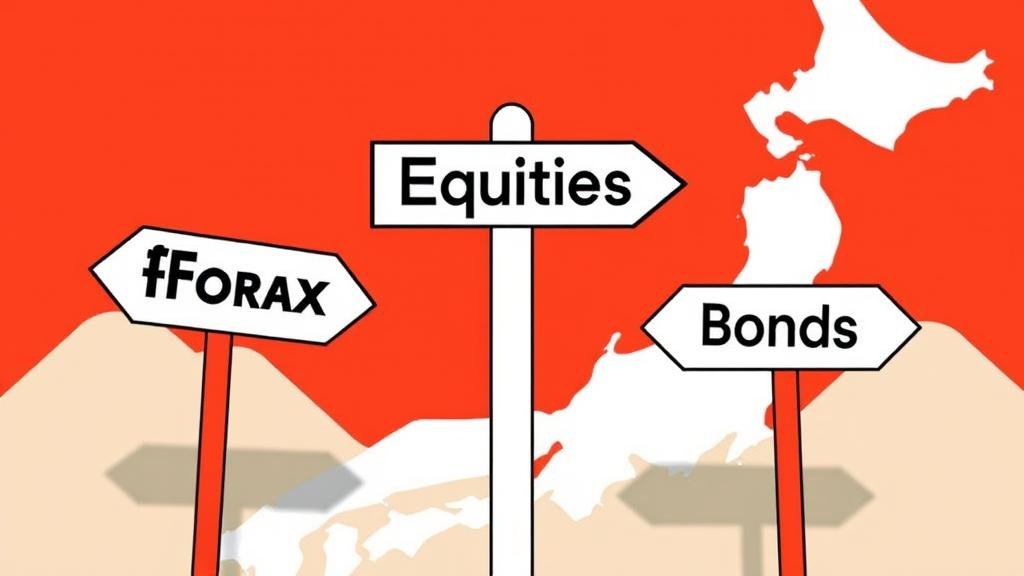
This potential shift in Japan’s monetary policy has several implications for different types of investors:
- For Forex Traders: The Japanese yen is expected to remain volatile, particularly in pairs like USD/JPY. Traders should be prepared for continued fluctuations.
- For Equity Investors: A stronger yen may negatively impact exporters while benefiting companies focused on the domestic market. It will be crucial to select companies with strong fundamentals.
- For Bond Investors: The bond market has remained relatively stable, suggesting confidence in the BoJ’s ability to manage the transition smoothly. However, any unexpected moves could lead to a spike in bond yields.
The Future of Japan’s Economy
Japan may be on the verge of a new economic era. The long period of the negative interest rate policy could be ending, with significant consequences for global markets. All eyes are on the Bank of Japan’s upcoming December meeting to see if they will officially announce an interest rate hike.