Putin, a Trump Envoy, and a High-Stakes Ukraine Peace Plan: What’s Really Going On?
A real estate developer’s five-hour meeting with Russian President Vladimir Putin has ignited a firestorm of speculation. This isn’t just a curious event; it’s a significant moment in international diplomacy, offering a glimpse into a potential Trump 2.0 presidency and its approach to the war in Ukraine. The Putin-Witkoff meeting in the Kremlin hints at a back-channel Ukraine peace plan that could reshape global alliances. Let’s analyze what this high-stakes meeting means for the future of geopolitical drama.
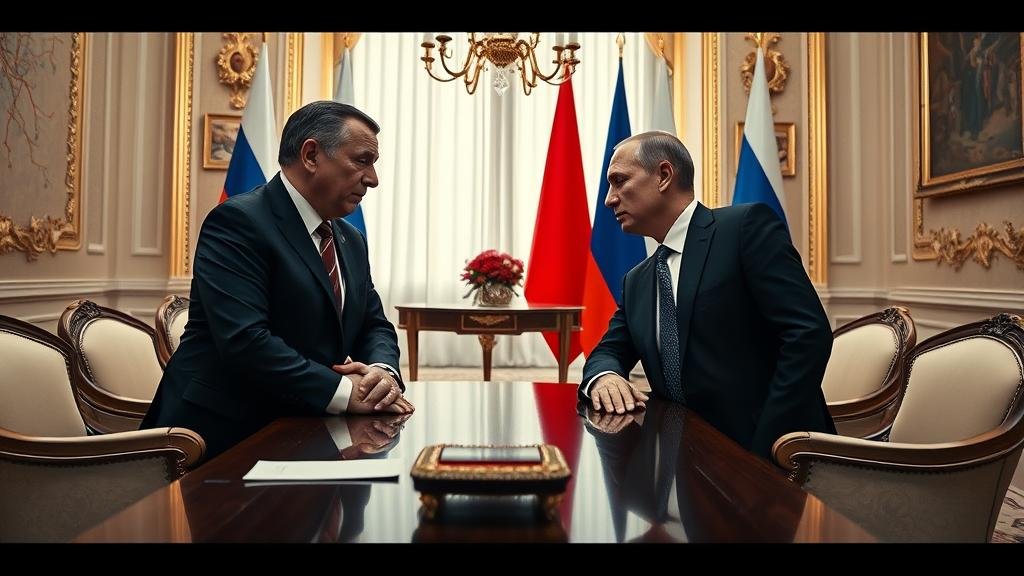
Who is Steve Witkoff, Trump’s Unofficial Envoy?
Steve Witkoff, a New York real estate magnate and a longtime associate of Donald Trump, has no official government position. Yet, he was granted a lengthy audience with Vladimir Putin. Accompanied by Jared Kushner, Trump’s son-in-law, Witkoff’s presence in Moscow signals a direct line of communication to Mar-a-Lago. This positions Witkoff as a trusted Trump envoy, capable of conveying messages outside of traditional diplomatic channels. Although the Kremlin described the meeting as “productive,” it yielded no concrete “result,” leaving the international community to decipher the true nature of these unofficial talks.

The Contentious “Land for Peace” Proposal
The central point of discussion was reportedly a “land for peace” proposal to end the conflict in Ukraine. This Ukraine peace plan would likely involve Kyiv ceding territory currently occupied by Russia in exchange for a ceasefire. Such a deal would directly contradict the stated position of Ukrainian President Volodymyr Zelenskyy and the United States, which is that peace negotiations can only begin after a full withdrawal of Russian forces from all of Ukraine‘s sovereign territory, including Crimea. The notion of an unofficial envoy proposing a deal that undermines established allied policy is a diplomatic bombshell.

The Kremlin’s Strategic Calculus
From Vladimir Putin‘s perspective, the Putin-Witkoff meeting is a strategic masterstroke. Here’s why the Kremlin would engage in this piece of geopolitical drama:
- Sowing Division: This meeting drives a wedge between the U.S. and its NATO allies, creating uncertainty and mistrust.
- Legitimizing Alternatives: By engaging with a Trump envoy, Putin lends credibility to a potential alternative to the current U.S. administration, signaling his openness to negotiate on different terms.
- Gathering Intelligence: The meeting provided a direct channel to understand the foreign policy thinking of a potential future Trump administration, offering invaluable intelligence for Russia‘s long-term strategy.

The West’s Alarmed Reaction
The reaction from Western governments has been one of quiet alarm. The Biden administration is in the difficult position of downplaying the significance of this back-channel diplomacy. For European leaders, this event stokes fears of a potential withdrawal of U.S. support for Ukraine and a weakening of NATO under a second Trump presidency. The geopolitical drama also has financial market implications, as investors closely monitor any signs of instability or major policy shifts that could impact the global economy.
A New Era of Unofficial Diplomacy?
The Putin-Witkoff meeting is a stark illustration of how international diplomacy may be evolving. It raises questions about whether this was a genuine, albeit unconventional, attempt at peace or a calculated political maneuver to bolster Trump’s image as a global dealmaker. What is certain is that the path to peace in Ukraine has become more complex. This event highlights the growing risk and unpredictability in the global landscape, where unofficial channels can have a significant impact on foreign policy and international security.