Federal Reserve Independence: What a Trump Presidency Could Mean for the U.S. Economy
The Federal Reserve. It sounds like a national park for squirrels but is, in fact, the guardian of our economy. It’s meant to be the calm, data-driven adult in a room of economic chaos, insulated from political drama. This Federal Reserve independence is the bedrock of a stable U.S. economy, the very foundation of our financial system.
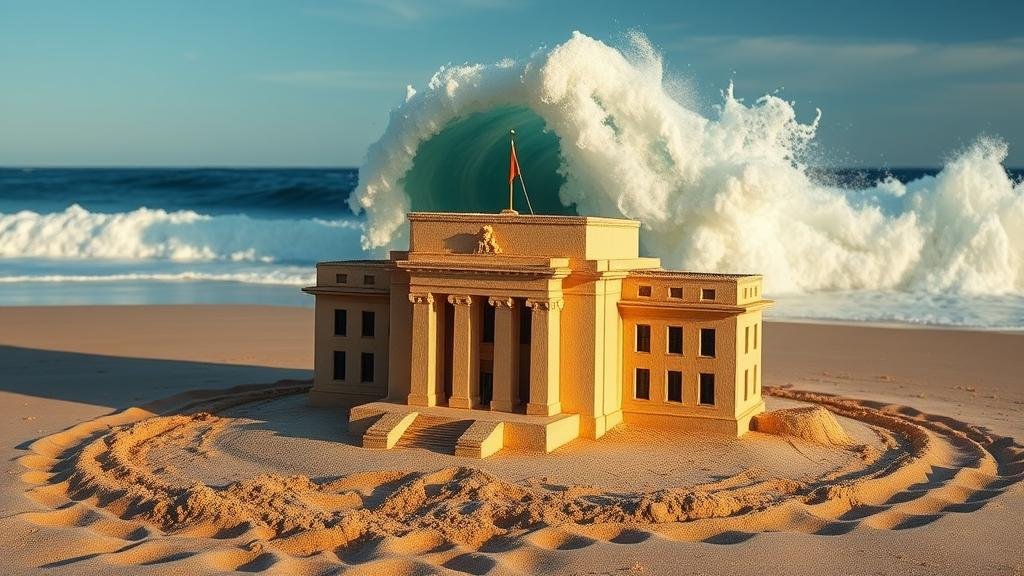
But what happens when a former president, known for his hands-on approach, hints at a comeback? Suddenly, the Fed’s independence feels less like a bedrock and more like a sandcastle against a rising tide. Market watchers are growing concerned that a new, Trump-appointed Fed chair might be too eager to please, a scenario with real-world consequences for your mortgage, your savings, and the overall economic stability.
The Cornerstone of a Stable Economy: Why the Fed’s Independence Matters
To grasp the current drama, it’s essential to understand why the Federal Reserve’s independence is more than just a political talking point. Established in 1913, the Fed was designed to be shielded from short-term political pressures. Think of it as the responsible driver for the U.S. economy, ensuring that decisions are made for long-term health, not short-term political gain.
Here’s why this matters:
- Taming Inflation: The Fed’s primary role is to keep inflation in check. This sometimes requires raising interest rates, an unpopular but necessary measure. A Fed chair influenced by political pressure might hesitate to make such a move, risking runaway inflation that devalues your savings.
- Long-Term Vision: Politicians often focus on the next election cycle, pushing for short-term economic boosts that can lead to long-term problems. An independent Fed can ignore the political noise and focus on sustainable, long-term growth, which is crucial for a healthy U.S. economy.
- Global Credibility: The U.S. dollar’s status as the world’s primary reserve currency is built on trust. If global markets perceive the Fed as a political tool, they could lose faith in the dollar, leading to severe economic consequences.
A History of Political Pressure: The Trump-Powell Dynamic
These concerns are not unfounded. During his presidency, Donald Trump openly criticized his own appointee, Jerome Powell, for raising interest rates. He labeled the Fed as “crazy” and his “biggest threat,” a departure from the long-standing tradition of presidential silence on monetary policy. This public pressure created a tense relationship between the administration and the central bank.
Reports suggest that in a potential second term, Trump would seek a Fed chair who will slash interest rates without hesitation. The fear is that he might prioritize loyalty over expertise, appointing someone who will execute his economic agenda without question. This raises concerns about the future of monetary policy and its impact on financial markets.
The Contenders and the Consequences
Names like economist Kevin Hassett and investor Scott Bessent are being floated as potential successors to Jerome Powell, causing a stir on Wall Street. A Fed chair who is not perceived as independent could lead to increased market volatility and uncertainty, making it difficult for investors to plan for the future.
This brings us to a critical question: would a new Fed chair, handpicked by Trump, be able to withstand political pressure? Or would they become an instrument for pre-election economic stimulus, regardless of the long-term consequences for inflation and economic stability?
What a Politicized Fed Means for Your Wallet
Let’s break down what a less independent Fed could mean for your personal finances:
Interest Rates and Your Debt
The Fed’s decisions directly impact the interest rates on your mortgage, car loan, and credit cards. While lower rates might seem appealing in the short term, they could fuel inflation, forcing the Fed to raise rates dramatically later. This kind of volatility makes financial planning incredibly challenging.
The Return of Inflation
The most significant risk of a politicized Fed is uncontrolled inflation. If the central bank is pressured to prioritize short-term growth over price stability, the cost of living could skyrocket, eroding your purchasing power. For those on a fixed income, the consequences could be devastating.
Your 401(k) and Market Volatility
Financial markets thrive on predictability. Uncertainty about the future of monetary policy can lead to significant market swings. A Fed that is not seen as independent could lead to a volatile stock market, impacting your 401(k) and retirement savings.
Is the Alarm Overblown?
To offer a counter-perspective, some argue that the fears of a compromised Fed are exaggerated. The institution has safeguards in place, and a new chair would still need the support of the other governors, who have staggered terms to protect them from political influence. Moreover, any Fed chair must confront the same economic realities and global pressures, which cannot be wished away.
Your Action Plan
The Federal Reserve is at a critical juncture, and the outcome will have far-reaching implications for the U.S. economy and your financial well-being. This is a time for vigilance, not panic.
Here’s what you can do:
- Stay Informed: Keep up with the news to understand the evolving economic landscape.
- Manage Your Debt: With interest rates potentially in for a bumpy ride, now is an excellent time to pay down high-interest debt.
- Review Your Investments: Consider consulting a financial advisor to ensure your portfolio is prepared for potential market turbulence.
The path the Federal Reserve takes will shape our collective financial future. By staying informed and taking proactive steps, you can better navigate the challenges and opportunities that lie ahead.