Kevin Hassett: Trump’s Front-Runner for Fed Chair and What a More Political Fed Means for You
And the Rose for the Next Fed Chair Goes To… Maybe Kevin Hassett?
The financial world is abuzz with its favorite pastime: gossip. This time, the speculation centers on who will lead the U.S. Federal Reserve, a role with slightly more impact than a TikTok influencer but with far worse lighting. Former President Donald Trump has nominated a familiar name: Kevin Hassett. As the whispers intensify, let’s explore what a Hassett-led Fed might mean for the economic policy, your finances, and whether you’ll need a wheelbarrow for your groceries.
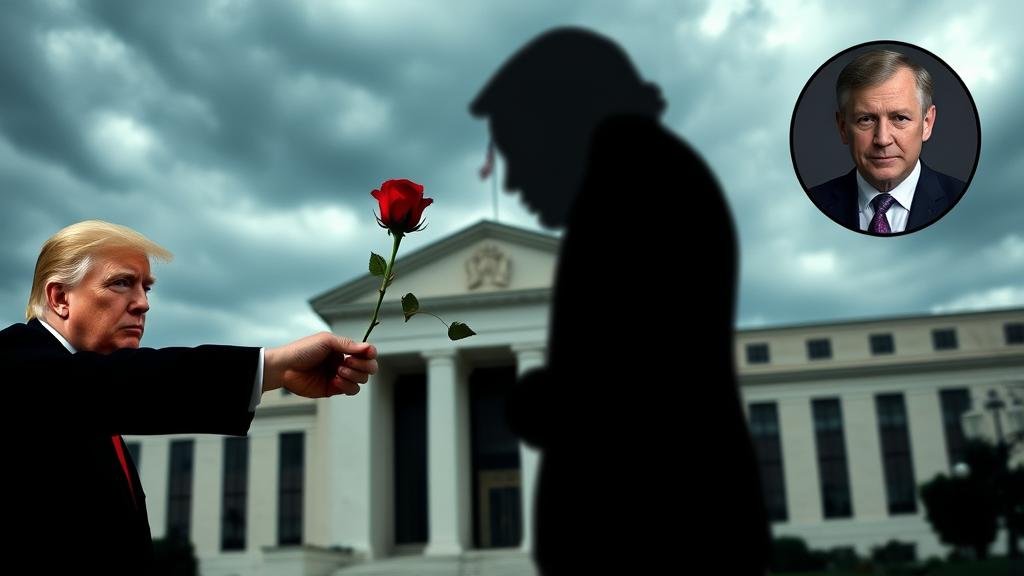
So, Who Is This Kevin Hassett Fella?
Unless you’re a C-SPAN aficionado or your hobby involves reading economic papers, you might be asking, “Kevin who?” A fair question.
Kevin Hassett is an economist who chaired the Council of Economic Advisers (CEA) under Trump from 2017 to 2019. Before his White House tenure, he worked at the Fed itself and a conservative think tank. His major achievement was being a key architect of the 2017 Tax Cuts and Jobs Act. In short, he wasn’t just in the room; he was helping draft the blueprints.
The Allure of an Old Flame
Why is Trump floating Hassett’s name? It’s like reuniting with a well-known ex. For Trump, Hassett is a known quantity who was pivotal in shaping his first-term economic agenda. This contrasts sharply with his relationship with current Fed Chair Jerome Powell, whom Trump criticized for not making money cheaper, faster. Hassett is seen as more aligned with Trump’s economic vision.
This idea has gained so much traction that, according to The Economist, betting markets are seeing a surge of money backing Hassett for the job, making him the front-runner. Yes, people are wagering real money on this. It’s probably time to pay attention.
A More Political Fed? Is That… Bad?
The prospect of mixing politics with the Federal Reserve makes economists anxious. The Fed’s independence is its greatest strength, allowing it to make tough decisions based on data, not political pressure. A Fed chair with deep political ties could be pressed to:
- Slash interest rates before an election to boost the economy, even if inflation is rising.
- “Fire up the money printer” to finance government spending, an economic sugar rush with painful consequences.
- Advocate for a weaker dollar to boost exports, which makes imported goods more expensive for you.
Bloomberg and other outlets have highlighted concerns that this could drag the Fed from its quiet, analytical corner into the political arena.
Okay, Okay, But What’s the Upside?
Let’s consider the other side. A little more coordination between the White House and the Fed could be beneficial, particularly during a crisis. When everyone rows in the same direction, progress is faster.
Supporters argue that Hassett’s focus on pro-growth policies, like tax cuts and deregulation, could be the recipe for jumpstarting investment and creating jobs. The argument is that a little less ivory tower and a bit more “let’s get this done” energy is what the economy needs.
But Wait, There’s Another Contestant!
To add to the drama, Hassett isn’t the only candidate. Enter Chris Waller, a current Fed governor. Waller is viewed as a more traditional, “hawkish” economist, meaning he prioritizes controlling inflation. He’s the type to remove the punch bowl early to prevent an economic hangover (inflation), even if it means slower growth.
The choice between them represents a clash of economic philosophies: Waller, the cautious inflation-fighter, versus Hassett, the ambitious growth-promoter.
What a Hassett-Led Fed Could Mean for You (Yes, You!)
What does this all mean for your wallet? Let’s get practical.
- Your mortgage: A Fed focused on lower interest rates could mean cheaper mortgages, which is great if you’re buying a home.
- Your savings: The downside of low-cost loans? Your savings account might earn next to nothing.
- Your job: Pro-growth policies could fuel a robust job market. However, if these policies also trigger inflation, your larger paycheck won’t stretch as far.
- The cost of living: This is the big one. If the Fed prioritizes a political agenda over controlling inflation, the prices of everything from gas to groceries could soar.
It’s a classic economic seesaw. Pushing down on one end makes the other go up. The question is who sits on which side.
The Road Ahead
For now, we wait and watch the financial world’s spectator sport of speculation.
The selection of the next Fed Chair is more than a personnel decision; it’s a philosophical one. What is the central bank’s main role? To be the responsible adult ensuring price stability? Or to be a partner in advancing a president’s economic agenda?
The answer will shape our economy for years to come. No pressure. And you can bet we’ll be here, providing both dad jokes and actual analysis, to cover it every step of the way.