The Geopolitical Plot Twist: Decoding the Surprising Export Boom in Global Trade
For the last few years, the global economy has been the world’s most-watched drama, with the US-China trade war as the main storyline. Most experts were on the edge of their seats, predicting a full-scale global trade meltdown. We were all ready for the end of international commerce as we knew it.
But the latest trade data just walked in and delivered a massive plot twist. A recent Bloomberg report revealed that China’s exports didn’t just recover; they rocketed, pushing their trade surplus past an incredible $1 trillion for the first time. This isn’t just a China story; it’s a sign that the global demand for goods remains surprisingly robust, even with widespread economic gloom. Instead of a trade apocalypse, we’re witnessing a complex reshuffling of the international trade network.
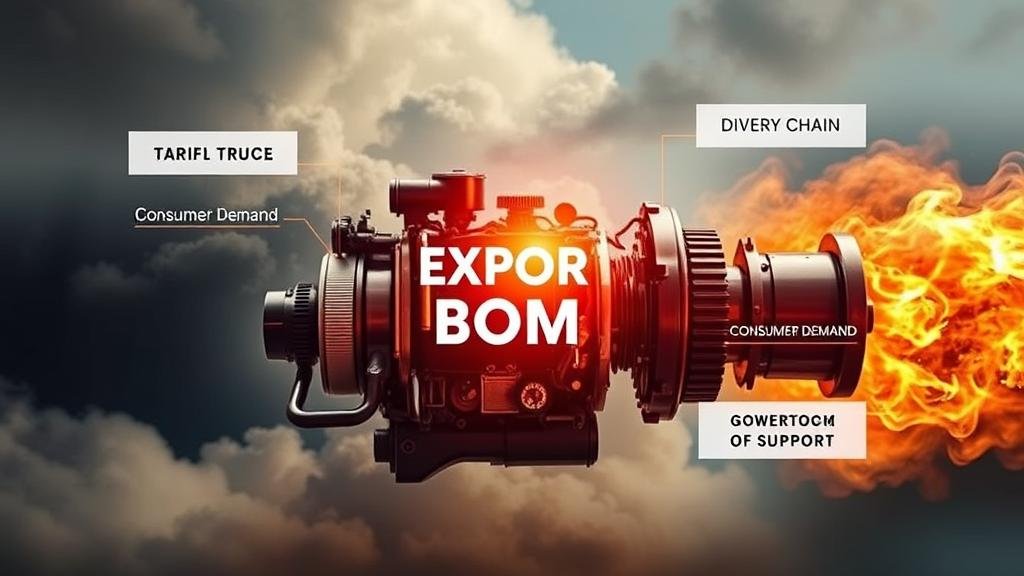
What’s Fueling This Economic Engine?
So, what are the secret economic drivers behind this unexpected trend? It’s more than just a caffeine-fueled sprint by the world’s supply chain managers.
1. A “Tariff Truce” in the US-China Trade War
A key factor was the de-escalation of the US-China trade war. This temporary “tariff truce,” as the South China Morning Post called it, gave businesses a window to rush-ship goods that had been piling up, creating an international version of a Black Friday sale and boosting export numbers.
2. Supply Chain Diversification
The trade conflict forced companies to rethink their strategies, leading to crucial supply chain diversification. Businesses realized that relying on a single source was a recipe for disaster and started exploring new trade partners in regions like Southeast Asia and Latin America. This is forging a more resilient, albeit more complicated, global trade network.
3. Unwavering Consumer Demand
Despite rising inflation, our appetite for electronics, home goods, and medical supplies hasn’t waned. The surge in demand that began during the pandemic has proven to be unexpectedly persistent, keeping the wheels of international trade turning. My credit card statement can personally vouch for this.
4. Government Intervention and Support
Finally, governments worldwide stepped in to support their economies. Through measures like tax breaks and subsidies, they propped up their exporters to maintain global market competitiveness. Beijing, in particular, was proactive in supporting its manufacturing sector, ensuring its goods remained competitive in international markets.

Navigating the Future: A Fragile Rebound
Let’s be clear: this rebound is fragile. The core geopolitical tensions are far from resolved. Inflation, rising interest rates, and the war in Ukraine are all significant risks waiting in the wings.
So, what’s the takeaway for businesses? Agility is the name of the game. The old playbook is gone, replaced by a need for constant adaptation. Here’s your updated to-do list:
- Prioritize Supply Chain Diversification. Stop relying on a single country. Building a diverse network of suppliers is essential for resilience.
- Embrace Technology. In this complex environment, digital platforms and data analytics are crucial tools for global market analysis and navigating the maze of international trade.
- Stay Informed. The landscape is changing fast. Keeping up with global trade analysis (like this article!) is key to making smart, proactive decisions.

Conclusion: A New, Weirder Chapter for the Global Economy
The fact that exports are rebounding despite the high-stakes staring contest between the US and China is a testament to the stubborn resilience of the global economy.
We are not returning to business as usual. We’re entering a new era of global trade—one that is more complex, unpredictable, and defined by constant change. The path forward will require a sharp strategy, a good sense of humor, and incredible flexibility. For now, this unexpected export boom is a welcome sign that even in chaotic times, the engine of global commerce keeps chugging along.