Warning Lights: Why Distressed Debt in the Auto Parts Industry Signals a Major Breakdown
Let’s discuss corporate debt, specifically within the auto parts industry. A major auto parts manufacturer’s debt is currently trading at 70 cents on the dollar. For the uninitiated, this is a significant red flag. It’s a vote of no confidence from investors and a clear sign of financial distress that points to serious underlying issues in the sector’s health.
This isn’t just a market fluctuation; it’s a signal that the foundational structure of the automotive supply chain is under pressure. So, let’s diagnose what’s really happening under the hood.
What “Distressed Debt” Means for an Auto Parts Manufacturer
When a company issues bonds, it’s essentially taking out a loan from investors with the promise to repay it in full. Healthy corporate bonds trade at 100 cents on the dollar, or “par value.” When the price drops to 70 cents, that debt becomes “distressed.”
The market is signaling a significant risk that the company might default. This isn’t theoretical; a US auto parts supplier recently filed for Chapter 11 with billions in debt, turning a potential risk into a reality. Investors are selling at a loss because recovering 70% of their investment is preferable to potentially getting nothing. This fire sale is typically fueled by a few key factors:
- Plummeting Profits: The company’s revenue is insufficient to cover its debt obligations.
- Credit Rating Downgrades: Rating agencies have flagged the company as a high-risk investment.
- Industry-Wide Instability: The entire sector may be facing systemic challenges.
- Looming Bankruptcy: The 30% discount reflects the market pricing in the real possibility of a complete collapse.
The Perfect Storm Battering the Automotive Supply Chain
The situation extends beyond a single company. The entire auto parts industry is navigating a complex storm of technological and economic challenges, most notably the EV transition.
The Inevitable EV Transition Challenge
The monumental shift toward electric vehicles (EVs) is the primary disruptor. For companies specializing in parts for internal combustion engines (ICE), this is a seismic challenge.
- Obsolescence of Gas-Powered Vehicle Parts: Components like pistons, fuel injectors, and exhaust systems are on a clear path to obsolescence.
- High Cost of Re-tooling: Transitioning auto parts manufacturing to produce EV-specific components like battery packs and electric motors requires billions in capital investment.
- Uncertain Transition Timeline: A recent slowdown in EV sales growth has created a difficult limbo for suppliers. Demand for traditional parts is declining, but the demand for new EV parts isn’t accelerating fast enough to compensate, creating a significant revenue gap.
Economic Pressures and Supply Chain Disruption
Compounding the technological shift are severe economic headwinds that are squeezing suppliers from every direction.
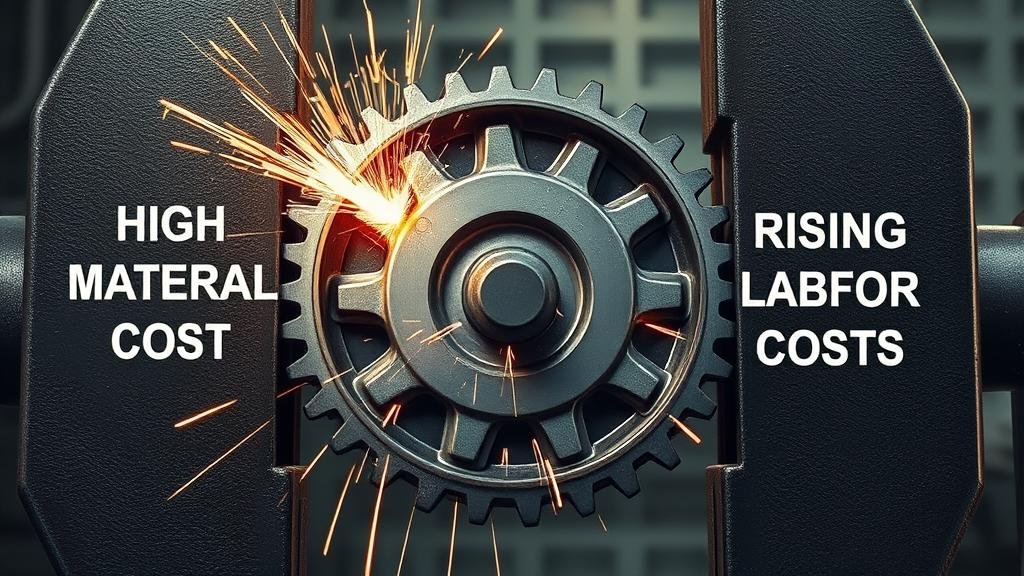
- Persistent Inflation: The high cost of raw materials like steel and aluminum continues to crush profit margins, as suppliers have limited leverage to pass these costs on to major automakers.
- Rising Labor Costs: The struggle to find and retain skilled labor adds another layer of financial pressure.
- Post-Pandemic Supply Chain Disruption: The sector is still recovering from events like the microchip shortage, which created lasting vulnerabilities. The recent bankruptcy of another major parts company with over $10 billion in debt underscores how these compounded pressures can lead to financial distress.
The Ripple Effect: Why This Affects Car Owners
This industry turmoil has far-reaching consequences beyond Wall Street, impacting the entire automotive supply chain and, ultimately, consumers.
For the Broader Supply Chain
The failure of a major manufacturer can set off a domino effect, leading to unpaid bills and potential insolvency for hundreds of smaller suppliers that depend on it.
For Automakers and Consumers
A weakened supply chain means less competition and more fragility. For automakers, a single supplier failure can halt production, costing millions. For the average car owner, the consequences of this supply chain disruption include:
- Higher New Car Prices: If manufacturers have to pay more for components, those costs will be passed on to the buyer.
- Increased Car Repair Costs: A reduction in parts manufacturers will inevitably lead to higher prices for aftermarket and replacement parts.
A Barometer for Economic Slowdown
The auto parts industry is a critical indicator of broader economic health. Significant stress in this sector often signals a wider economic slowdown, as it reflects waning consumer confidence in making major purchases.
That 30% discount on corporate debt is more than a financial headline; it’s a story of technological disruption, economic strain, and an industry at a critical inflection point. The road ahead for auto parts manufacturing is fraught with challenges, and the outcome will ripple through the entire economy.