The Dragon’s Gambit: China’s High-Stakes Bet on Semiconductor Supremacy

The Dragon’s Gambit: Why China is Doubling Down on Domestic Chips
China’s grand plan for semiconductor independence, a cornerstone of its “Made in China 2025” blueprint, is the kind of ambitious project that makes my five-year plan to ‘clean the garage’ look absolutely pathetic. The initial goal? To domestically produce 70% of their own chips by 2025. And while they might miss that exact target—cue a dramatic sigh of relief from my perpetually messy garage—the U.S. sanctions have only poured gasoline on their nationalistic fire.
Instead of crippling China’s tech sector, the restrictions convinced Beijing that depending on foreign tech was like trusting a toddler with your car keys. A very bad idea. The result has been a firehose of state-led investment so massive it makes lottery jackpots look like pocket change. We’re talking tens of billions of dollars for everything from R&D to giant new fabrication plants (fabs). The message from Beijing is clear: when it comes to the chip war, money is no object, and failure is not in the vocabulary.
This all led to some pretty stunning “hold my beer” moments, like when their national champion, SMIC, managed to produce a 7-nanometer chip for Huawei’s new smartphone. Now, before your eyes glaze over like a Krispy Kreme, just know that while it’s still a few steps behind the big dogs like TSMC, it was a breakthrough that proved China could innovate even with its hands tied in the ongoing US-China chip war. You feel me?

A Shifting Landscape: How Global Regulators are Reacting
This is where the grown-ups in the room—or at least, the people in charge at the U.S. Department of Commerce—start their very complicated conversation. Their initial strategy was called the “small yard, high fence” approach. Think of it like toddler-proofing your house: you don’t board up every single window, you just put an impenetrable gate around the really critical stuff, like advanced AI chips that have military uses.
The only problem? It kind of worked too well. American tech giants like Nvidia, who make the GPUs that power basically all modern AI, suddenly saw a giant chunk of their Chinese market vanish. Let’s be real, telling your star player they can’t sell to their biggest customer tends to make them a little grumpy.
Hot take coming in 3…2…1… In a plot twist worthy of a daytime soap opera, it now looks like the Commerce Department might be easing up a bit. The rumor is they’re considering letting Nvidia sell a slightly less powerful version of its fancy new Nvidia H200 AI chips to China. This isn’t a surrender; it’s a strategic pivot. The thinking seems to be that it’s better to keep China hooked on American-designed hardware (and Nvidia’s crucial software) than to push them to build their own rival ecosystem from scratch. It’s a delicate tightrope walk over a canyon filled with angry lobbyists and national security hawks. Still reading? Wow. You’re officially my favorite.
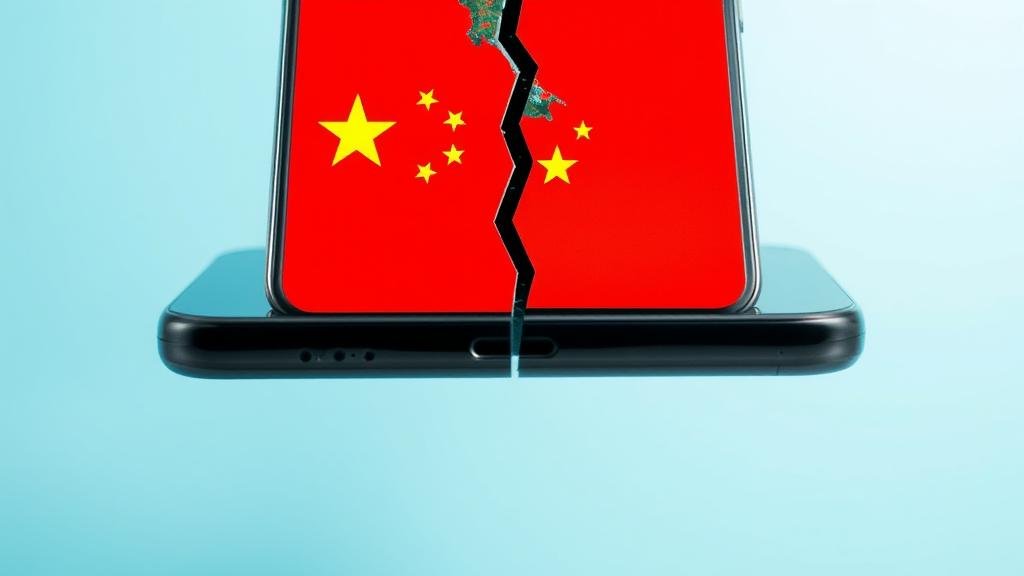
The Ripple Effect: What This Means for the Global Tech Industry
So, why should you, a person who just wants their phone to work, care about this geopolitical chess match? Because the outcome is going to shake things up for everyone.
- A Split Tech Universe? The biggest fear is that we’re heading for a tech bifurcation. Imagine a world where you need one phone based on Western tech and another based on Chinese tech, because they’re completely incompatible. Sounds fun, right? No. No, it does not. It sounds like my personal nightmare.
- Headaches for the Big Guys: For companies like Nvidia, Apple, and Qualcomm, this whole situation is a five-alarm migraine. China isn’t just a factory; it’s a massive market. Navigating this mess of export controls and political drama is now a full-time job.
- A Chance for the Underdogs: On the other hand, all this disruption creates openings. As Chinese firms are forced to find local suppliers, it’s a golden ticket for new homegrown chip companies to rise up. As a certain scheming TV character once said, chaos is a ladder.
From our perspective here at Creditnewsinsider, this “tectonic shift” is a story we’ll be glued to. Mostly because we need to know if we’ll have to buy two of every gadget from now on.

Conclusion: Key Takeaways and The Road Ahead
Alright, class is almost over. The ongoing chat between global regulators is a huge deal, evolving from a simple “no, you can’t have that” to a more complex game of managed competition.
Here’s what you need to remember (and yes, this will be on the test):
-
1
China Isn’t Backing Down: Fueled by national pride and a gigantic pile of cash, China’s mission for semiconductor self-reliance is here to stay. You don’t “discourage” a trend like this; you just learn to navigate the chaos it creates. -
2
Regulators Are Getting Craftier: The powers-that-be are realizing a sledgehammer isn’t the best tool. They’re switching to a scalpel, trying to contain China’s military tech without torpedoing the entire global economy. -
3
Adapt or Get Left Behind: For tech companies, investors, and probably even you, it’s time to get ready for a weirder, more unpredictable world. If your business plan doesn’t have a chapter titled “What to Do During a Geopolitical Tech Tantrum,” you might want to add one.
The “chip war” is less of a single battle and more of a forever-simmering standoff. Watching the folks at the Department of Commerce is now required viewing for anyone who wants to understand where technology, and a big chunk of the global economy, is headed next. Now, if you’ll excuse me, my 7-year-old just asked if I’m done talking about semiconductors. I said “never.”