Why the October JOLTS Report Won’t Stop the Fed’s Pivot to Rate Cuts
The JOLTS report—officially the Job Openings and Labor Turnover Survey—just threw a minor curveball. Just as the financial world anticipated the Federal Reserve’s end-of-year meeting, the October report revealed a slight, almost negligible increase in job openings.
But is this single data point enough to deter Fed Chair Jerome Powell from the expected pivot to cutting interest rates? That seems unlikely. Changing course based on this minor detail would be like rerouting a cross-country road trip for a five-minute drizzle. This report feels more like a head-fake, and the Fed’s plan to pivot remains on track.
What Exactly Is the JOLTS Report?
Published by the U.S. Bureau of Labor Statistics, the JOLTS report is a key economic indicator that provides a detailed look at the US labor market. It tracks several key metrics:
- Job Openings: The total number of unfilled jobs on the last business day of the month, acting as the nation’s “Help Wanted” sign.
- Hires: The total number of new employees added to payrolls during the month.
- Separations: The total number of employees who left their jobs, broken down into:
- Quits: Voluntary separations initiated by employees, often seen as a measure of worker confidence.
- Layoffs and Discharges: Involuntary separations initiated by employers.
The Federal Reserve monitors this report closely because a high number of job openings and a rising “quits rate” can signal a “hot” labor market, which may contribute to a wage-price spiral and higher inflation.
A Minor Twist in the Data
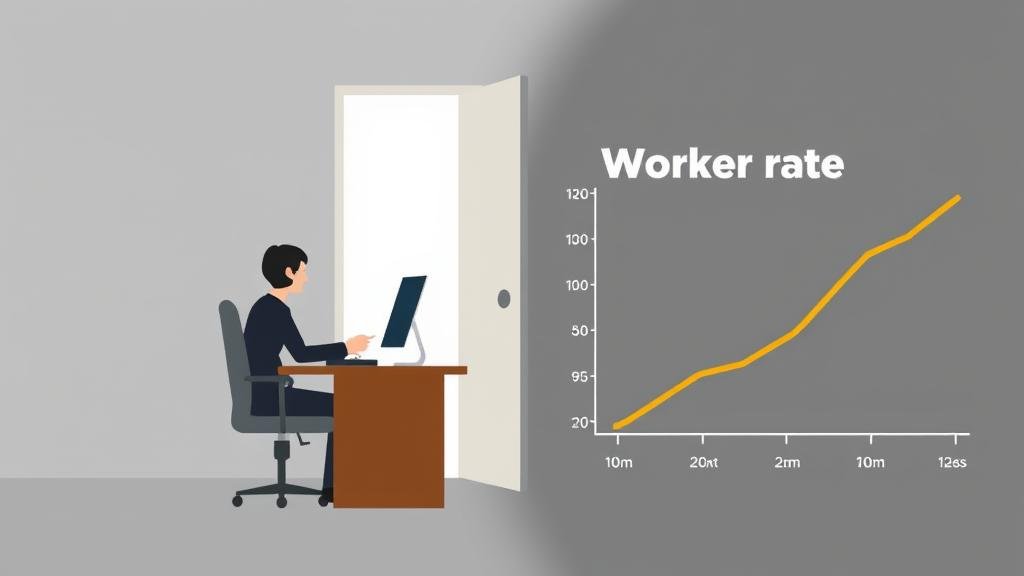
The October 2025 JOLTS report indicated that job openings rose to 7.67 million from 7.658 million. While this increase might seem counterintuitive in a cooling economy, it’s essential to view it in context. As analysts from the Indeed Hiring Lab noted, we shouldn’t “mistake a good headline for genuine momentum.” The headline number alone doesn’t tell the full story.
Why the Fed is Likely to Stay the Course
The Federal Reserve will almost certainly acknowledge the report and then proceed with its strategy to lower interest rates. Here’s why this minor “jolt” is unlikely to alter its course.
1. The Broader Trend Remains Downward
One month of data does not reverse a year-long trend. Job openings have fallen significantly from their peak of over 12 million in March 2022. The overall trajectory is clearly downward, aligning with the Fed’s objective of cooling the labor market. The ratio of job openings to unemployed individuals—a statistic closely watched by Jerome Powell—is also moving closer to pre-pandemic levels.
2. The “Quits Rate” Reveals the Real Story
The quits rate provides a clearer picture of the labor market’s health. The era of the “Great Resignation” has passed, and the quits rate has been steadily declining. This indicates that workers are becoming more cautious, choosing to stay in their current roles rather than seeking new opportunities. This trend signals to the Fed that the labor market is losing its froth, reducing the risk of runaway wage growth and making further rate hikes unnecessary.
3. Inflation Is the Main Objective
For the past two years, the Fed’s primary focus has been combating inflation. Recent data from both the Consumer Price Index (CPI) and the Personal Consumption Expenditures (PCE) Price Index—the Fed’s preferred inflation gauge—show that inflation is moderating. With the main threat of inflation receding, the rationale for maintaining high interest rates weakens. The JOLTS report is a secondary factor; inflation remains the primary policy driver.
4. The Goal Is a Soft Landing, Not a Recession
Monetary policy operates with a significant lag, meaning the full economic impact of past rate hikes is yet to be felt. The Fed is acutely aware of the risk of an “overshoot”—tightening policy so much that it pushes the economy into a recession. To achieve a “soft landing,” policymakers must begin to ease off the brakes before the economy stalls. Adhering to a hawkish stance based on a single, slightly irregular jobs report would be a strategic error.

What This Means for Your Finances
So, what are the practical implications of a potential Fed pivot for the average person?
- Lower Borrowing Costs: Interest rates on mortgages, car loans, and other forms of credit are likely to decrease, making borrowing more affordable.
- Credit Card APRs: While you may not see an immediate drop, the upward trend in credit card APRs should cease and eventually begin to decline.
- A Stabilizing Job Market: The Fed’s goal is to cool the job market, not freeze it. Current data suggests they are managing this balance, so widespread layoffs are not the most probable outcome for now.
Conclusion: All Eyes on the Federal Reserve
The October JOLTS report was an interesting but minor event. The larger economic narrative remains unchanged: inflation is cooling, the labor market is stabilizing, and the Federal Reserve has the justification it needs to change its policy direction. We anticipate the Fed will either initiate its pivot this week or strongly signal that rate cuts are coming in early 2026. This is not a reactive decision but a strategic move based on comprehensive data indicating that its primary mission is accomplished.