The $250 Billion AI Chip Stock Crash: Is the Tech Bubble Bursting?
Just as the AI boom became the hottest ticket in town, the financial equivalent of a front-row seat to a Taylor Swift concert, the music suddenly stopped. Poof. It was as if someone unplugged the world’s most powerful computer, vaporizing a staggering $250 billion in market value. That’s enough to buy a private island and then another one for your private island’s private island.
This wasn’t just a minor blip on the stock charts; it was a full-blown, “Houston-we-have-a-problem” tremor that shook markets from Wall Street to Asia. The big question on everyone’s mind is: Is the AI party over, or is this just a temporary glitch in the matrix? You’re here for the drama and the dad jokes, and I’m here to help make sense of the stock market volatility.
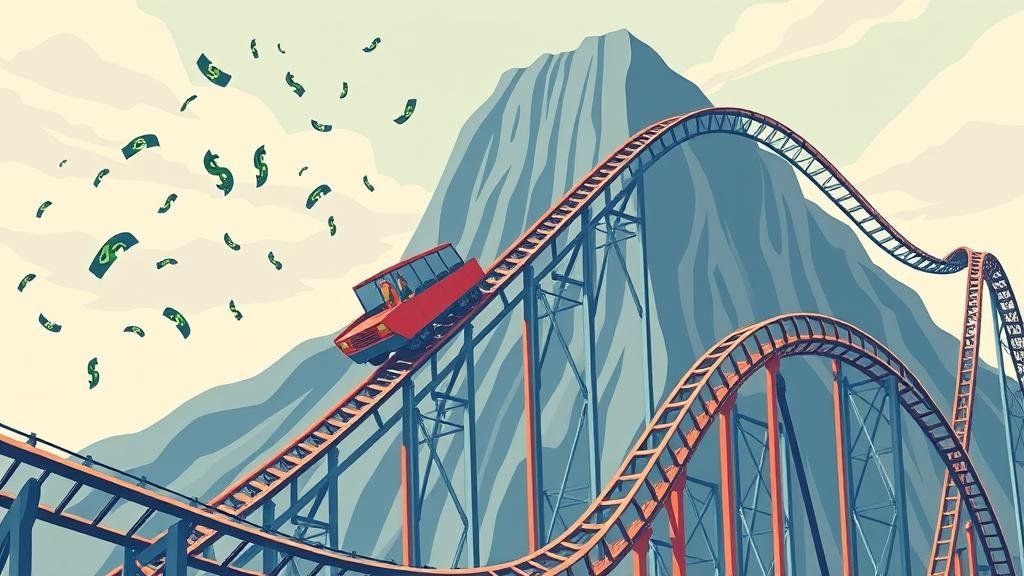
The Unstoppable Hype Train of Generative AI
To understand why this crash felt like such a betrayal, you need to appreciate the climb. For the past year, whispering “generative AI” near a stock was enough to send it soaring. The insatiable demand for powerful GPUs—the brains behind technologies like ChatGPT—turned chipmakers into overnight rock stars.
Companies like NVIDIA became household names, with their stock prices reaching stratospheric levels. This created a “halo effect” that lifted the entire tech sector. Suppliers like TSMC, who manufacture the silicon wafers, and Samsung, providing essential memory, were all riding the AI wave. The narrative was simple: AI is the future, and these companies are selling the essential tools. Investors, driven by a classic case of FOMO (fear of missing out), piled in, pushing prices to dizzying heights where logic gets a little fuzzy.
Takeaway: When a party gets this wild, it’s only a matter of time before someone calls the cops. Or, in this case, their broker, screaming “SELL!”
Who Ignited the $250 Billion Fire?
A fire of this magnitude is never started by a single match. It was a perfect storm of nervous investors and shaky hands.
1. Good Old-Fashioned Profit-Taking
The primary culprit appears to be profit-taking, a polite term for “I’ve made a ton of money, and I’d like to keep some of it.” After watching AI chip stocks defy gravity for so long, many investors started to get nervous about the lofty valuations. As The Economic Times noted, concerns were looming. When a stock is valued higher than the GDP of a small nation, any hint of a slowdown is like yelling “shark!” at a crowded beach.
2. When the Titans Stumble
The sell-off gained momentum when market leaders and their key suppliers took a hit. When the giants of the industry sneeze, the rest of the sector catches pneumonia. A dip in a major AI leader’s stock signals to investors that demand may not be as infinite as once believed. It’s a domino effect, but with more crying and fewer plastic tiles.
3. Fear is Contagious and Spreads Globally
This wasn’t just a Wall Street phenomenon. The panic went on a world tour, hitting Asian markets with particular force. As Finimize reported, South Korean stocks slipped as the wave of selling slammed its own chipmakers. It’s like a rumor spreading through a high school cafeteria—once it starts, there’s no stopping it. Global investors saw the red on their screens and began dumping their tech shares, turning a bonfire into an inferno.
Takeaway: The market is essentially a group chat where everyone has access to a “panic” button. Someone pressed it. Hard.
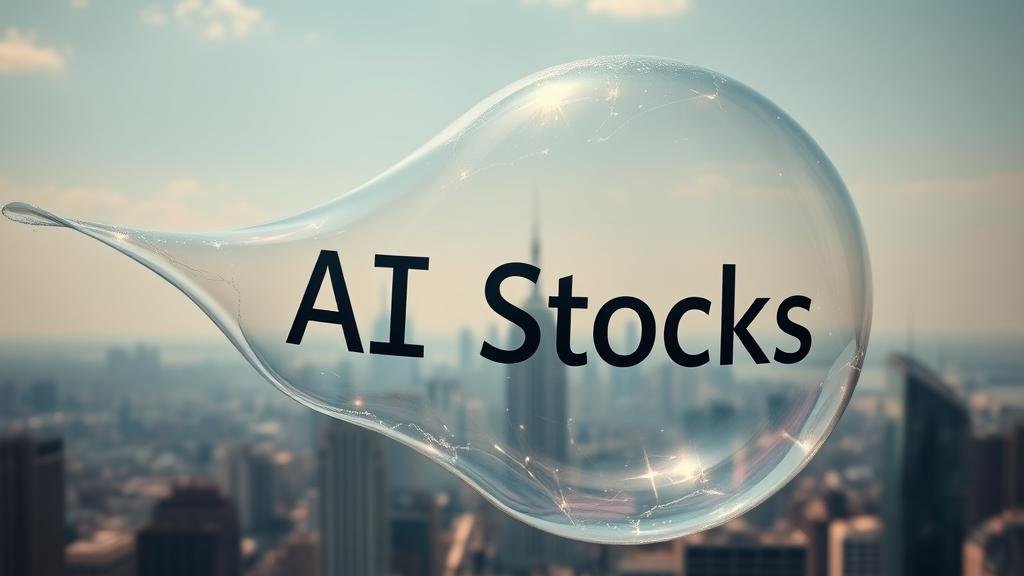
Is the AI Stock Bubble Bursting, or Just Rebalancing?
This is the billion-dollar question. Are we witnessing the Hindenburg of our time, or is this just a healthy market correction? The answer is probably a frustrating “yes.”
The “It’s Just a Flesh Wound” Argument
On one hand, this could be a healthy market adjustment. The AI rally was getting a bit frothy, and a correction can shake out speculators and bring valuations back to a more reasonable level. The actual demand for AI technology is still massive. We are in the very early stages of this tech revolution. For long-term investors, this dip might look less like a crisis and more like a Black Friday sale.
The “Okay, It Might Be a Bubble” Argument
On the other hand, this has all the hallmarks of a classic tech bubble. The market, some argue, was running on pure hype. As Livemint reported, “fears loom over valuations,” highlighting the gap between stock prices and a company’s actual value. The bears argue that while AI is transformative, the timeline for it to generate massive profits might be longer than the market was pricing in. Increased competition and geopolitical risks are also very real concerns. From this perspective, the $250 billion haircut might just be the beginning.
Takeaway: It’s either a great time to buy or a great time to hide under your desk. The experts are just as confused as we are, which is oddly comforting.
What This Means for Your Investment Strategy
Navigating this kind of market whiplash can make you want to stuff your money in a mattress. But don’t do that—it’s terrible for your back. Here’s some slightly-less-terrible advice.
- Re-evaluate, Don’t Evacuate: A knee-jerk panic-sell is almost always a mistake. Use this as a moment to ask yourself: Do I still believe in the long-term growth of AI and these companies? If the answer is yes, then try to breathe.
- Diversification Isn’t Just a Buzzword: This is a glowing, neon-sign reminder of why you don’t put all your eggs in one hyper-volatile, semiconductor-shaped basket. Spreading your investments around helps cushion the blow when one sector takes a nosedive.
- Do Your Homework: It’s time to look past the hype. Check the companies’ balance sheets. Are they profitable? Do they have a real competitive edge? Solid companies are the ones that survive the storm.
- Spot the Opportunity (with Caution): If you’re brave and see this as a temporary sale, you might find some deals. Just know that this requires a strong stomach and the emotional stability of a Zen master.
The chip sector is at a crossroads. This sell-off has injected a much-needed dose of reality into a market high on its own supply. While the fundamental shift to AI is still underway, this messy week has proven that the road ahead will be anything but a straight line up. It will be volatile, unpredictable, and I, for one, can’t wait to see what happens next.