Assisted Dying Bill Faces 'No Hope' Without Lords' Support
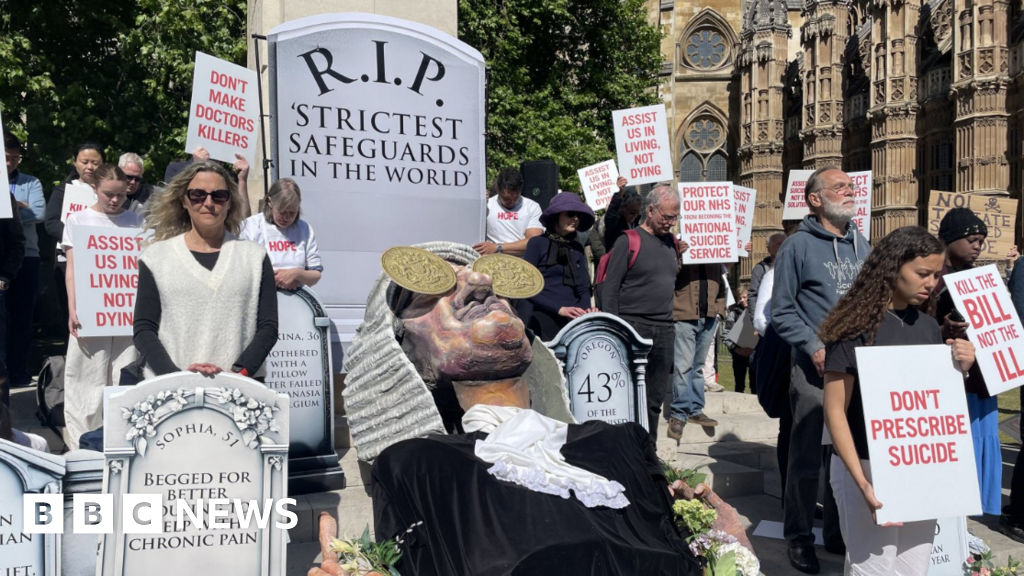
Assisted dying bill 'no hope' of passing unless Lords change approach, warns peerImage Credit: BBC News
Key Points
- •LONDON – A future bill to legalise assisted dying in England and Wales has "no hope" of becoming law unless the House of Lords fundamentally changes its approach to the deeply divisive issue, a senior peer and long-standing proponent of reform has warned.
- •Falconer's Stance: "The issue about assisted dying is very controversial, but ultimately somebody in our constitution has got to decide whether the country should make the change." He framed the issue as a question of democratic legitimacy, implying that the will of the elected Commons should ultimately prevail on such a significant matter.
- •Baroness Meacher's Bill (2021): The most recent significant effort, the Assisted Dying Bill 2021, was introduced in the House of Lords by Baroness Meacher. It passed its second reading but failed to progress to the committee stage due to a lack of government support and parliamentary time, effectively talking it out.
- •Lord Falconer's Bill (2014): Lord Falconer himself introduced a similar bill that made significant progress in the Lords before it, too, was ultimately thwarted by running out of time ahead of a general election.
- •House of Commons Vote (2015): The last time the Commons voted on the issue, MPs overwhelmingly rejected a bill by 330 votes to 118. However, political observers and campaigners believe sentiment has shifted significantly since then, with a new intake of MPs and changing attitudes among established parliamentarians.
Assisted dying bill 'no hope' of passing unless Lords change approach, warns peer
LONDON – A future bill to legalise assisted dying in England and Wales has "no hope" of becoming law unless the House of Lords fundamentally changes its approach to the deeply divisive issue, a senior peer and long-standing proponent of reform has warned.
Lord Falconer, a former Lord Chancellor, cautioned that the legislative process is heading for a constitutional clash, suggesting that repeated blocking by the upper chamber could force a future government to consider using the controversial Parliament Act to push the legislation through.
The stark warning highlights the profound procedural and political deadlock surrounding one of the most sensitive ethical debates in modern British politics. While public support for a change in the law remains high, parliamentary efforts have consistently stalled, primarily within the unelected second chamber.
The Heart of the Matter: A Constitutional Impasse
Lord Falconer's comments place the procedural stalemate at the centre of the debate. Speaking to BBC News, he addressed the potential for a constitutional showdown between the elected House of Commons and the appointed House of Lords.
He argued that if the Commons were to pass an assisted dying bill with a clear majority, only for it to be blocked again by the Lords, the government would face a critical decision.
- Falconer's Stance: "The issue about assisted dying is very controversial, but ultimately somebody in our constitution has got to decide whether the country should make the change." He framed the issue as a question of democratic legitimacy, implying that the will of the elected Commons should ultimately prevail on such a significant matter.
His intervention signals a growing impatience among reformers who see the Lords as an insurmountable obstacle to legislative progress, regardless of sentiment in the Commons or the country at large.
The Legislative Labyrinth: A History of Failed Attempts
The path to legalising assisted dying in the UK is littered with failed private members' bills, most of which have run out of parliamentary time or been defeated in the House of Lords. This history provides crucial context for Lord Falconer's warning.
Proposals have typically sought to allow mentally competent adults, who are terminally ill with a prognosis of six months or less to live, the option of requesting medical assistance to end their lives. Each attempt has ignited intense debate.
-
Baroness Meacher's Bill (2021): The most recent significant effort, the Assisted Dying Bill 2021, was introduced in the House of Lords by Baroness Meacher. It passed its second reading but failed to progress to the committee stage due to a lack of government support and parliamentary time, effectively talking it out.
-
Lord Falconer's Bill (2014): Lord Falconer himself introduced a similar bill that made significant progress in the Lords before it, too, was ultimately thwarted by running out of time ahead of a general election.
-
House of Commons Vote (2015): The last time the Commons voted on the issue, MPs overwhelmingly rejected a bill by 330 votes to 118. However, political observers and campaigners believe sentiment has shifted significantly since then, with a new intake of MPs and changing attitudes among established parliamentarians.
A Constitutional 'Nuclear Option': The Parliament Act
At the core of the controversy raised by Lord Falconer is the Parliament Act. This is a powerful but rarely used piece of legislation that defines the power balance between the two houses.
Using it for a bill of conscience—an issue of morality where party whips are not applied and MPs vote according to their own beliefs—would be a highly unconventional and contentious move.
- The Parliament Acts 1911 and 1949: These acts allow the House of Commons to pass legislation without the consent of the House of Lords. If the Lords rejects a bill passed by the Commons, the Commons can pass it again in the next parliamentary session, and it can then become law. It is traditionally reserved for major government policies that were included in an election manifesto, not private members' bills on ethical issues.
Invoking the Act would represent a major escalation, turning a debate about individual ethics into a constitutional battle over the role and power of the House of Lords.
Navigating the Political Divide
The debate over assisted dying cuts across party lines, creating unusual alliances and deep divisions. Both major parties treat it as an issue of conscience, allowing a free vote.
The current government has remained neutral, stating it would facilitate parliamentary time for a debate if a bill were to gain traction. The Labour Party, under Sir Keir Starmer, has signalled a greater willingness to address the issue, with Starmer personally stating he is in favour of a change in the law and committing to a vote in the next Parliament.
The arguments on both sides are deeply held and well-established.
-
Arguments for Change: Proponents, like the campaign group Dignity in Dying, argue for compassion, individual autonomy, and an end to the suffering of terminally ill people. They point to the current law, which they say forces individuals to suffer against their will, travel abroad to die at significant expense, or take matters into their own hands in a desperate and often traumatic manner.
-
Arguments Against Change: Opponents, including many faith groups and the campaign group Care Not Killing, raise concerns about the sanctity of life and the protection of vulnerable people. They argue that legalising assisted dying could lead to pressure on the elderly, disabled, or those with mental health conditions to end their lives, and that the focus should be on improving palliative care.
What Happens Next?
Lord Falconer's warning serves as a clear signal to both Parliament and the next government that the status quo is becoming untenable for reformers. The legislative pathway remains the primary obstacle.
The next steps will likely be determined by the outcome of the next general election.
-
A New Private Member's Bill: It is almost certain that a new bill will be introduced in the next Parliament, likely originating in the House of Commons this time to test the will of elected MPs.
-
The Lords' Response: If such a bill passes the Commons, the focus will shift squarely to the House of Lords. The chamber will face immense pressure to either allow the bill to pass or risk the constitutional crisis that Lord Falconer has foreshadowed.
-
Government Involvement: While a government-led bill remains unlikely, a future administration could be forced to intervene if the legislative deadlock persists, potentially by establishing a Royal Commission to study the issue or, in a more extreme scenario, by backing the use of the Parliament Act.
Ultimately, the path forward for assisted dying legislation is not just about winning the moral argument, but about solving a complex parliamentary and constitutional puzzle. Lord Falconer's intervention has made it clear that without a new approach from the House of Lords, the debate is destined for a stalemate that could shake the very foundations of Westminster.
Source: BBC News
Related Articles
ARRY Stock Sinks Despite Market Gains: What to Know
Array Technologies (ARRY) stock declined 2.5% in the latest session, contrasting with market gains. Find out why the solar stock fell and what it means for inve
India and the EU clinch the 'mother of all deals' in a histo
Jay Vine Wins Tour Down Under 2026 After Kangaroo Crash
Australian cyclist Jay Vine secures the overall victory at the 2026 Tour Down Under despite a dramatic final-stage crash involving a kangaroo.
Trump's New Defense Strategy: Allies Must Fund Own Security
The Trump administration's new National Defense Strategy realigns US policy, demanding allies assume primary responsibility for their own security and defense c