The Great “Autism Epidemic”: Are We Asking the Right Questions?
The phrase “autism epidemic” sounds like a blockbuster movie tagline, but the reality is far less dramatic and infinitely more interesting. While the CDC has reported a surge in diagnoses, this isn’t a sign of an outbreak. Instead, it’s a testament to our growing understanding of neurodiversity.
So, why the spike in autism rates?
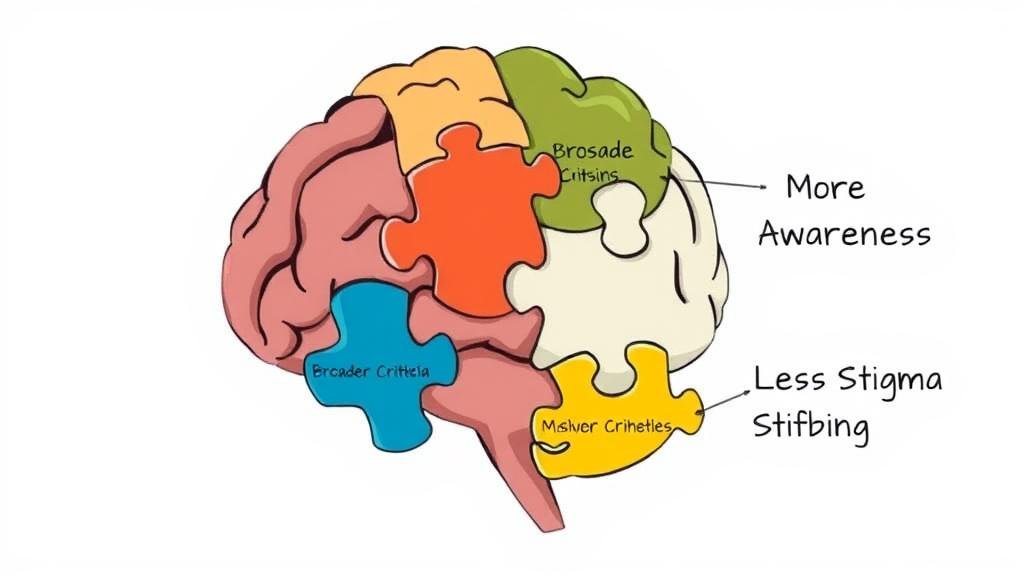
First, the diagnostic criteria for autism have expanded. The Diagnostic and Statistical Manual of Mental Disorders (DSM) now recognizes a broader range of traits, leading to more accurate diagnoses. What was once dismissed as eccentricity is now understood as part of the rich tapestry of the autism spectrum.
Second, awareness has skyrocketed. Parents, educators, and healthcare professionals are now better equipped to recognize the signs of autism, leading to earlier and more frequent diagnoses. This isn’t over-diagnosis; it’s progress.
Finally, the stigma surrounding autism is fading. As society becomes more accepting of neurological differences, more individuals are seeking diagnoses for themselves and their children. A diagnosis is no longer seen as a label of limitation but as a key to self-understanding and community.
The Spectrum Is Not a Monolith
It is crucial to remember that the autism spectrum is not a monolith. The saying, “If you’ve met one autistic person, you’ve met one autistic person,” holds true. The spectrum is vast, and a one-size-fits-all approach to support is not only ineffective but also harmful.
A Personalized Game Plan for Success

Instead, we need a personalized game plan for every individual. This could include a combination of:
- Speech and language therapy to enhance communication skills.
- Occupational therapy to help manage sensory sensitivities.
- Social skills training to navigate the complexities of social interaction.
By shifting our focus from the sensationalized “autism epidemic” to a more nuanced conversation about acceptance, inclusion, and individualized support, we can create a world where every mind can thrive.