Bank of Japan’s Monetary Policy Shift: A New Era for Interest Rates and the Global Economy

The End of Ultra-Low Interest Rates: A Turning Point for Japan’s Economy
To comprehend the intense focus on the Bank of Japan (BOJ), it’s essential to look back at its recent history. For more than two decades, Japan has maintained ultra-low interest rates, often near-zero or even in negative territory.
This long-standing strategy of unconventional monetary policies was a determined effort to combat persistent deflation. The primary objective was to stimulate the economy by making borrowing cheaper, thereby encouraging spending and investment. While this policy made the Japanese yen a favorite for carry trades, rising inflation is now forcing a re-evaluation of this approach. The world is watching to see if the BOJ will finally pivot away from its low-rate stance.
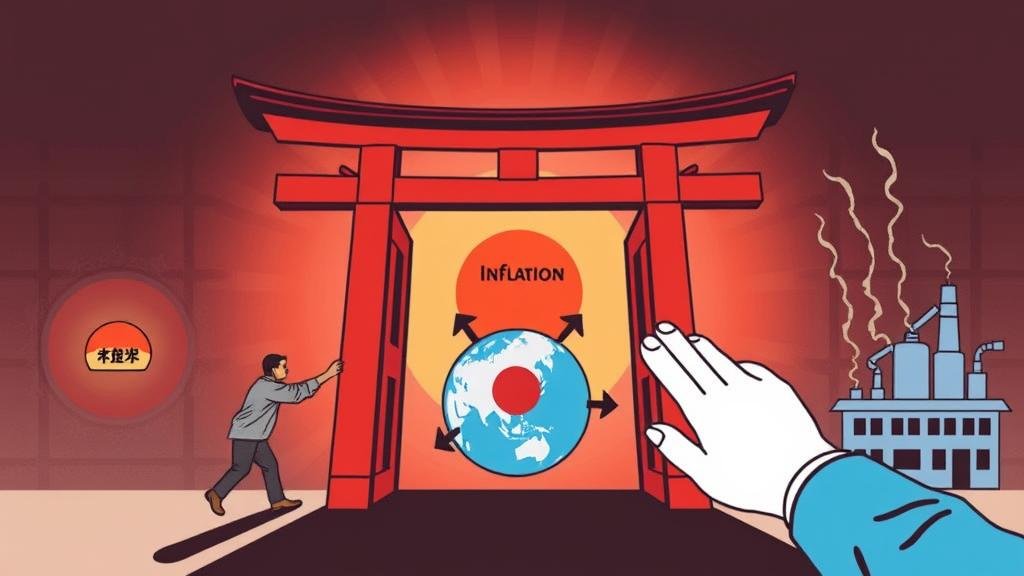
Governor Ueda’s Hawkish Stance: A Shift in Monetary Policy
The recent market buzz centers on statements from Bank of Japan Governor Kazuo Ueda. In what is being widely interpreted as a “hawkish pivot,” Governor Ueda announced that the BOJ will assess the advantages and disadvantages of raising interest rates. This signaled a significant shift, suggesting that a rate hike is now a realistic possibility in Tokyo.
Further complicating the picture, Governor Ueda expressed concern about the rapid rise in long-term rates. While this may seem contradictory, it is a strategic move to acknowledge and manage market expectations. By signaling a potential rate hike while also showing caution, the BOJ is attempting to guide the market toward a soft landing. As a result, many analysts are now anticipating a rate hike as early as December.
Market Reactions: Yen Appreciation and Surging Bond Yields
Financial markets have responded swiftly to the BOJ’s shifting rhetoric. Yields on Japanese government bonds (JGBs) have risen sharply, indicating that the cost of borrowing for the government and corporations is increasing. This is a critical development for Japan’s economy, as it directly impacts national debt and corporate financing.
Simultaneously, the yen has strengthened considerably. A stronger yen benefits consumers by increasing their purchasing power for imported goods, but it poses a challenge for export-oriented companies like Toyota, whose products become more expensive for foreign buyers. This tension has created a tug-of-war in the financial markets, with the yen currently gaining the upper hand.
The Driving Forces Behind the Policy Shift
The Bank of Japan’s potential shift in monetary policy is not occurring in isolation. Several key factors are driving this change.
- First, inflation has finally returned to Japan. After years of struggling to achieve price stability, the BOJ is now facing a new reality. The central bank appears to view this as a positive development, a sign that its long-term efforts to stimulate the economy are bearing fruit.
- Second, global economic trends are exerting pressure on the BOJ. Major central banks around the world have been aggressively hiking interest rates to combat inflation. If Japan continues to maintain its zero-rate policy, the yen could weaken further, leading to higher import costs.
- Finally, there is a growing concern that the era of ultra-low rates has created a “zombie” economy, where uncompetitive companies are kept afloat by cheap credit. This has led to a consensus that a policy shift is necessary for long-term economic health.
Expert Analysis: What to Expect from the Bank of Japan
The upcoming BOJ meeting is poised to be a landmark event for global monetary policy. While no outcome is certain, a rate hike appears increasingly probable.
We anticipate a modest initial increase of 15-25 basis points. This would be a symbolic move, signaling a policy shift without triggering a market shock. The BOJ is likely to accompany this with reassurances that it is not embarking on an aggressive tightening cycle.
Another potential move is an adjustment to its yield curve control (YCC) policy. This tool, which the BOJ uses to manage long-term interest rates, is a cornerstone of its unconventional monetary policies. Any change to YCC would represent a fundamental shift in the rules of the game. Governor Ueda is facing a critical decision that will have far-reaching implications.
The Global Impact of Japan’s Rate Hike
Why should the world care about a potential rate hike in Japan? For years, Japan has been a major source of global capital. With low returns available domestically, Japanese investors have poured trillions of dollars into foreign assets, including U.S. stocks and Australian bonds.
If interest rates in Japan rise, even slightly, a portion of this capital may flow back home. This “great repatriation” could have a significant impact on global financial markets, potentially leading to a decline in stock and bond prices. Countries like the United States and Australia, which have benefited from Japanese investment, could feel the effects most acutely.
A New Chapter for Japan’s Economy
The economic landscape in Japan is changing. Governor Kazuo Ueda has signaled a potential end to the country’s long era of ultra-cheap money, setting the stage for a historic shift in monetary policy.
The next BOJ meeting will be a critical moment not just for Japan, but for the entire global economy. The world is watching to see if the central bank will finally join the global trend of rate hikes or maintain its unique course a while longer. Whatever the decision, we will be here to provide in-depth analysis of the outcome.