Labour's Budget 2025: Best & Worst Case Scenarios
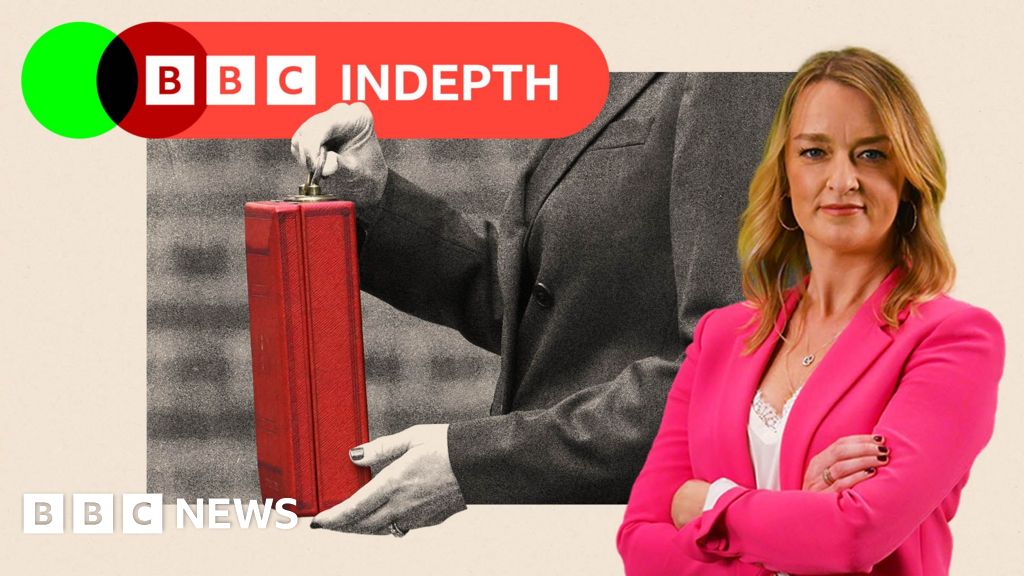
Budget 2025: What's the best and worst that could happen for Labour?Image Credit: BBC Business (Finance)
Key Points
- •LONDON – Chancellor Rachel Reeves's first Autumn Budget was a high-wire act, designed to calm a fractious party and signal a new direction for a government struggling under the weight of public dissatisfaction and internal dissent. With significant tax rises and a bold expansion of the welfare state, the Labour administration has placed a high-stakes bet on a new economic and political course. The immediate market reaction was one of relief, but with daunting economic forecasts and persistent political risks, the government's path forward is balanced on a knife's edge.
- •Welfare System Overhaul: The government's flagship social policy is the decision to scrap the two-child limit on benefit claims, a move long demanded by the party's left wing and anti-poverty campaigners.
- •Cost of Living Support: To address immediate household pressures, the Budget includes measures to ease energy bills and implement a freeze on rail fares.
- •Significant Tax Increases: The fiscal plan is underpinned by tax rises projected to total £26 billion. This includes the effect of fiscal drag, which is expected to pull over a million people into paying income tax for the first time or into a higher tax bracket.
- •Forthcoming Strategy: A long-awaited national strategy on child poverty is expected to be published by the end of the week, reinforcing the government's focus on redistribution.
Budget 2025: What's the best and worst that could happen for Labour?
LONDON – Chancellor Rachel Reeves's first Autumn Budget was a high-wire act, designed to calm a fractious party and signal a new direction for a government struggling under the weight of public dissatisfaction and internal dissent. With significant tax rises and a bold expansion of the welfare state, the Labour administration has placed a high-stakes bet on a new economic and political course. The immediate market reaction was one of relief, but with daunting economic forecasts and persistent political risks, the government's path forward is balanced on a knife's edge.
This Budget arrives just 16 months after Labour secured a commanding majority in the July 2024 general election. That victory, however, gave way to a period of governance described by insiders as "eventful at best, chaotic at worst." Prime Minister Keir Starmer has struggled to contain backbench rebellions and articulate a clear vision, fuelling anxiety within his own ranks about his leadership.
The measures announced by the Chancellor are therefore a dual-pronged strategy: to re-assert core Labour values to unify the party, and to attempt to stabilise an economy grappling with high debt, stubborn inflation, and sluggish growth. The coming months will reveal whether this gamble pays off or simply postpones a deeper crisis.
The Chancellor's Fiscal Prescription
The Budget introduced a raft of measures that fundamentally redraw the lines of government spending and taxation. The core components aim to provide targeted support while raising revenue to manage the nation's substantial debts.
- Welfare System Overhaul: The government's flagship social policy is the decision to scrap the two-child limit on benefit claims, a move long demanded by the party's left wing and anti-poverty campaigners.
- Cost of Living Support: To address immediate household pressures, the Budget includes measures to ease energy bills and implement a freeze on rail fares.
- Significant Tax Increases: The fiscal plan is underpinned by tax rises projected to total £26 billion. This includes the effect of fiscal drag, which is expected to pull over a million people into paying income tax for the first time or into a higher tax bracket.
- Forthcoming Strategy: A long-awaited national strategy on child poverty is expected to be published by the end of the week, reinforcing the government's focus on redistribution.
Best Case: A Path to Stability and Purpose
For the government, the most optimistic outcome is that this Budget marks a turning point, calming both internal politics and external market nerves.
Restoring Party Unity
The decision to remove the benefit cap has provided a significant morale boost for Labour MPs after months of discontent. A government source described the move as a "restatement of values, something that MPs wanted to see, government being more bold about what it believes in." By delivering a policy championed by figures across the party—from the traditional left to cabinet ministers like Bridget Phillipson—the leadership has bought crucial goodwill. While the policy lacks universal public support, it provides the government with a clearer, more coherent identity, making it easier to manage its large but restless majority. Another government official noted, "there'll be a body language change and we are going to enjoy the fight."
Securing Business and Market Confidence
The most immediate success of the Budget was the lack of a negative market reaction. For a government reliant on borrowing from international investors, this stability is paramount. Business leaders, weary of political turmoil, are cautiously optimistic. "Best-case scenario is this gives stability - the government can crack on, and we see an uptick [in the economy]," one business leader commented. The hope is that a period of political calm will encourage businesses to unlock investment, even in the face of higher taxes. The CEO of one FTSE 100 firm acknowledged the scale of the tax burden but concluded that the Budget could "settle things down." He added, "Twenty-six billion of extra tax is not normal, but maybe it is time to cut them some slack."
A Reprieve for the Prime Minister
Politically, the Budget has, for now, shored up Keir Starmer's position. The primary goal is to improve the government's standing ahead of a challenging set of local and regional elections in May. According to one government member, the best case "has to be an uptick in the polls and a stronger message for May." By calming the party, the Budget has averted, or at least delayed, an immediate leadership crisis.
Worst Case: A Fragile Truce on Shaky Ground
Despite the guarded optimism in Westminster, significant economic and political headwinds threaten to derail the government's plans.
Economic Realities and Public Opinion
The positive political narrative runs contrary to the stark economic forecasts and the initial public reaction.
- Squeezed Households: Growth in real household disposable income—a key measure of spending power—is projected to be "dismal."
- Rising Inflation: The Office for Budget Responsibility now expects inflation to be higher this year than previously forecast, eroding the value of wages and savings.
- Taxpayer Impact: The tax changes will directly impact millions of households, a fact that is unlikely to generate public cheer. Early opinion polls suggest the Chancellor's plans have been poorly received by the wider electorate.
A Return to Political Mismanagement
The newfound sense of discipline proved short-lived. The ink was barely dry on the Budget documents when the government was embroiled in a new political controversy over a partial reversal of a commitment to expand workers' rights. The timing baffled many within the party. "In terms of managing your party, why do it this week? You'd calmed everyone down," one exasperated senior Labour figure remarked. This unforced error suggests the government's underlying issues with strategic discipline and party management have not been resolved, undermining the very stability the Budget sought to create.
The Looming Electoral Test
The ultimate test of the Budget's success will be the "mega set of elections" in Scotland, Wales, and England next May, where Labour is widely expected to suffer significant losses. The Budget has not materially changed this expectation. The grim joke circulating among party insiders is that "the best-case scenario for the PM is that he gets to May, and then there is a failed challenge." This highlights the fragility of the Prime Minister's position and the immense pressure riding on the next six months.
What Happens Next?
The 2025 Budget has set two divergent paths for the Labour government. One leads towards renewed political purpose and a stable, if slow, economic environment. The other leads back to the infighting, economic pain, and political chaos that has defined much of its first term.
The Prime Minister will seek to build momentum with a major speech on Monday, framing the Budget's welfare changes as a moral and economic imperative. The subsequent release of the child poverty strategy will further test the government's ability to maintain a coherent and positive message. For businesses, investors, and the public, the key question remains: has this Budget bought the government anything more than time? The answer will determine the UK's economic and political trajectory for the foreseeable future.
Source: BBC Business (Finance)
Related Articles
ARRY Stock Sinks Despite Market Gains: What to Know
Array Technologies (ARRY) stock declined 2.5% in the latest session, contrasting with market gains. Find out why the solar stock fell and what it means for inve
India and the EU clinch the 'mother of all deals' in a histo
Jay Vine Wins Tour Down Under 2026 After Kangaroo Crash
Australian cyclist Jay Vine secures the overall victory at the 2026 Tour Down Under despite a dramatic final-stage crash involving a kangaroo.
Trump's New Defense Strategy: Allies Must Fund Own Security
The Trump administration's new National Defense Strategy realigns US policy, demanding allies assume primary responsibility for their own security and defense c