China’s Ascendancy in the Semiconductor Industry: Why the Nvidia Chip Deal is a Minor Plot Point
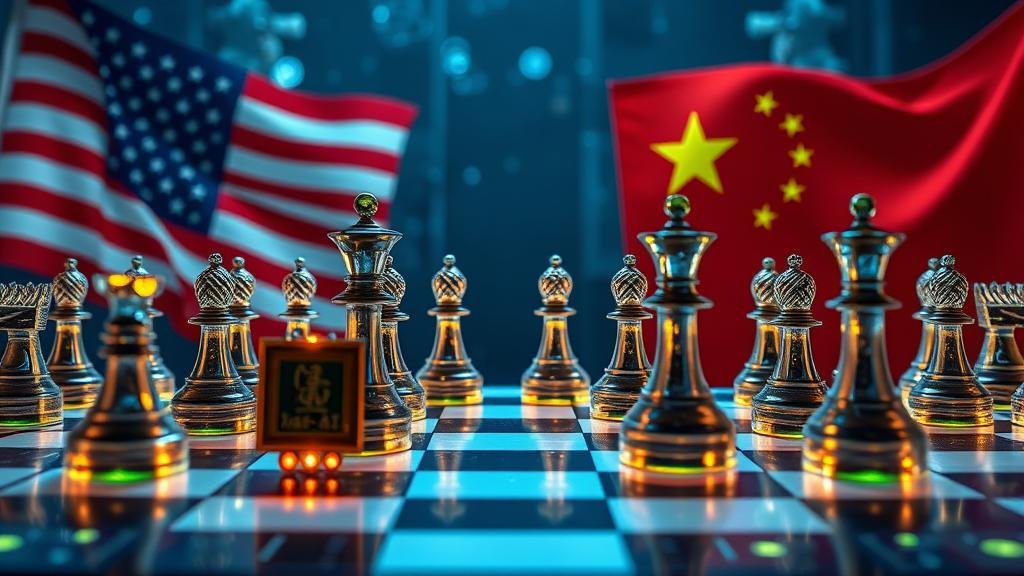
In the high-stakes world of global technology, the silicon chips that power our digital lives have become a central battlefield. The ongoing US-China chip war is a complex narrative of export controls, national security, and the race for technological supremacy. While recent headlines have focused on the White House decision to permit Nvidia to sell its powerful H200 AI chips to China, this move is merely a subplot in a much larger story: China’s determined march toward semiconductor self-reliance.
This isn’t a simple tale of sanctions and trade deals. Long before the latest C-suite drama, Beijing was already executing a long-term strategy, encouraging its domestic tech giants to develop their own sovereign capabilities. This is the story of how China began cultivating its own technological ecosystem, preparing for a future where it no longer depends on foreign innovation.
The Nvidia H200 Deal: A Truce or a Tariff?
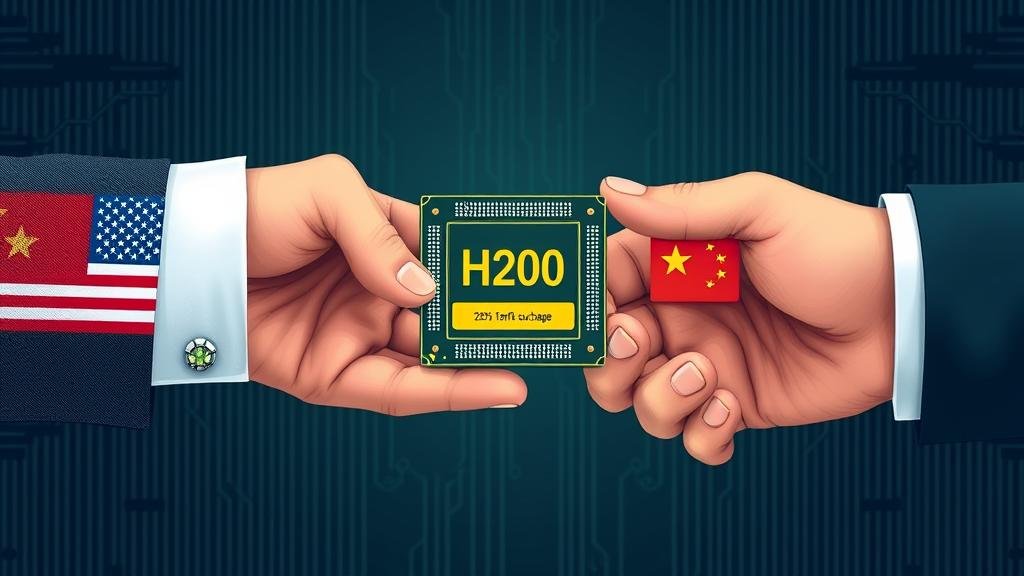
The Nvidia H200 is more than just a chip; it is a critical component for training the advanced artificial intelligence models that are shaping the future. For Nvidia, the leading semiconductor company, regaining access to the vast Chinese market represents a significant financial opportunity.
However, this access comes with a significant caveat: a 25% surcharge. This additional cost will invariably be passed on to Chinese consumers, positioning these American-made chips as a luxury good in the AI hardware market. While the decision might seem like a de-escalation in the US-China chip war, it doubles as a strategic tariff, adding a layer of complexity to the semiconductor industry dynamics.
While the world focused on this transaction, the more critical developments were happening within China itself, where a national strategy for technological independence was already in full swing.
Beijing’s Master Plan: Cultivating a Domestic Semiconductor Industry
For years, China has been on a mission to achieve tech self-reliance. This national strategy is not born of pride, but of strategic necessity. The stringent US sanctions imposed on companies like Huawei served as a clear signal: dependence on foreign technology creates a critical vulnerability.
In response, Beijing has implemented a comprehensive industrial policy to foster its domestic semiconductor industry, including:
- Massive Capital Investment: Injecting substantial capital into research and development to accelerate innovation.
- Favorable Tax Policies: Offering significant tax incentives to domestic chip design and manufacturing firms.
- “Buy China” Mandates: Prioritizing homegrown technology in government procurement to guarantee a stable market for local companies.
This strategy has created the ideal environment for domestic champions to emerge, with Huawei and Cambricon leading the charge.
Huawei’s Ascend Series: A True Competitor Emerges
Cut off from its primary suppliers, Huawei was forced to innovate. The result is the Huawei Ascend series of AI chips, a direct challenge to Nvidia’s market dominance. These processors are designed to handle everything from cloud computing to autonomous vehicles. Notably, the Ascend 910B is widely considered a viable alternative to Nvidia models that are subject to export controls.
With the full backing of the Chinese government, Huawei has a secure, built-in market for its new hardware, establishing it as a formidable player in China’s AI chip race.
Cambricon: The “Fabless” Powerhouse
While Huawei often steals the spotlight, Cambricon represents another critical front in China’s strategy. As a “fabless” company, Cambricon focuses exclusively on designing high-performance AI chips for data centers and edge devices, leaving the manufacturing to partners. With significant state funding, Cambricon’s rise demonstrates that Beijing is diversifying its investments across the entire semiconductor industry ecosystem, building a resilient and multi-faceted domestic supply chain.
Global Implications of Tech Bifurcation
The narrative is shifting. This is no longer just a story about US containment, but about China’s successful creation of a parallel tech ecosystem. The world is moving towards a state of “tech bifurcation,” where two distinct and competing technology standards may emerge. This could lead to:
- Fragmented Supply Chains: Increasing the cost and complexity of manufacturing electronics globally.
- Competing Technology Standards: Forcing countries and companies to choose sides in a new, multi-trillion-dollar tech cold war.
- Accelerated Innovation: Sparking an intense race for technological breakthroughs as competition heats up.
The Road Ahead: A New Geopolitical Reality
The decision to allow the sale of Nvidia’s H200 chips is a fascinating wrinkle, suggesting that a complete decoupling of the US and Chinese tech industries is too complex to execute cleanly. However, it does not alter the fundamental trajectory. Beijing is committed to its long-term vision of technological sovereignty.
The rise of the Huawei Ascend series and Cambricon’s innovative designs are not simply reactions to sanctions; they are the pillars of a strategic, multi-decade plan. For businesses, investors, and consumers, understanding this new, two-track reality is essential.
Executive Summary:
- A Marathon, Not a Sprint: The Nvidia chip deal is a single event in the long-term US-China chip war. China’s goal remains tech self-reliance.
- China’s Homegrown Champions: Backed by state support, companies like Huawei and Cambricon are becoming formidable competitors in the global semiconductor industry.
- A Divided Tech World: Prepare for a future defined by competing tech standards and fragmented supply chains as the global tech landscape continues to bifurcate.