China’s Currency Conundrum: Is a New US-China Trade War Brewing?
Let’s be honest, the term “international currency fluctuations” can be a real conversation killer. But the typically sleepy world of exchange rates just got a jolt of drama. The Chamber of Commerce is raising concerns about China’s currency, the yuan, which is currently in a nosedive. The big fear? That its fall could trigger a sequel to the US-China trade war that nobody wants to see.
Let’s break down what this currency clash is all about, minus the heavy financial jargon.
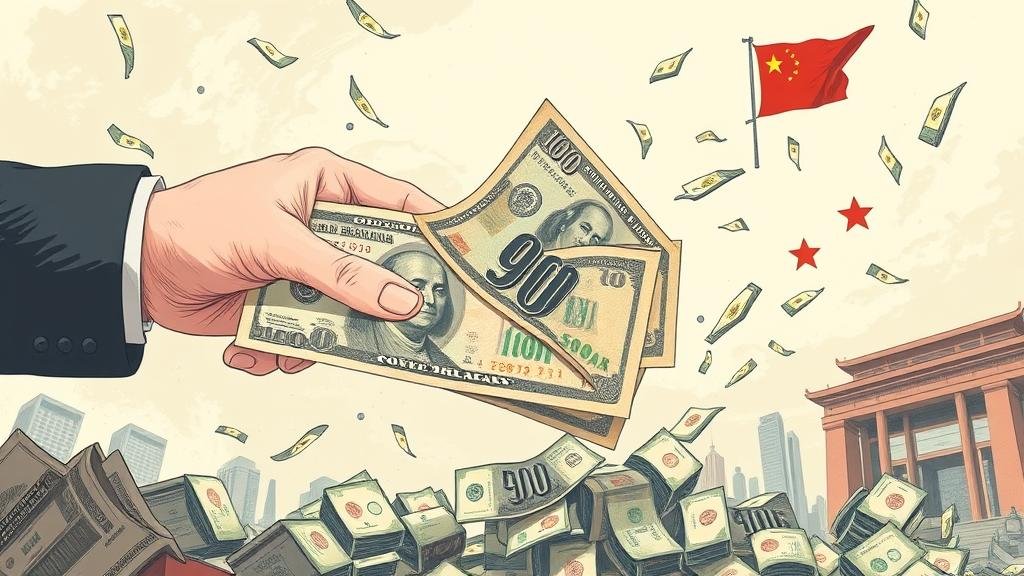
The Story of the Sinking Yuan
Think of the US dollar as a free-roaming stallion, its value determined by market winds. The Chinese yuan, however, is more like a prized pony on a short, government-held leash. The People’s Bank of China (PBOC) “tightly manages” it, dictating its every move.
Lately, that move has been a stumble.
This devaluation makes Chinese-made products cheaper for international buyers, which sounds like a win for consumers. But it also gives China’s exports an enormous competitive edge. As a result, their trade surplus recently soared past the $1 trillion mark for the first time. While a devalued currency can stimulate an economy, it often looks like an unfair tactic to global partners. Many now see an undervalued yuan as a form of cheating.
The Chamber of Commerce Sounds the Alarm
The Chamber of Commerce, a major voice for businesses, is now signaling that this currency situation is a serious problem. As reported by the Financial Times, they’re warning that an undervalued yuan could provoke international backlash.
The reasoning is straightforward: when one country is perceived to be artificially depressing its currency to gain an export advantage, other nations tend to get frustrated. It’s the economic version of breaking the rules in a friendly game. This can lead to retaliation in the form of protectionist measures—tariffs, quotas, and other trade barriers. This is the classic recipe for a tit-for-tat trade war, where escalating defenses damage the global economy.
Why Is the Yuan Falling? A Look at Economic Headwinds
It’s not just about China trying to get ahead. The falling yuan is also a massive indicator of China’s significant domestic economic headwinds.
The nation is grappling with a much-publicized real estate crisis, sagging consumer demand, and immense pressure on the government to maintain employment. From this angle, allowing the yuan to weaken is like economic first aid—it eases internal pain by making Chinese products a bargain for the rest of the world. The PBOC is walking a tightrope, trying to guide the yuan downward without sparking a global panic or the very trade war everyone fears. It’s a “delicate balance” that reveals a high-stakes economic gamble.
The Global Ripple Effect: Why Your Wallet Should Be Concerned
So, what are the potential consequences if this currency tension escalates?
- Disrupted Supply Chains: A new trade war could create major bottlenecks in global shipping, leading to shortages and increased operational costs for businesses reliant on Chinese manufacturing.
- Increased Consumer Prices: Tariffs are essentially taxes that get passed on to consumers. That new phone or pair of shoes could see a price hike, straining household budgets.
- Financial Market Volatility: Investors despise uncertainty. A trade conflict would likely trigger a sell-off in the markets, impacting retirement accounts and other investments.
- A Drag on Global Growth: The International Monetary Fund (IMF) has consistently warned that trade wars hinder global growth. Another round would be a significant setback for the post-pandemic economic recovery.
What This Means for You
So, what’s the bottom line for individuals and business owners?
For entrepreneurs, this cloud of uncertainty complicates future planning. Lenders may become more cautious, and access to credit could tighten.
For everyone else, the most immediate impact is on consumer prices. Higher costs mean your money simply doesn’t go as far. This can affect your budget and have knock-on effects on your investments. It’s not a time for panic, but it is a time to pay attention.
The Chamber of Commerce’s warning is a critical heads-up. The world is at a crossroads, with one path leading to stability through dialogue and the other to a damaging trade conflict. We’ll be watching to see which route global leaders choose.