The Rise of the Dollar Store Millionaire: Why Affluent Shoppers are Flocking to Discount Stores
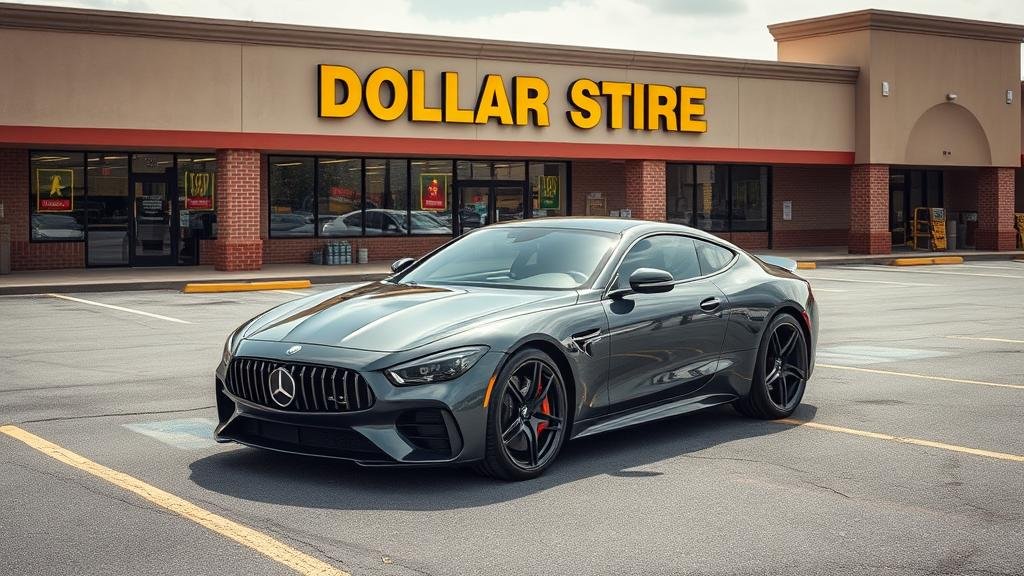
Picture this: you pull into a Dollar General parking lot, and parked next to the 1998 Corolla with a bumper held on by duct tape is a brand-new Lexus. An anomaly? A hilarious mistake? Nope. Welcome to 2024, where the secret’s out: wealthier households and savvy shoppers are flocking to dollar stores.
The old image of the dollar store shopper is about as outdated as my collection of Beanie Babies. (Don’t ask. It’s a sore subject.) This isn’t just a fluke; it’s a full-on seismic shift in how America shops. So, let’s dive into why Chardonnay-sippers are now hunting for bargains and incredible value alongside the rest of us.
The Great Equalizer: Inflation and the Squeeze on “Affordable Luxury”
The number one reason for this shift is a villain we all know and love to hate: inflation. It’s the party guest who double-dips, overstays their welcome, and makes everything more expensive. While it hits everyone, it puts a unique squeeze on folks who aren’t struggling, but are definitely noticing that their favorite “artisan” potato chips now cost more than a gallon of gas.
So what do they do? They “trade down.” Let’s be real, it’s a tactical retreat. They’re hunting for value, and dollar stores are the new, unexpected safari. Before your eyes glaze over like a Krispy Kreme, here’s a stat that’ll make your monocle pop:
Dollar Tree’s CEO said that a whopping 60% of their 3 million new customers earn over $100,000 a year. I know, I had to read that twice, too.
They aren’t just buying ramen and off-brand batteries. They’re grabbing party supplies, a year’s worth of name-brand dish soap, and seasonal decor. Why pay a 40% markup at a big-box store for the exact same paper towels? That’s not frugality; that’s just… math. And yes, this will be on the test.

More Than Just a Dollar: The Glow-Up of the Century
It’s not just that shoppers have changed; the stores have, too. Let’s be honest, the dollar stores of yesteryear sometimes felt like you were one dusty shelf away from contracting a forgotten pirate disease. They’ve had a serious glow-up.
Today’s stores are brighter, cleaner, and organized with a focus on convenience. Dollar Tree even rolled out its “Dollar Tree Plus” sections, with stuff for $3, $4, and $5. *Cue dramatic pause.* It’s their way of saying, “Okay, fine, we can’t sell a whole rotisserie chicken for a buck, but we can still give you a deal on it.” They’re even adding fresh and frozen foods. You feel me? It’s a game-changer.
Meanwhile, Dollar General is shedding its “only found in a town with one stoplight” reputation and popping up in suburbs everywhere, making it way too convenient to stop for cheap candy and surprisingly decent private-label snacks. Hot take: some of their chip brands are better than the originals. Don’t tell Lay’s I said that.
A Psychological Shift: It’s Not “Cheap,” It’s “Smart,” Okay?
There’s also a new mindset in town. The stigma of shopping at a dollar store has evaporated. In fact, it’s been replaced by a weird kind of flex. Being a savvy shopper is now a badge of honor. It’s no longer about being “cheap”; it’s about being “smart” and frugal. My 7-year-old (hypothetically, of course) asked if I ever stop talking about good deals and money-saving hacks. I said “never.”
Wealthier shoppers are realizing that every dollar they save on toilet paper is a dollar they can put toward a vacation, a ridiculously expensive coffee machine, or therapy to deal with the stresses of modern life. It’s a strategy.
This is especially true for millennials, who are now running the world (or at least, most of the HR departments). We’re pragmatic. We’re not brand-loyal just for the sake of it. If we can get the same result for less money, we’re doing it. And we’ll probably post about it on Instagram with the caption #budgetwin. Still reading? Wow. You’re officially my favorite.
The Data Doesn’t Lie: Here Comes the Science Bit
“That’s all very witty,” you might be thinking, “but show me the receipts.” Okay, fine. Here’s the boring part. Just kidding—it’s actually kinda cool. Or maybe I’ve been doing this too long.
According to Newsweek, sales from Americans earning over $100k have given Dollar Tree a major boost. And The Financial Times noted that the “affordability crunch pinches consumers” across the board. The numbers confirm that even people who aren’t living paycheck-to-paycheck are feeling the squeeze and trimming the fat from their budgets. It’s a universal “heck no” to paying $7 for a box of cereal.
What This Means for the Future of Retail
This whole trend has basically thrown a wrench into the retail Hunger Games. Traditional grocery and big-box stores are suddenly looking over their shoulders at the little guys. They can no longer just compete with each other on who has the fanciest deli counter.
To survive, they’ll have to get scrappy—beefing up their own private labels, getting more competitive on prices, and maybe, just maybe, not charging a small fortune for a bottle of ketchup. For the dollar stores, the challenge is to keep their new, wealthier clientele happy without forgetting the loyal customers who got them there. It’s a tightrope walk, but one they seem thrilled to be on.
The Takeaway: A New Era of Value-Conscious Shopping
The rise of what I’m calling the “dollar store millionaire” is a wild story about inflation, anxiety, and the surprisingly simple power of a good deal. It proves that whether you’re counting pennies or managing a portfolio, nobody likes to feel ripped off.
As the economy continues to do its… thing, we’ll probably see even more of this bougie-on-a-budget shopping. And who can blame them? When you find a good deal, it feels like you’ve outsmarted the system. And that feeling? Priceless. Or, you know, about $1.25.