Trump Warns UK: Dealing with China is 'Very Dangerous'
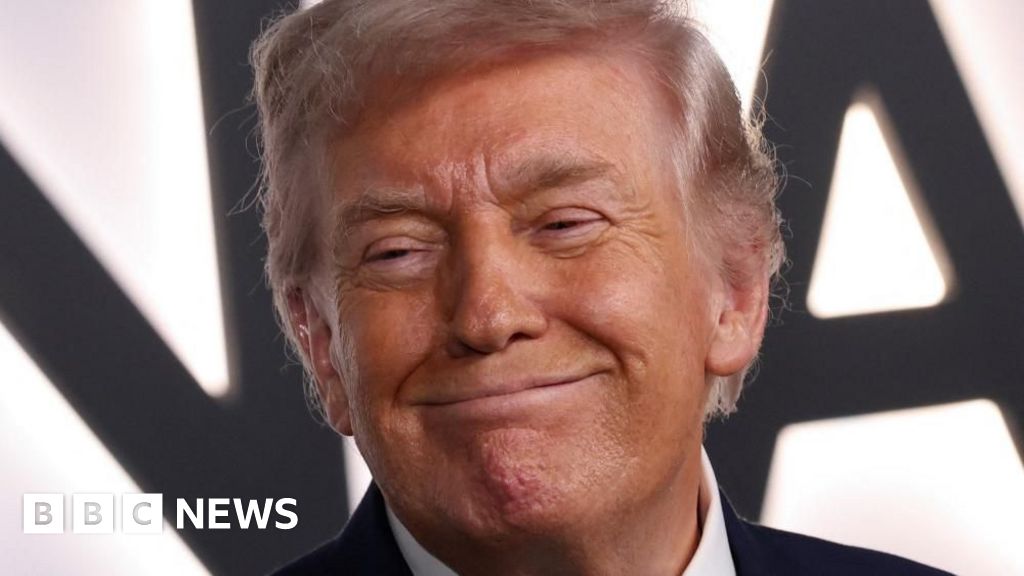
Donald Trump says 'very dangerous' for UK to deal with ChinaImage Credit: BBC News
Key Points
- •LONDON – Former US President Donald Trump has issued a stark warning to the United Kingdom, labelling its economic engagement with China as "very dangerous" and urging a decoupling. The comments, made during a recent interview, have reignited a fierce debate within Western capitals about the strategic tightrope of managing relations with Beijing, forcing governments and corporations to weigh immense economic opportunities against mounting security concerns.
- •The Public Stance: The US has consistently used punitive tools to counter China's influence. This includes the sweeping tariffs initiated during the Trump administration, sanctions on Chinese tech firms like Huawei, and the Biden administration's CHIPS Act, designed to onshore semiconductor production and limit China's technological advancement.
- •The Pragmatic Reality: Despite the tough talk, the US-China economic relationship remains one of the largest in the world. High-level diplomatic visits, such as those by Secretary of State Antony Blinken and Treasury Secretary Janet Yellen, underscore a commitment to maintaining communication and managing the rivalry to avoid open conflict. A potential transactional "deal," whether on trade imbalances or climate change, remains a constant possibility.
- •Economic Interdependence: China is one of the UK’s largest trading partners. It is a critical market for British exports, from luxury cars to financial services, and a primary source of imported consumer goods. Chinese investment has also been significant in UK infrastructure, including the controversial stake in the Hinkley Point C nuclear power station.
- •The Security Alliance: As a key member of the Five Eyes intelligence-sharing network and a signatory to the AUKUS security pact with the US and Australia, the UK is under immense pressure to align its security policies with Washington. This was most evident in the government's eventual decision to ban Huawei from its 5G network after sustained US lobbying.
Donald Trump says 'very dangerous' for UK to deal with China
LONDON – Former US President Donald Trump has issued a stark warning to the United Kingdom, labelling its economic engagement with China as "very dangerous" and urging a decoupling. The comments, made during a recent interview, have reignited a fierce debate within Western capitals about the strategic tightrope of managing relations with Beijing, forcing governments and corporations to weigh immense economic opportunities against mounting security concerns.
This transatlantic pressure comes at a critical juncture, as analysts note a potential divergence between American rhetoric towards its allies and its own pragmatic approach to China. While Washington sanctions and reprimands others for their ties to Beijing, experts anticipate the US itself may pursue a strategic deal with China, creating a complex and potentially perilous landscape for allies like the UK.
A 'Do As I Say, Not As I Do' Dilemma
The core tension for UK policymakers and business leaders lies in the perception of a dual-track US strategy. On one hand, Washington actively discourages its partners from deep economic integration with China. On the other, it maintains its own complex economic relationship and open channels for high-stakes negotiations.
This dynamic was highlighted by market analyst David Torrens. "The US are maybe sanctioning and reprimanding other economies and slapping tariffs on countries that are doing deals with China but the US itself may well do a deal with China. In fact we expect that this year," Mr. Torrens told the BBC.
This analysis points to a fundamental pragmatism in US foreign policy that could leave allies in a difficult position.
-
The Public Stance: The US has consistently used punitive tools to counter China's influence. This includes the sweeping tariffs initiated during the Trump administration, sanctions on Chinese tech firms like Huawei, and the Biden administration's CHIPS Act, designed to onshore semiconductor production and limit China's technological advancement.
-
The Pragmatic Reality: Despite the tough talk, the US-China economic relationship remains one of the largest in the world. High-level diplomatic visits, such as those by Secretary of State Antony Blinken and Treasury Secretary Janet Yellen, underscore a commitment to maintaining communication and managing the rivalry to avoid open conflict. A potential transactional "deal," whether on trade imbalances or climate change, remains a constant possibility.
Navigating the Tightrope: Britain's China Policy
For the United Kingdom, Trump's warning amplifies an already precarious balancing act. The country is caught between its most crucial security partner, the United States, and China, an indispensable engine of global growth and a major economic partner.
The UK government's own stance has evolved dramatically over the past decade, moving from the "Golden Era" of relations under former Prime Minister David Cameron to a more cautious "de-risking" strategy. This shift reflects a growing awareness of the strategic challenges posed by Beijing.
-
Economic Interdependence: China is one of the UK’s largest trading partners. It is a critical market for British exports, from luxury cars to financial services, and a primary source of imported consumer goods. Chinese investment has also been significant in UK infrastructure, including the controversial stake in the Hinkley Point C nuclear power station.
-
The Security Alliance: As a key member of the Five Eyes intelligence-sharing network and a signatory to the AUKUS security pact with the US and Australia, the UK is under immense pressure to align its security policies with Washington. This was most evident in the government's eventual decision to ban Huawei from its 5G network after sustained US lobbying.
-
Domestic Political Pressure: The appropriate stance on China is a subject of intense debate within the UK's political class. A hawkish wing of the ruling Conservative Party advocates for a tougher line, while others caution against a complete economic rupture that could damage the UK's fragile economy.
The Global 'De-Risking' Doctrine
The UK's dilemma is not unique. Across the globe, advanced economies are grappling with the same challenge: how to reduce dependency on China without initiating a full-blown, economically catastrophic decoupling. This has given rise to the doctrine of "de-risking."
Unlike decoupling, which implies a complete separation of economies, de-risking is a more nuanced strategy focused on mitigating vulnerabilities in critical sectors.
-
Targeted Sectors: The focus of de-risking is on areas with clear national security implications. This includes advanced technology (semiconductors, AI, quantum computing), critical raw materials, and strategic infrastructure like telecommunications and energy grids.
-
Supply Chain Diversification: Corporations are actively encouraged, through both market forces and government incentives, to diversify their supply chains away from a sole reliance on China. This has led to increased investment in alternative manufacturing hubs in Southeast Asia, India, and Mexico—a trend known as "friend-shoring" or "near-shoring."
-
Continued Engagement: Proponents of de-risking argue that engagement with China on global issues like climate change, pandemic preparedness, and financial stability remains essential. The strategy aims to build resilience, not to isolate China entirely from the global system.
Market Implications and Future Outlook
For investors and corporate strategists, the ambiguity surrounding Western policy towards China remains a primary source of geopolitical risk and market volatility. Trump's comments, and the potential for his return to the White House, add another layer of uncertainty.
A second Trump administration could see a return to transactional, tariff-heavy policies that could unexpectedly alter the playing field. The possibility that the US could strike its own deal with Beijing, after pressuring allies to take a harder line, is a scenario that boardrooms in London, Berlin, and Tokyo must now seriously consider.
Ultimately, the UK and its allies face a period of sustained strategic challenge. Crafting a coherent China policy requires a delicate, long-term approach that secures national interests without sacrificing economic prosperity. As the US-China rivalry continues to define the 21st-century geopolitical landscape, the ability to navigate this complex relationship will be the defining test of statecraft for governments and a critical risk factor for global markets.
Source: BBC News
Related Articles
ARRY Stock Sinks Despite Market Gains: What to Know
Array Technologies (ARRY) stock declined 2.5% in the latest session, contrasting with market gains. Find out why the solar stock fell and what it means for inve
India and the EU clinch the 'mother of all deals' in a histo
Jay Vine Wins Tour Down Under 2026 After Kangaroo Crash
Australian cyclist Jay Vine secures the overall victory at the 2026 Tour Down Under despite a dramatic final-stage crash involving a kangaroo.
Trump's New Defense Strategy: Allies Must Fund Own Security
The Trump administration's new National Defense Strategy realigns US policy, demanding allies assume primary responsibility for their own security and defense c