EasyJet Ad Banned for Misleading £5.99 Cabin Bag Fee
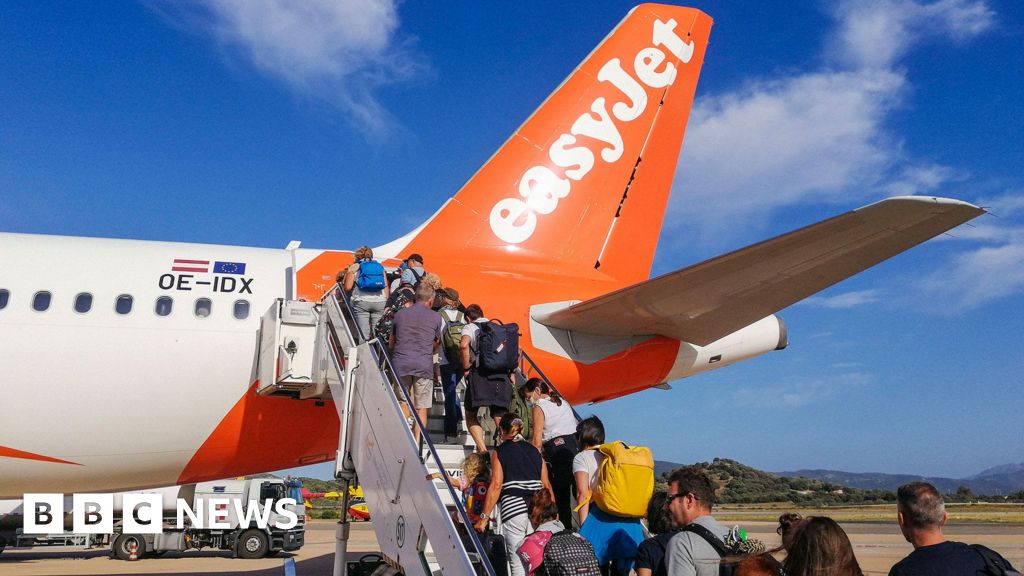
EasyJet ad banned for claiming bags available for £5.99Image Credit: BBC Business (Finance)
Key Points
- •LONDON – Budget airline EasyJet has been formally censured by the UK's advertising watchdog and ordered to cease promoting a "from £5.99" fee for large cabin bags, a ruling that strikes at the heart of the airline industry's lucrative and often controversial ancillary revenue model. The Advertising Standards Authority (ASA) concluded the claim was misleading after the carrier failed to provide substantive evidence that the rock-bottom price was sufficiently available to customers.
- •The Complaint: Which? flagged the claim on EasyJet's website, highlighting a broader industry trend of advertising low initial prices that are inflated by subsequent, often unavoidable, fees.
- •The Finding: The ASA ruled the advertisement was misleading. The "from £5.99" claim created an expectation of availability that the airline could not prove it met, thereby deceiving potential customers about the likely cost of adding a large cabin bag.
- •The Rationale: The watchdog expected to see robust evidence demonstrating that the £5.99 price point was not merely a theoretical possibility on a few obscure routes, but a real and bookable option for a meaningful number of flights. EasyJet did not provide this.
- •The Order: The ASA has instructed EasyJet not to use the specific "from £5.99" claim in its future advertising unless it can hold evidence that the price is widely available.
EasyJet Ad Banned for Claiming Bags Available for £5.99
LONDON – Budget airline EasyJet has been formally censured by the UK's advertising watchdog and ordered to cease promoting a "from £5.99" fee for large cabin bags, a ruling that strikes at the heart of the airline industry's lucrative and often controversial ancillary revenue model. The Advertising Standards Authority (ASA) concluded the claim was misleading after the carrier failed to provide substantive evidence that the rock-bottom price was sufficiently available to customers.
The ruling is a significant victory for consumer advocates who argue that "drip pricing"—where a low headline fare is incrementally increased by a series of additional charges—harms transparency and misrepresents the true cost of travel.
The ASA's Decisive Ruling
The investigation was triggered by a complaint from the consumer rights group Which?, which challenged whether the advertised £5.99 starting price was genuinely attainable for a significant number of passengers. The ASA's findings were unequivocal, stating that consumers would reasonably interpret the claim to mean the price was available across a "significant proportion of flight routes and dates."
EasyJet was unable to substantiate this expectation. The regulator's decision was based on a critical failure by the airline to provide the necessary evidence.
-
The Complaint: Which? flagged the claim on EasyJet's website, highlighting a broader industry trend of advertising low initial prices that are inflated by subsequent, often unavoidable, fees.
-
The Finding: The ASA ruled the advertisement was misleading. The "from £5.99" claim created an expectation of availability that the airline could not prove it met, thereby deceiving potential customers about the likely cost of adding a large cabin bag.
-
The Rationale: The watchdog expected to see robust evidence demonstrating that the £5.99 price point was not merely a theoretical possibility on a few obscure routes, but a real and bookable option for a meaningful number of flights. EasyJet did not provide this.
-
The Order: The ASA has instructed EasyJet not to use the specific "from £5.99" claim in its future advertising unless it can hold evidence that the price is widely available.
EasyJet's Defense and Corrective Action
In its response to the regulator, EasyJet defended its pricing structure, arguing that the claim was not misleading because the £5.99 figure represented the absolute lowest price point for a large cabin bag, and no bags were ever available for less.
The airline contended that the webpage in question was intended to be informational, outlining the range of fees, rather than a direct marketing promotion.
-
Pricing Logic: EasyJet stated the wording was meant to inform customers that £5.99 was the starting point for adding a large cabin bag, a price it claimed was accurate on several routes.
-
Dynamic Pricing Model: The carrier explained that it could not provide specific figures on availability because cabin bag prices are dynamic and fluctuate based on numerous factors, including route, flight date, time of booking, and overall demand.
-
Website's Purpose: EasyJet informed the ASA that the section of its website where the claim appeared was designed for "information purposes," not as a promotional tool to drive sales.
-
Corrective Action: In light of the ruling, EasyJet has amended its website. The page now carries a more general disclaimer: "Fees vary with demand, route, flight date and time of booking. You'll see exact price at time of purchase." The airline maintained that customers always see the final, accurate price during the booking process before committing to payment.
The Bigger Picture: Ancillary Fees and 'Drip Pricing'
This ruling extends far beyond a single advertisement, touching upon the fundamental business model of low-cost carriers (LCCs). For airlines like EasyJet, Ryanair, and Wizz Air, ancillary revenue is not just supplementary income; it is a core pillar of their profitability.
These revenues are generated from a wide array of add-ons to the basic fare.
-
Key Ancillary Streams: These include charges for checked baggage, cabin baggage, seat selection, priority boarding, in-flight food and beverages, and travel insurance.
-
The Financial Engine: For many LCCs, ancillary fees can account for 30-50% of total revenue. This model allows them to advertise very low headline fares to attract customers, with the final transaction value often being significantly higher.
The practice of "drip pricing" has come under increasing scrutiny from both consumers and regulators. Critics argue it makes fare comparison difficult and exploits customers who are drawn in by an "unattainable" low price, only to find the total cost is far more than anticipated. The complaint from Which? explicitly referenced this frustration, calling out airlines for advertising low fares that are then burdened with extra fees.
The Bottom Line: Implications for EasyJet and the Industry
While the direct financial penalty for EasyJet is non-existent—the ASA's primary enforcement tool is the banning of ads and the associated reputational impact—the implications are significant.
-
For EasyJet: The ruling is a reputational blow and forces a change in its marketing language. The airline must now be more cautious in how it presents its fee structure to avoid further regulatory action. It highlights the fine line between competitive marketing and misleading consumers.
-
For the Airline Industry: This serves as a warning shot to all carriers employing similar "from" pricing strategies for ancillary services. Regulators are signaling a lower tolerance for price claims that cannot be rigorously substantiated. Other airlines will likely be reviewing their own advertising to ensure compliance and avoid a similar public rebuke.
-
Next Steps: The ongoing tension between the LCC business model and the demand for greater price transparency is set to continue. This ruling may embolden consumer groups and regulators to look more closely at other forms of drip pricing and complex fee structures across the travel sector. For the foreseeable future, the battle over what constitutes a fair and transparent price is far from over.
Source: BBC Business (Finance)
Related Articles
ARRY Stock Sinks Despite Market Gains: What to Know
Array Technologies (ARRY) stock declined 2.5% in the latest session, contrasting with market gains. Find out why the solar stock fell and what it means for inve
India and the EU clinch the 'mother of all deals' in a histo
Jay Vine Wins Tour Down Under 2026 After Kangaroo Crash
Australian cyclist Jay Vine secures the overall victory at the 2026 Tour Down Under despite a dramatic final-stage crash involving a kangaroo.
Trump's New Defense Strategy: Allies Must Fund Own Security
The Trump administration's new National Defense Strategy realigns US policy, demanding allies assume primary responsibility for their own security and defense c