EU’s Digital Services Act vs. US Big Tech: A Transatlantic Tech War Brewing?
The European Union and the United States, once the power couple of global politics, are now in a messy, public dispute over platform regulation—and the fines are big enough to make a Silicon Valley CEO’s eyes water.
The response from across the pond has been less than congratulatory, with threats of sanctions against EU officials. This escalation in transatlantic tech tensions marks a significant moment in digital sovereignty, pitting two global giants against each other with companies like Google and Meta caught in the crossfire.
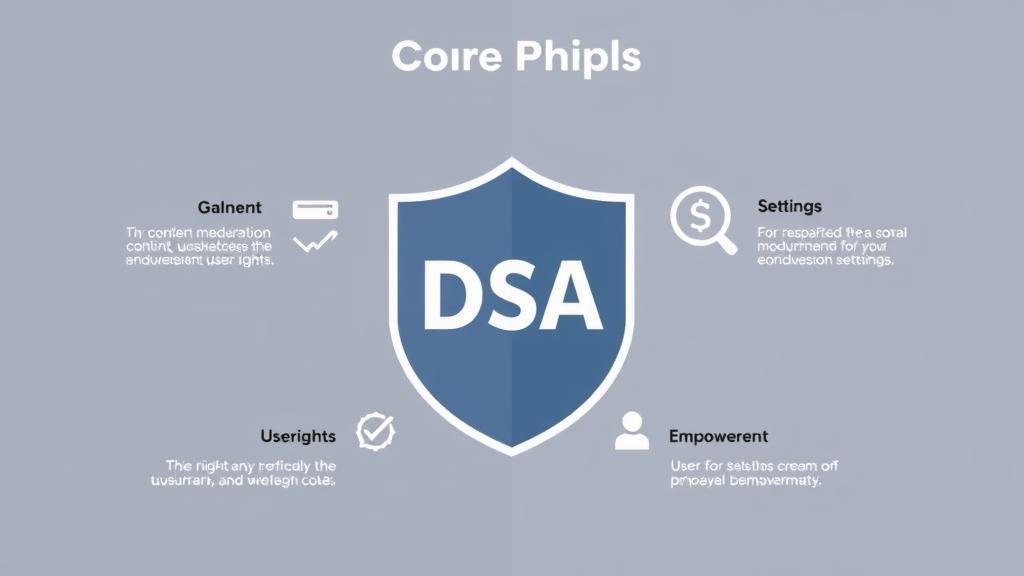
What is the EU’s Digital Services Act (DSA)? A Quick Primer
While European Union legislation might sound complex, the DSA is a pivotal development. It represents the EU’s attempt to establish a safer, more regulated internet.
Its primary objectives are:
- Combat illegal content: Implementing new systems for content moderation to compel platforms to remove everything from hate speech to counterfeit goods.
- Protect user rights: Ensuring users have clear channels for appeal when their content is removed, safeguarding freedom of expression.
- Increase transparency: Requiring Big Tech to disclose how their algorithms and ad-targeting systems operate.
- Empower users: Granting individuals more control over their feed curation and data.
These rules are most stringent for “Very Large Online Platforms” (VLOPs), a list dominated by American tech giants. It’s as if the EU hosted a party exclusively for Californian companies to hand them a list of chores.
The Stick: The DSA’s Billion-Dollar Penalties 💰
The EU is no longer content with fines that Big Tech treats as a rounding error. The DSA carries a significant financial threat.
Up to 6% of Global Annual Turnover
Non-compliant companies can be fined up to 6% of their global annual turnover. For a company like Amazon or Apple, this is a substantial sum. Let’s quantify it:
- Apple: Could face a fine of approximately $23 billion.
- Alphabet (Google): A potential $18 billion penalty.
- Amazon: Up to $34 billion.
- Meta (Facebook): A relatively smaller $8 billion.
These figures are designed to command attention. If a company remains non-compliant, the EU has the authority to issue a temporary ban. They are not bluffing.
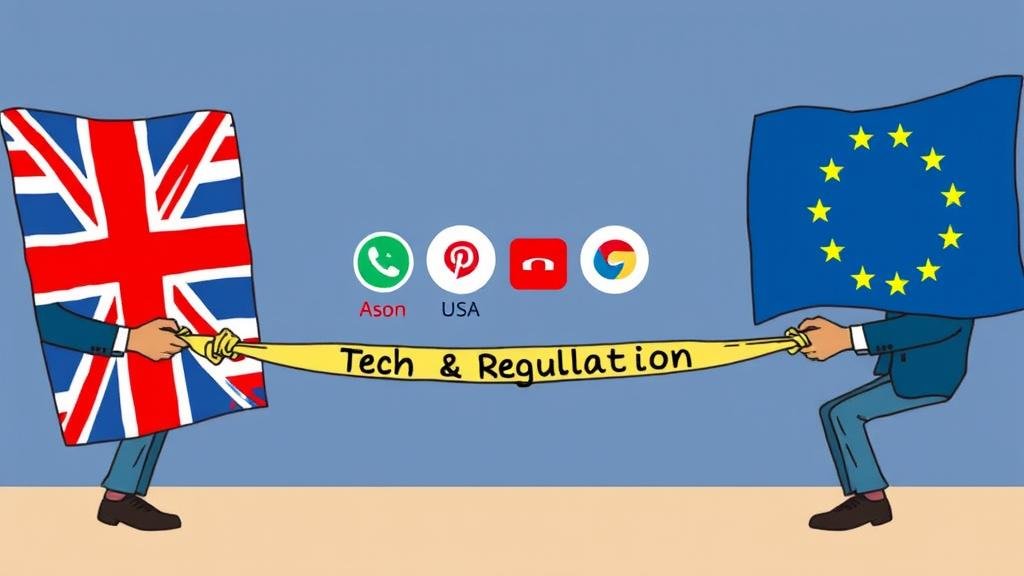
The US Pushback: From Lobbying to Sanctions Threats
The U.S. response to the DSA has been critical. First, intensive lobbying efforts by US officials and Big Tech business lobbies sought to dilute the regulations, a tactic that had some success in delaying the EU’s AI Act.
However, the recent threat of sanctions is an entirely new level of conflict. The rationale appears to be a mix of motives:
- Protecting Economic Interests: The US government views its tech giants as crucial national assets. The DSA is perceived as a direct threat to their profitability.
- First Amendment Concerns: Some in the US worry that the EU’s stringent rules on “illegal content” could infringe upon America’s principles of freedom of expression, censoring content that is legal stateside.
- Sovereignty Disputes: The US objects to the EU applying its laws extraterritorially to American companies.
A Broader Battleground: This Isn’t Their First Fight
This tension has been escalating for years, with previous disputes over digital taxes, data privacy (GDPR was the precursor), and anti-trust violations. The EU has been penalizing Big Tech for anti-competitive behavior for some time. The DSA, along with the related Digital Markets Act (DMA), represents the EU firmly planting its flag and asserting its “digital sovereignty,” even at the risk of antagonizing its most powerful ally.
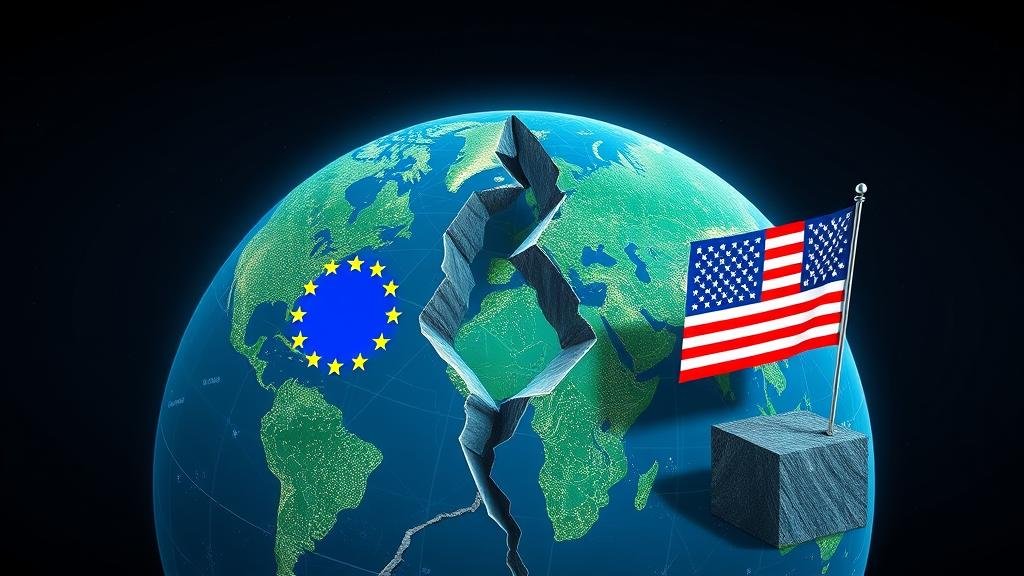
What’s at Stake? More Than Just Billionaire Feelings
The fallout from this US-EU tech conflict could have widespread consequences:
- Economic Impact: A full-blown tech trade war could lead to tariffs and protectionist measures, increasing costs for businesses and consumers.
- The “Splinternet”: We risk a fragmented internet, with different regulatory zones creating a balkanized online world.
- Geopolitical Shifts: While the US and EU are in contention, other global powers, like China, are promoting their own model of a state-controlled internet. A divided West could accelerate this trend.
The Road Ahead: A High-Stakes Game of Chicken
The EU is unlikely to retreat, and the US is unlikely to cease protecting its most valuable companies. This sets the stage for a high-stakes game of regulatory chicken.
Will they find a middle ground, or are we on the brink of a transatlantic tech war? The outcome will undoubtedly shape the future of global tech regulation, the stock market, and the internet as we know it. Grab your popcorn.