EU’s €90 Billion Plan: How Frozen Russian Assets Could Fund Ukraine’s Fight
Imagine finding €300 billion in your rival’s bank account. You can’t touch the principal, but it’s racking up an insane amount of interest. What’s your move? If you’re German Chancellor Olaf Scholz, you don’t buy a fleet of yachts—you draft a plan to fund a war effort.
This is the most audacious financial story of the year, where the European Union is on the verge of a multi-billion euro maneuver to support Ukraine, all backed by the windfall profits from frozen Russian assets. At the heart of it is Germany’s Chancellor, whom the Financial Times dubbed the “driving force” behind this entire operation. Let’s dive into this geopolitical financial thriller.
The Problem: Ukraine Needs a Financial Lifeline
Rebuilding a nation devastated by war requires more than pocket change. The World Bank estimates the cost in the hundreds of billions, a sum that makes you question your calculator’s life choices. With Ukraine’s economy struggling and its infrastructure in ruins, traditional aid feels like a drop in the ocean.
European leaders, faced with this colossal bill, started creatively eyeing the €300 billion in Russian sovereign assets frozen after the 2022 invasion. The big question has been lingering for months: “Can we actually use this money for Ukraine funding?”
The Plan: A Masterclass in Financial Strategy
This is where the plot thickens. Instead of outright confiscating the money—a move that would send international lawyers into a panic—the EU is proposing a more sophisticated approach. The plan, championed by Scholz, is a brilliant example of what could be called financial jujutsu.
Here’s how this EU plan works:
- The frozen Russian billions are parked in banks (primarily Euroclear in Belgium), generating substantial profits from interest and returns—billions of euros annually.
- The EU’s proposal is to seize these windfall profits (which Russia cannot access) and use them as collateral for a massive reparations loan for Ukraine, potentially up to €90 billion.
- And there you have it. Ukraine secures a critical, immediate infusion of cash for its military and government, and the EU finances it without technically raiding Russia’s reserves.
It’s like discovering your deadbeat tenant has a locked safe with a winning lottery ticket inside. You can’t crack the safe, but it dispenses a hundred dollars daily. You’re definitely taking that hundred bucks.
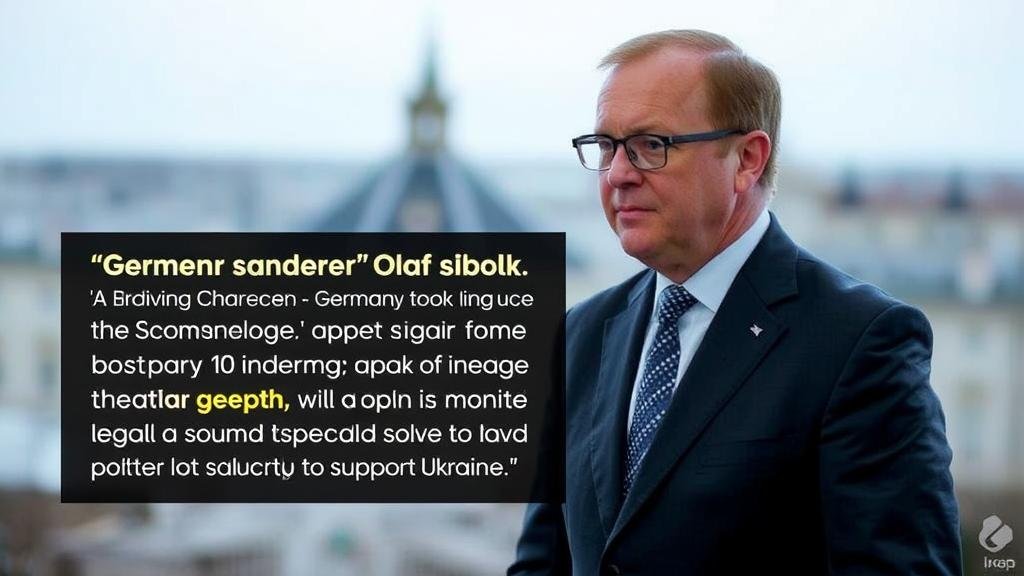
The Architect: Olaf Scholz’s Big Idea
While this scheme sounds like something from a Hollywood heist film, sources confirm that German Chancellor Olaf Scholz has been its quiet architect. He’s been the “driving force” uniting EU members and persuading them that this audacious idea is legally sound.
Why is Scholz so invested? First, he has repeatedly stated that a Russian victory would be a catastrophe for Europe. Second, as a lawyer by trade, Scholz is determined to create a plan that is both bold and legally airtight, avoiding future repercussions. He is expertly navigating the political landscape to find a solution that is both courageous and compliant with international law.
Even his political rival in Germany, Friedrich Merz, has been in Brussels discussing it. When the opposition gets on board, you know something significant is brewing.
The “Is This Legal?” Debate
Of course, this plan has raised some eyebrows. On one side, proponents argue that since Russia caused the damage, it should contribute to the repairs. This isn’t confiscation; it’s repurposing profits.
On the other side, some legal experts and the European Central Bank are cautious. They worry this could set a risky precedent, making other nations hesitant to keep their assets in euros. The “don’t spook the international markets” argument carries some weight.
The Road Ahead: Uniting 27 Nations
Despite the concerns, the plan is rapidly gaining momentum. The G7 has given its approval, and the European Commission is set to release the official proposal. The next challenge is securing the unanimous agreement of all 27 EU member states.
However, the urgent situation in Ukraine is a powerful catalyst. The sentiment in Brussels is that it’s time for bold action, not just another strongly worded statement.
A New Era of Financial Warfare
What does this signal for the future? It shows that sanctions are evolving. If successful, this creates a new model for holding aggressor nations financially accountable. We are moving beyond simply freezing assets to actively leveraging them for economic pressure.
It’s a high-stakes gamble, to be sure. The legal and financial tightrope is thin. But in a world where economic power is as potent as military might, this could be the beginning of a new strategic playbook for Ukraine reconstruction.
A Defining Moment for Europe
Ultimately, this initiative is a test of political will and financial ingenuity. It’s a bold move that could be the game-changer Ukraine so desperately needs.
And at the center of it all is Olaf Scholz, the seemingly conventional leader pushing one of the most daring financial strategies in modern history. The world is watching to see if Europe can pull it off.