EU’s High-Stakes Gamble: A $50B Ukraine Loan, Frozen Russian Assets, and Hungary’s Veto
Ever witnessed a tense negotiation where one dissenting voice could derail the entire plan? Now, picture this on a global scale: the European Union is the group, a crucial $50 billion Ukraine loan is the subject, and Hungary is the dissenting voice threatening to veto the decision. This high-stakes standoff is a pivotal moment in the economic pressure campaign against Russia, and the implications are monumental.
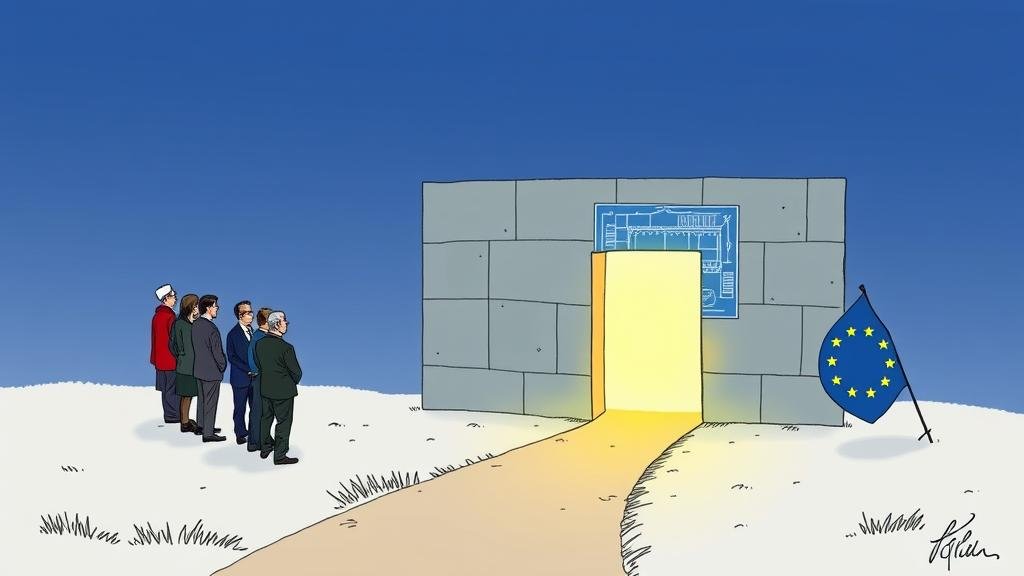
The G7-Backed Plan to Fund Ukraine
The EU is in a state of “panicked urgency.” Ukraine desperately needs financial aid, but the EU’s budget is stretched thin. However, there’s a staggering €210 billion in frozen Russian assets, seized after the 2022 invasion, sitting in a bank account at Euroclear and generating billions in unexpected profits. The G7-backed plan is not to confiscate the assets themselves—a move fraught with legal complexities—but to leverage these “windfall profits” to secure a massive loan for Ukraine. It sounds straightforward, but there’s a major roadblock.
The Hungarian Hurdle: Viktor Orbán’s Veto
Major EU decisions require unanimous agreement, and Hungary, under Prime Minister Viktor Orbán, has been a consistent obstacle. Orbán, who has maintained closer ties with Moscow than any other EU leader, has repeatedly used his veto power to block aid to Ukraine and sanctions on Russia. When it comes to using the profits from frozen Russian assets, Hungary is firmly opposed, citing concerns about setting a dangerous legal precedent and potentially destabilizing the global financial system.
The EU’s ‘Nuclear Option’: Bypassing the Veto
Frustrated by Hungary’s obstruction, EU officials are exploring a “nuclear option” to bypass Hungary’s veto. They’ve found a provision in the EU treaty that would allow them to approve the Ukraine loan with a “qualified majority” vote. This would require the support of at least 15 of the 27 member states, representing 65% of the EU’s population. While legally viable, this move is politically explosive and would be an unprecedented step in the EU’s history.
A Gamble with Global Consequences
The decision to sideline a member state and push through the loan is a high-wire act with significant risks and rewards.
The Upside: A Lifeline for Ukraine and a Strong Message to Moscow
- Massive Financial Injection: The $50 billion would provide a critical lifeline to Ukraine, funding everything from military defense to economic reconstruction.
- Making Russia Pay: The symbolic power of using Russian assets to fund Ukraine’s defense is immense. It’s a powerful way to make Russia pay for its aggression.
- Demonstrating EU Resolve: Successfully implementing this plan would project an image of a strong, unified, and strategic EU.
The Downside: Political, Legal, and Financial Mayhem
- Intra-EU Conflict: Overriding a member’s veto could create deep divisions within the EU, leading to long-term political fallout.
- Legal Quagmire: Russia has vowed to launch “endless” legal challenges, which could tie up the funds for years.
- Financial Instability: The “weaponization” of finance on this scale could have unforeseen consequences. Other countries might become wary of holding their reserves in euros, potentially weakening the currency.
- Russian Retaliation: The Kremlin has threatened to retaliate by seizing Western assets in Russia.
A New Chapter in Economic Warfare
The EU is at a crossroads, weighing a decision that could provide a massive boost to Ukraine but also risk its own internal cohesion and the stability of the global financial system. The coming weeks will be a crucial test of the EU’s resolve and its ability to navigate this complex geopolitical challenge. The world is watching to see whether the EU will take this unprecedented step and enter a new chapter in economic warfare.