Did John Williams Just Signal a December Rate Cut? Why the Fed May Pivot.
Who is John Williams and Why Should You Care?
To grasp why the financial world is buzzing, you need to know about John Williams. Think of him as the Jay-Z of the U.S. central bank: when he speaks, everyone listens. As the president of the Federal Reserve Bank of New York, Williams has one of the most critical jobs in finance. The New York Fed is the main artery of the banking system, and its president holds a permanent voting seat on the Federal Open Market Committee (FOMC)—the powerhouse group that sets interest rates.
While other Fed presidents rotate their voting rights, Williams is always at the decision-making table. He’s also the committee’s vice chairman. So, when he talks, it’s not just an opinion; it’s a strong indicator of the Federal Reserve’s next move. Wall Street hangs on his every word, and this time, they heard something that sounded like a green light for a rate cut.
Decoding the Fed Speak: “Room for a Further Adjustment”
In the cryptic world of central banking, words are chosen with surgical precision. So when Williams mentioned there is “room for a further adjustment” in borrowing costs, it was the Fed equivalent of a major plot twist.
Let’s be clear: “adjustment” is a wildly understated term. In this context, it’s widely interpreted as a clear signal for an interest rate cut. For the past two years, the Fed has been on a single-minded mission to tame stubborn inflation. Williams’s comment suggests a monumental shift in focus toward a weakening labor market. This signals that Fed policymakers are confident the inflation beast is mostly contained, allowing them to focus on the other side of their mandate: keeping the job market stable. His hint that this could happen “in the near term” has the market buzzing about a potential December rate cut.
The Economic Data Driving the Dovish Turn
This change in tone isn’t based on a whim; it’s a direct reaction to a series of economic data points that are finally showing signs of cooling. Here’s what’s making the Fed consider a pivot:
- Cooling Inflation: Recent CPI and PCE reports show that inflation is finally trending down toward the Fed’s 2% target. The aggressive rate hikes have worked, giving officials the confidence to ease up.
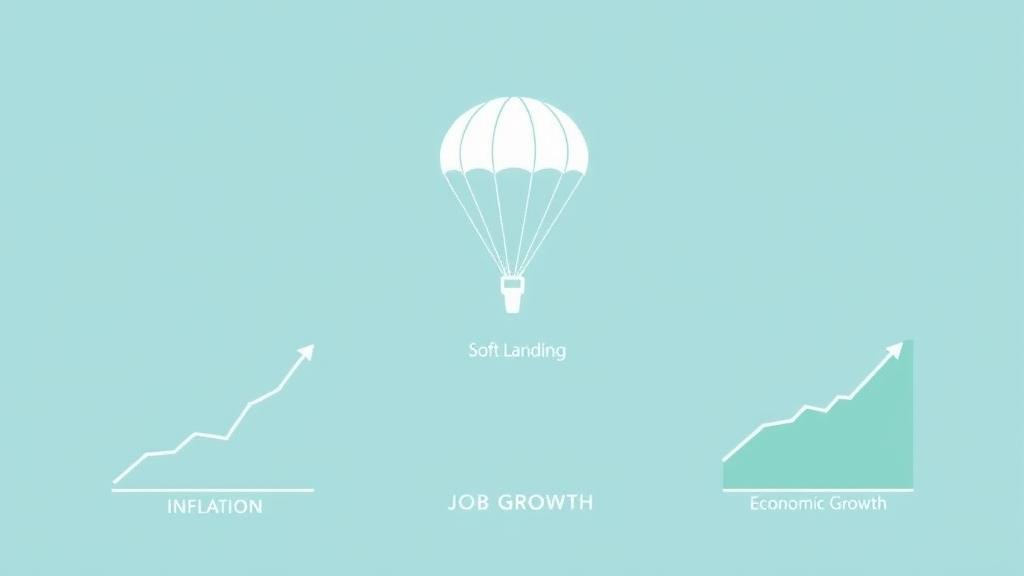
- A Softer Labor Market: The job market, which was running red-hot, is now simmering down. Williams noted that a labor market slowdown is now a more significant concern than inflation, signaling a desire to avoid an economic crash and achieve the legendary “soft landing.”
- Slowing Economic Growth: The overall economy is hitting the brakes, which is what the Fed intended. This slowdown provides the necessary space to lower rates without risking another inflationary spike.
The financial markets reacted with a surge of optimism, betting that the Fed might just pull off a perfect economic landing.
What a Rate Cut Means for Your Wallet
Enough about the Fed’s strategy—let’s talk about what this means for you. A rate cut has real-world implications for your finances.
- Mortgages and Housing: Lower Fed rates typically lead to lower mortgage rates. For prospective homebuyers, this could mean significant savings on monthly payments. If you have an adjustable-rate mortgage (ARM), your payments could soon decrease.
- Credit Card Debt: Most credit card APRs are linked to the Fed’s benchmark rate. A cut would make it cheaper to carry a balance and easier to pay down debt.
- Auto and Personal Loans: Planning to buy a car or finance a project? Lower rates will make auto loans and personal loans more affordable, giving your budget much-needed breathing room.
The Flip Side for Savers
This isn’t good news for everyone. While borrowers rejoice, savers will likely see the high returns on their savings accounts and CDs begin to drop. The era of risk-free 5% yields may be drawing to a close.
What to Watch for Next
While a December rate cut seems likely, it’s not guaranteed. The Fed is still data-dependent. Here’s what to keep an eye on:
- Upcoming Fed Meetings: The FOMC’s December meeting is now the main event. Their updated economic projections will provide a roadmap for the 2024 economic outlook.
- Inflation Reports: The monthly CPI and PCE data are crucial. Continued cooling makes a rate cut more probable.
- Jobs Data: The monthly jobs report will be closely scrutinized to see if the labor market is gently cooling or heading for a freeze.
The bottom line is that John Williams has signaled a potential end to the relentless rate hikes. A new chapter of relief for borrowers could be on the horizon, making now the perfect time to review your finances and prepare for the shift.