Germany’s Diplomatic Balancing Act in the Gaza War
The recent diplomatic mission of German Chancellor Olaf Scholz to Israel highlights the complexities of Germany-Israel relations amidst the ongoing Gaza war. What began as unequivocal support for Israel’s right to defend itself following the October 7th Hamas attacks has evolved into a more nuanced position, reflecting growing international concern over the humanitarian crisis in Gaza.
A Shift in Tone Amidst the Gaza War
Initially, Germany’s solidarity with Israel was resolute. However, as the conflict has intensified, so have concerns from German officials, including Foreign Minister Annalena Baerbock, regarding the welfare of Palestinian civilians. The prospect of a major Israeli offensive in Rafah, where over a million displaced people are sheltered, has significantly amplified these concerns, prompting a public shift in Germany’s tone. This delicate situation underscores the immense international pressure being applied from all sides.
This diplomatic shift is not a formal withdrawal of support but rather a public expression of concern, urging strategic reconsideration. Chancellor Olaf Scholz articulated this by warning that a large-scale Rafah offensive could lead to a devastating loss of life. These warnings have been met with a firm response from Israeli Prime Minister Benjamin Netanyahu, who remains focused on dismantling Hamas and securing the return of hostages.
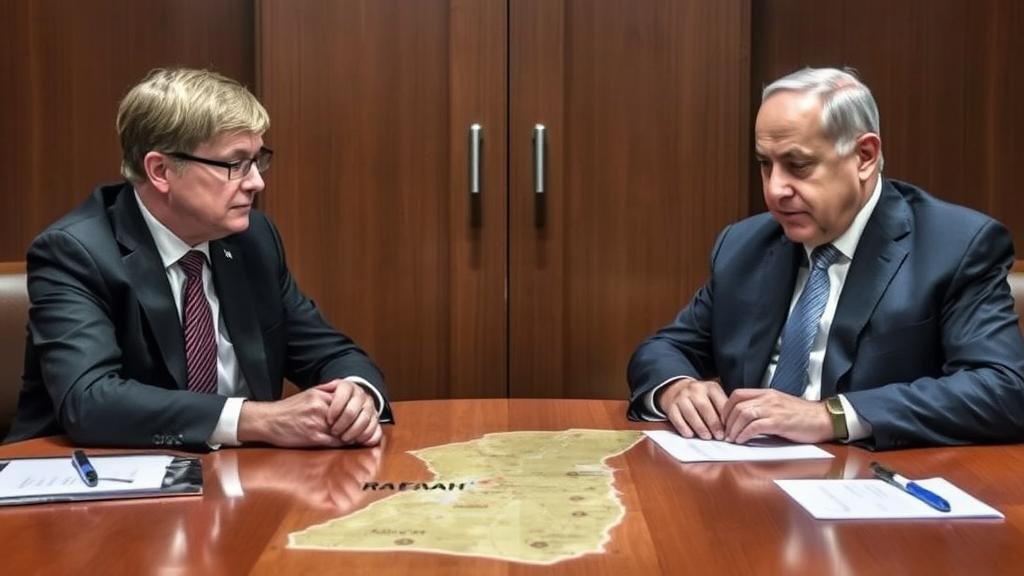
Scholz’s Visit: A High-Stakes Diplomatic Mission
Chancellor Scholz’s visit to Jerusalem was a masterclass in diplomacy, aimed at reaffirming Germany’s support for Israel while simultaneously addressing the escalating humanitarian situation. While public appearances were marked by handshakes and smiles, behind the scenes, conversations were reportedly more direct.
Scholz is said to have emphasized the need for a sustainable ceasefire to facilitate the delivery of humanitarian aid into Gaza. Furthermore, he raised the long-term question of a post-conflict resolution, advocating for a two-state solution—a prospect the current Israeli government has been hesitant to embrace.
Another critical aspect of the discussion revolves around Germany’s role as one of Israel’s primary arms dealers. While armament shipments have continued, the domestic debate in Germany over the appropriateness of these sales is growing, reflecting the complex moral and political dimensions of the conflict.
Staatsräson: A Core Principle Under Pressure
The joint press conference between the two leaders revealed their differing perspectives. Netanyahu reiterated his commitment to achieving “total victory,” underscoring that international pressure would not deter Israel’s military objectives. In contrast, Scholz, while reaffirming Germany’s commitment, spoke of the high costs of the Gaza war and the imperative to protect innocent lives.
At the heart of Germany’s position is the concept of Staatsräson, or “reason of state,” which establishes Israel’s security as a fundamental and non-negotiable principle for Germany due to its historical responsibilities. However, the current humanitarian crisis in Gaza has put this core principle to the test, forcing Germany to navigate a difficult diplomatic tightrope.
The Path Forward: A Continuing Dialogue
Scholz’s visit did not resolve the deep-seated disagreements between the two nations, but it successfully kept the channels of communication open. Germany’s role moving forward will be to continue this delicate balancing act: supporting its ally while advocating for a course of action that mitigates further humanitarian suffering.
Key Takeaways:
- Unwavering Solidarity: Germany’s commitment to Israel’s security remains a core principle of its foreign policy.
- Growing Concerns: The escalating humanitarian crisis in Gaza has led to a significant shift in Germany’s public stance.
- The Two-State Solution: Germany continues to promote the two-state solution as the most viable path to long-term peace.
- A Delicate Balancing Act: Chancellor Scholz’s visit highlighted the diplomatic tightrope Germany must walk between supporting Israel and addressing the humanitarian crisis.
- The Road Ahead: The dialogue continues, reflecting the complex and evolving nature of Germany-Israel relations.