Germany Spearheads EU’s €90 Billion Ukraine Aid Plan Using Frozen Russian Assets
The European Union is advancing a landmark financial strategy, championed by Germany, to provide significant aid to Ukraine. This initiative centers on leveraging the profits generated by frozen Russian assets to secure a substantial loan for Kyiv, bypassing the legal complexities of outright confiscation.
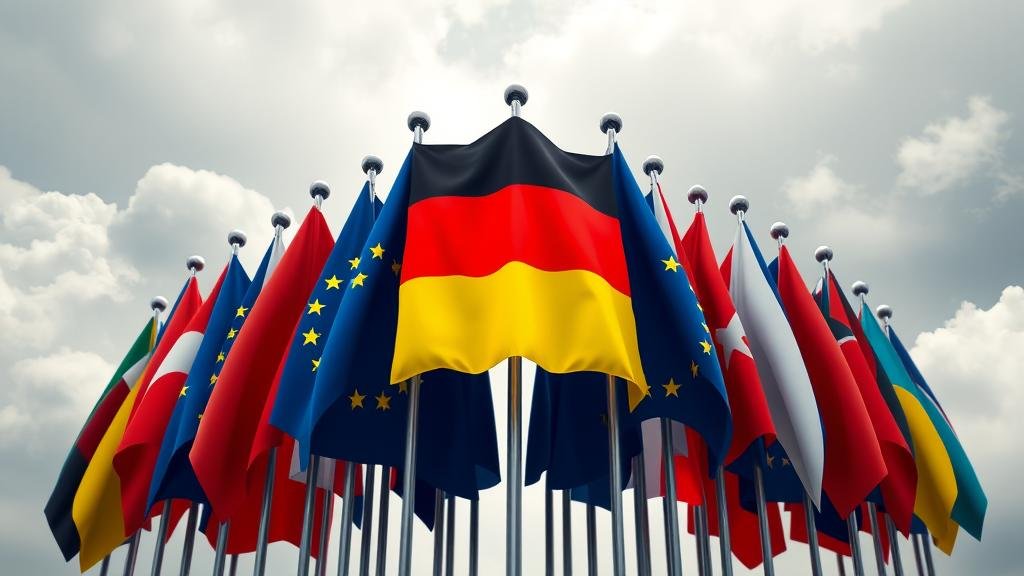
The EU’s Innovative Funding Model: A Reparations Loan for Ukraine
Following Russia’s 2022 invasion, Western nations immobilized approximately €300 billion in Russian sovereign assets. While seizing the principal of these funds presents considerable legal and political challenges, the European Commission has developed an alternative approach. The plan is not to confiscate the assets themselves, but to redirect the windfall profits they generate annually.
These profits will serve as collateral for a large-scale loan to Ukraine, potentially reaching up to €90 billion. This mechanism is designed to create a stable, long-term Ukraine funding stream, moving away from the inconsistent nature of previous aid packages. It offers Kyiv the financial predictability necessary for sustained defense efforts and long-term strategic planning.
Germany’s Leadership in Overcoming EU Divisions
The proposal to use asset-generated profits initially faced resistance from some EU member states, who cited concerns about financial stability and the potential for setting a problematic international precedent. However, Germany has emerged as the central “driving force” to unify the bloc behind the plan.
German Chancellor Olaf Scholz and his officials have worked diligently to address legal concerns and build consensus among member nations. This proactive stance marks a significant evolution in Germany’s foreign policy, positioning it as a decisive leader in Europe’s response to the conflict and its efforts to secure a reparations loan.
How the Ukraine Funding Mechanism Works
The financial architecture of this plan involves several key steps:
- Profit Diversion: The EU will legally mandate that the profits from the frozen Russian assets, a majority of which are held at the Belgian depository Euroclear, are transferred to a dedicated fund.
- Collateralization: These guaranteed annual profits will be used as collateral to secure a multi-billion euro loan from international lenders.
- Disbursement to Ukraine: The full loan amount—potentially up to €90 billion—will be disbursed directly to Ukraine. These funds are designated for a wide range of needs, including military support, public sector salaries, pensions, and critical infrastructure repair.
- Long-Term Financial Stability: This structure provides a continuous and predictable source of income, empowering Ukraine to manage its war-time economy and strategic planning for years to come, independent of ad-hoc aid agreements.
Potential Challenges and Global Precedent
This strategy is not without risks. Russia has condemned the plan as theft and has vowed to launch legal challenges that could persist for years. The success of this move will likely be debated in international courts, testing the limits of current sanctions and international law.
Furthermore, this action sets a significant global precedent. It could establish a powerful new economic tool to deter future aggression by sovereign nations. Conversely, it may lead to global financial instability, as countries could become hesitant to hold foreign reserves abroad, fearing similar seizures. The long-term consequences for the international financial system remain a critical question.
Conclusion: A New Era in Economic Sanctions
The EU’s plan to fund Ukraine using profits from frozen Russian assets is a bold and innovative piece of geopolitical finance. With Germany providing crucial leadership, this initiative is moving closer to becoming a reality. It represents more than just a financial aid package; it is a potential paradigm shift in the use of economic power as an instrument of foreign policy. The world is watching as a new chapter in international finance and sanctions is written, with a distinctly German signature.