Germany and Israel: A Diplomatic Tightrope Walk Over Gaza
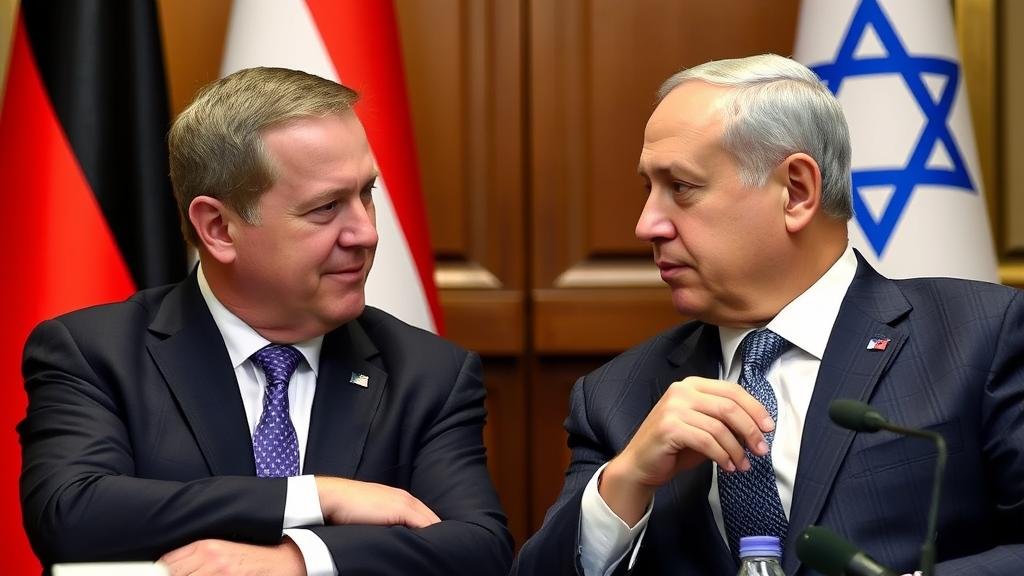
International relations often resemble a high-stakes drama, and the current dynamic between Germany and Israel is the latest gripping episode. A recent disagreement over the Gaza war has strained their usually close ties, prompting German Chancellor Olaf Scholz to make an urgent trip to Tel Aviv. This isn’t just a casual diplomatic chat; it’s a tense negotiation navigating historical obligations and the harsh realities of the present conflict.
A Complicated Friendship Under Pressure
Think of Germany and Israel as best friends with a bond cemented by history. After the horrific Hamas attack on October 7th, Germany was quick to express “unwavering solidarity.” However, as Israel’s military response in Gaza escalated, Berlin’s tone began to shift, reflecting a growing international unease with the humanitarian crisis.
The scale of civilian suffering in Gaza—mounting casualties, mass displacement, and a severe lack of essential resources—has raised alarms in the German government. Chancellor Scholz has started emphasizing the need to uphold international humanitarian law and prioritize “protecting civilians.”
While this is a standard diplomatic plea, given the unique context of German-Israeli relations, it carries significant weight.
Germany now finds itself in a delicate diplomatic balancing act. It continues to affirm Israel’s “right to self-defense” but couples it with calls for a sense of “proportionality” in the conflict. This dual messaging has left some in Israel feeling a shift from their staunchest ally. Scholz’s challenge is to voice serious concern without undermining the foundational friendship, a task complicated by widespread coverage in the German media and global outlets.

The Chancellor’s Mission: Reinforcing a Core Commitment
Scholz’s visit is a powerful symbolic gesture, aimed at reaffirming the core of their relationship even amid disagreement. Central to this is the concept of Staatsräson (“reason of state”), a term Angela Merkel used to describe Germany’s iron-clad commitment to Israel’s security, a principle rooted in the tragedy of the Holocaust. Scholz’s trip is a public renewal of this vow, intended to “reset relations,” as the Financial Times noted.
Adding a layer of complexity and commitment is Germany’s recent finalization of a multi-billion-dollar purchase of Israel’s Arrow 3 missile defense system. This major defense deal, happening amidst the tension, is a tangible signal that the security partnership remains fundamentally strong, proving that their bond is more than just words.
The Path Forward: Dialogue and De-escalation
What’s next? While Scholz’s meetings with Prime Minister Netanyahu won’t resolve all tensions, the willingness to engage in direct dialogue is a positive step. One of the most challenging topics remains the two-state solution, which Germany champions as the only viable path to lasting peace, a view the current Israeli government does not share.
Germany’s position isn’t formed in a vacuum. As a leader in the EU, its voice amplifies the growing international pressure for de-escalation. Scholz’s visit allows him to convey this global sentiment directly. The road ahead for German-Israeli relations is undeniably complex, but their deep-rooted, albeit complicated, history suggests they will navigate this chapter, keeping the critical lines of communication open. In today’s geopolitical climate, that itself is a significant achievement.