Germany’s Bold Financial Strategy: A €90 Billion Reparations Loan for Ukraine
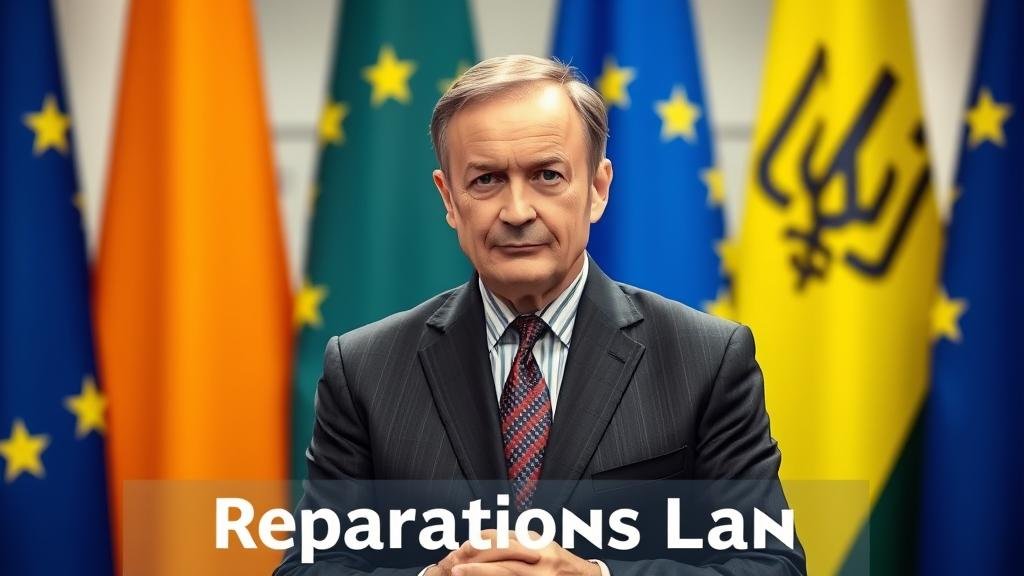
The Architect of a Bold Financial Strategy
German Chancellor Friedrich Merz is spearheading a bold financial strategy to support Ukraine, centered on an unprecedented “reparations loan.” Merz has been a key advocate in Brussels for this ambitious plan, which proposes raising up to €90 billion to aid Ukraine’s defense and reconstruction efforts.
The German government is transparently positioning itself at the forefront of this initiative. Official sources confirm Merz is the primary proponent of the plan, which is uniquely structured to finance the loan using the windfall profits generated by Russia’s frozen sovereign assets. This innovative approach signals a strategic shift, with Germany leading the charge to establish a new model for international financial support.

How the Reparations Loan Would Work
The mechanism behind this proposed reparations loan is a sophisticated financial workaround. Since the conflict began, approximately €300 billion in Russian sovereign assets have been immobilized in Western financial institutions. The EU’s plan avoids the legal complexities of seizing the principal assets directly. Instead, it targets the “windfall profits” these assets continue to generate.
In simple terms, the process is as follows:
- The Frozen Assets: Billions in Russian state assets are held, primarily at institutions like Belgium’s Euroclear. While the principal is untouchable, it is not dormant.
- Generated Profits: These assets accrue substantial interest and profits. The plan is to strategically sequester these earnings.
- The Loan Guarantee: The EU intends to use these collected “windfall profits” as a guarantee to secure a syndicated loan of up to €90 billion. This capital would then be directed to Kyiv to fund military, budgetary, and reconstruction needs.
This financial maneuver effectively uses Russia’s own assets against it without triggering a direct legal confrontation over the seizure of sovereign property, representing a potential game-changer in economic statecraft.
Germany’s Strategic Imperative
Germany’s leadership on this initiative is a significant strategic move. As Europe’s largest economy, Germany has a vested interest in maintaining continental stability and security. A prolonged conflict in Ukraine poses substantial risks to both.
By championing this financial solution, Germany is reinforcing its solidarity with Ukraine while simultaneously working to contain the geopolitical and economic fallout. This leadership role also allows Germany to demonstrate its capacity for innovative problem-solving in international affairs, bolstering confidence in its position as a stabilizing force within the EU.

The Legal and Ethical Tightrope
This proposal navigates a complex legal and ethical landscape. While utilizing the profits rather than the assets themselves is a clever distinction, it challenges the long-standing principle of “sovereign immunity,” which protects state assets from seizure by other governments.
Proponents frame it as a matter of justice, arguing it is a legitimate way to make the aggressor nation contribute to the damages it has caused. Conversely, critics raise concerns about setting a precedent that could destabilize international financial norms, potentially leading to retaliatory actions and undermining the principle of sovereign assets. The EU is therefore proceeding with caution, fully aware that the international community is closely watching this decision.

A New Chapter in Economic Warfare?
The initiative, heavily backed by the German Chancellor, could mark a new chapter in economic statecraft. If implemented, this reparations loan would represent a significant escalation of financial pressure on Russia, demonstrating a unified and creative Western commitment to supporting Ukraine.
It transforms high finance into a powerful tool of foreign policy, establishing a precedent for holding aggressor nations accountable through innovative economic measures. While the path forward involves significant legal and political challenges, the objective—a secure and stable Europe and a clear message against aggression—is deemed a worthy endeavor. This development underscores that in modern geopolitics, financial strategy can be as decisive as military strength.