How Tariffs Will Reshape the Global Economy in 2026
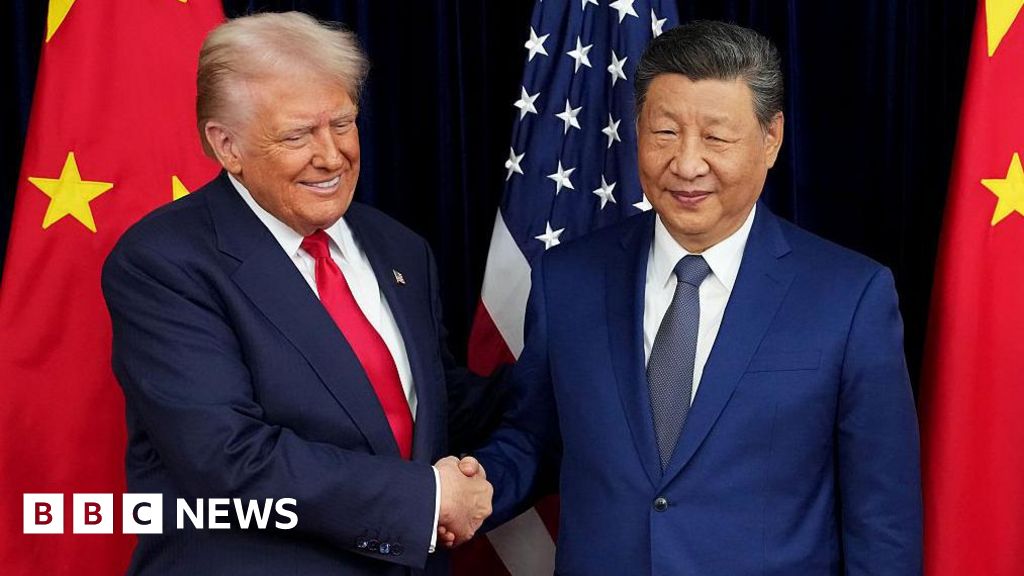
How tariffs will continue to reshape the global economy in 2026Image Credit: BBC Business (Finance)
Key Points
- •8 January 2026 | By a Senior Financial Correspondent, BBC Business
- •Muted Retaliation: Obstfeld notes that most countries "didn't retaliate strongly against the US," preventing a domino effect of escalating trade wars.
- •China's Counter: The one major exception was China, which "did forcefully hit back." This response, Obstfeld argues, "induced the US to back down very quickly," preventing a worst-case scenario between the world's two largest economies.
- •Economic Buffers: The impact of higher import costs has been partially mitigated by a period of lower interest rates and a corresponding fall in the value of the US dollar.
- •Navigating the Maze: Some nations have successfully charted a course through this uncertainty. The UK, South Korea, and Japan have all managed to secure trade deals with the Trump administration, providing a potential template for other countries hoping to do the same in 2026.
How tariffs will continue to reshape the global economy in 2026
8 January 2026 | By a Senior Financial Correspondent, BBC Business
The global economy enters 2026 walking a tightrope, stretched by the persistent force of US-led tariffs. While President Donald Trump champions them as a catalyst for American prosperity, international bodies are flagging a different reality: a world economy growing at its slowest pace in years, reshaped by friction, uncertainty, and rerouted trade. The "tariff shock," as the International Monetary Fund (IMF) calls it, has become a defining feature of the post-pandemic landscape, and its full, complex impact is still unfolding.
A World Recalibrated by Tariffs
In a pre-Christmas address, President Trump reiterated his belief that tariffs are a powerful tool for delivering jobs and growth to the United States. He considers the policy a "gift" to the American economy, a view he is likely to carry into a pivotal meeting with China's President Xi Jinping scheduled for April.
This perspective is hotly contested by global economists. The IMF has directly linked the tariff environment to its downgraded forecast for global economic growth, now expected to slow to 3.1% in 2026. This is a notable dip from the 3.3% predicted a year ago and significantly below the pre-Covid average of 3.7%.
IMF head Kristalina Georgieva recently described the situation as "better than we feared, worse than it needs to be," noting that the current growth rate is "too slow to meet the aspirations of people around the world for better lives."
Avoiding the Abyss
The economic fallout, while significant, has not spiralled into the "trade disaster" some initially feared. According to Maurice Obstfeld of the Peterson Institute for International Economics and a former chief economist at the IMF, several factors have cushioned the blow.
- Muted Retaliation: Obstfeld notes that most countries "didn't retaliate strongly against the US," preventing a domino effect of escalating trade wars.
- China's Counter: The one major exception was China, which "did forcefully hit back." This response, Obstfeld argues, "induced the US to back down very quickly," preventing a worst-case scenario between the world's two largest economies.
- Economic Buffers: The impact of higher import costs has been partially mitigated by a period of lower interest rates and a corresponding fall in the value of the US dollar.
Despite five rounds of trade talks, more restrictions remain between the US and China than before Trump's second term began. This creates what Obstfeld calls "frictions and uncertainties [that] take their toll over time" through lost efficiency.
The Loopholes and the Uncertainty
One of the most complex aspects of the tariff regime is the vast network of exemptions. These carve-outs have allowed global trade to show surprising resilience, with the UN's trade agency, UNCTAD, forecasting that the value of global trade grew 7% last year to over $35 trillion.
However, Obstfeld calls these loopholes a "double-edged sword." While they mean lower tariffs in practice for some, "they also introduce a lot of uncertainty about how you get them."
- Navigating the Maze: Some nations have successfully charted a course through this uncertainty. The UK, South Korea, and Japan have all managed to secure trade deals with the Trump administration, providing a potential template for other countries hoping to do the same in 2026.
An American Anomaly?
While the global picture is one of slowing growth, the US economy has demonstrated remarkable strength. Between July and September, it expanded by 4.3%—its strongest annual growth in two years.
"This is a very, very resilient economy, and I don't see why that wouldn't continue going forward," says Aditya Bhave, a senior economist at Bank of America.
This resilience, however, comes with an inflationary side effect.
- The Inflation Question: Bhave's analysis suggests tariffs have added between 0.3% and 0.5% to US inflation, which stood at 2.7% in November. He cautions that "we probably haven't seen the full impact" yet. This is critical for an economy that is 26% of the global total and driven primarily by consumer spending.
Elsewhere, cost of living pressures persist. While Eurozone inflation has stabilized near its target at 2.1%, the UK's rate of 3.2% remains well above the Bank of England's 2% goal.
Global Ripples and Shifting Supply Chains
The tariffs have done more than just raise costs; they have actively rewired global supply chains. This realignment is visible across multiple sectors.
- Manufacturing Onshoring: To bypass tariffs and access the strong US market, foreign firms like Hyundai are expanding their manufacturing footprint within the United States.
- New Export Routes: Facing barriers to the US, China has been successfully redirecting its exports to other major markets, with a notable increase in goods flowing to Europe.
- Energy Outlook: In the commodities market, Wall Street bank Goldman Sachs forecasts the price of Brent crude oil will fall by around 8% this year to approximately $56 a barrel. This is attributed more to strong production from the US and Russia than to specific geopolitical interventions.
The Year Ahead: Key Milestones
The trajectory of the global economy in 2026 will be heavily influenced by several upcoming political and legal events. These moments will determine whether trade tensions escalate or find a path toward stabilization.
- High-Stakes Diplomacy: The planned April meeting between President Trump and China's Xi Jinping will be a critical test of whether the two economic superpowers can find common ground or deepen their divide.
- North American Trade: The mandated renegotiation of the US-Mexico-Canada Agreement (USMCA), a signature deal from Trump's first term, could introduce new points of friction among the continent's key trading partners.
- A Supreme Court Showdown: A landmark US Supreme Court decision on the legality of the president's authority to impose tariffs could fundamentally alter the trade landscape, either cementing the current policy or forcing a dramatic reversal.
- European Trade Politics: EU member states are set to vote on the ratification of a major trade deal with the South American bloc, Mercosur, a decision that will signal Europe's direction on global trade liberalisation.
Source: BBC Business (Finance)
Related Articles
ARRY Stock Sinks Despite Market Gains: What to Know
Array Technologies (ARRY) stock declined 2.5% in the latest session, contrasting with market gains. Find out why the solar stock fell and what it means for inve
India and the EU clinch the 'mother of all deals' in a histo
Jay Vine Wins Tour Down Under 2026 After Kangaroo Crash
Australian cyclist Jay Vine secures the overall victory at the 2026 Tour Down Under despite a dramatic final-stage crash involving a kangaroo.
Trump's New Defense Strategy: Allies Must Fund Own Security
The Trump administration's new National Defense Strategy realigns US policy, demanding allies assume primary responsibility for their own security and defense c