India's Rare Earth Magnet Ambitions: A Realistic Goal?
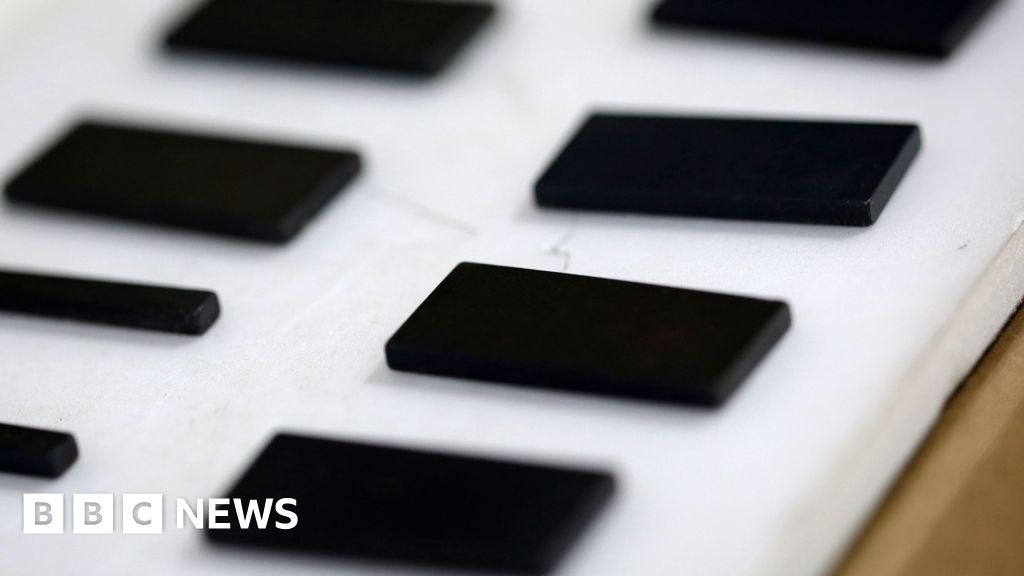
Rare earths magnets: How realistic are India's its ambitions?Image Credit: BBC Business (Finance)
Key Points
- •Anahita Sachdev, Senior Financial Correspondent
- •The Lesson Learned: The disruption, though temporary, served as a powerful wake-up call. Without a sovereign rare earths strategy, entire industries from automotive to defence remain exposed to external policy shifts.
- •A Global Scramble: India is not acting in a vacuum. The European Union, Australia, the US, and other allied nations have all launched similar initiatives to de-risk their supply chains and loosen China's grip on these strategic materials. "For many countries, the timing of the controls came as a surprise," notes Rajnish Gupta, a tax and economic policy specialist at EY India.
- •Nascent R&D: While a new research facility was inaugurated at the Bhabha Atomic Research Centre in 2023, and a separate public-private plant aims to produce 5,000 tonnes a year by 2030, neither project has reported any output to date, highlighting the gap between research and commercial reality.
- •Reserves vs. Production: Despite its vast deposits, India accounts for less than 1% of global rare earth mining. A single state-owned mine in Andhra Pradesh is operational.
Rare earths magnets: How realistic are India's ambitions?
Anahita Sachdev, Senior Financial Correspondent BBC Business (Finance) 16 January 2026
India has fired a multi-billion-dollar starting gun in a race to secure its industrial future, launching an ambitious plan to build a domestic supply chain for one of the world's most critical components: rare earth permanent magnets.
These small but powerful magnets are the invisible engines of the modern economy, vital for everything from electric vehicles (EVs) and wind turbines to medical scanners and advanced defence systems.
In a direct challenge to China's overwhelming dominance, New Delhi has committed 73 billion rupees ($800m) to cultivate a sovereign magnet-making capability. The goal is clear: to insulate its rapidly growing economy from the supply chain vulnerabilities that were starkly exposed in recent years.
But as the initial excitement settles, experts caution that money alone cannot buy mastery. India's success hinges on a complex interplay of technology acquisition, resource development, and rapid scaling—a journey that is far from guaranteed.
The Strategic Imperative
The government's plan, approved in late 2025, is a targeted strike. Rather than attempting the costly and time-consuming task of building a full rare earths ecosystem from mine to metal, India is focusing on the highest-value end product: permanent magnets.
Under the new production-linked incentive (PLI) scheme, selected manufacturers will receive capital and sales-linked support to establish a production capacity of 6,000 tonnes of permanent magnets annually within seven years.
This target is designed to meet a surge in domestic demand, which government officials project will double in the next five years, driven primarily by the nation's EV and renewable energy targets.
The China Factor
The urgency behind this push is rooted in geopolitical and economic reality. India currently imports 80-90% of its permanent magnets and related materials from China, which controls over 90% of global rare earth processing.
Official figures show these imports cost India approximately $221m in 2025 alone.
This dependency became a critical liability last year when Beijing tightened export controls during a trade dispute. The move sent shockwaves through Indian industry, severely disrupting carmakers and electronics firms. It forced parts of the EV sector to begin exploring less efficient alternatives to rare earth magnets, a clear signal of the economic risks at play.
-
The Lesson Learned: The disruption, though temporary, served as a powerful wake-up call. Without a sovereign rare earths strategy, entire industries from automotive to defence remain exposed to external policy shifts.
-
A Global Scramble: India is not acting in a vacuum. The European Union, Australia, the US, and other allied nations have all launched similar initiatives to de-risk their supply chains and loosen China's grip on these strategic materials. "For many countries, the timing of the controls came as a surprise," notes Rajnish Gupta, a tax and economic policy specialist at EY India.
A Mountain to Climb
While the strategic vision is clear, the path to achieving it is fraught with significant challenges. Experts warn that India is starting from a near-zero base in a highly specialized field.
The Technology Gap
The most immediate hurdle is a profound lack of industrial expertise. Nations like Japan, South Korea, and Germany have invested decades in refining the complex metallurgy and manufacturing processes required for high-performance magnets.
In contrast, India has virtually no commercial-scale experience.
"This is a good step in the right direction, but it's only a start," says Neha Mukherjee of Benchmark Mineral Intelligence, a consulting firm specializing in critical minerals. "India will need strategic partnerships to import technology, skill up its workforce and then build its own capabilities."
This sentiment is echoed by the scientific community. Dr. PV Sunder Raju, chief scientist at the National Geophysical Research Institute (NGRI), stresses that capital investment is not a silver bullet. "It's not possible to just give 73bn rupees and expect a product without a strong background in research and development," he said.
- Nascent R&D: While a new research facility was inaugurated at the Bhabha Atomic Research Centre in 2023, and a separate public-private plant aims to produce 5,000 tonnes a year by 2030, neither project has reported any output to date, highlighting the gap between research and commercial reality.
The Raw Material Paradox
India's second major challenge lies underground. The country possesses the world's third-largest reserves of rare earth elements—about 8% of the global total—found largely in the mineral-rich beach sands of its coastal states.
Yet, this geological wealth remains almost entirely untapped.
-
Reserves vs. Production: Despite its vast deposits, India accounts for less than 1% of global rare earth mining. A single state-owned mine in Andhra Pradesh is operational.
-
A Policy Shift: Until recently, most of the output from this mine was exported to Japan under a long-standing bilateral agreement. In a significant policy change in June 2025, the Indian government reportedly directed the state miner, IREL, to suspend these exports to secure raw materials for future domestic needs. This move signals a clear "India first" approach but does not solve the underlying issue of insufficient mining and processing capacity.
The Path Forward
For India's ambition to become reality, a multi-pronged and meticulously executed strategy is required. The government's financial incentives are a crucial first step, but they must be complemented by a broader national mission.
Key focus areas must include:
-
Technology Acquisition: Forging strategic joint ventures with established players in Japan, Europe, or the US will be essential to fast-track technology transfer and avoid a protracted and costly learning curve.
-
Resource Development: A clear and streamlined policy is needed to unlock India's domestic rare earth reserves. This includes incentivizing environmentally sustainable mining and, crucially, investing in the complex mid-stream processing facilities to turn mined ore into magnet-ready metals.
-
Bridging the R&D Gap: India must convert its academic research into industrial-scale production. This means empowering institutions like the NGRI and BARC to work directly with the private sector, creating a pipeline from the laboratory to the factory floor.
-
Workforce Skilling: A dedicated program to train metallurgists, engineers, and technicians in the specific skills required for magnet manufacturing will be vital for long-term success.
The 73-billion-rupee question is whether India can orchestrate these complex elements simultaneously. The nation's quest for magnet self-reliance is not just an industrial policy; it is a strategic imperative for the 21st century. Its success or failure will have profound implications for its economic resilience, its green energy transition, and its standing in the new geopolitical landscape.
Source: BBC Business (Finance)
Related Articles
ARRY Stock Sinks Despite Market Gains: What to Know
Array Technologies (ARRY) stock declined 2.5% in the latest session, contrasting with market gains. Find out why the solar stock fell and what it means for inve
India and the EU clinch the 'mother of all deals' in a histo
Jay Vine Wins Tour Down Under 2026 After Kangaroo Crash
Australian cyclist Jay Vine secures the overall victory at the 2026 Tour Down Under despite a dramatic final-stage crash involving a kangaroo.
Trump's New Defense Strategy: Allies Must Fund Own Security
The Trump administration's new National Defense Strategy realigns US policy, demanding allies assume primary responsibility for their own security and defense c