The Investor’s Guide to Governance Risk: When Politics Impacts Your Portfolio
For many investors, risk analysis involves scrutinizing charts, forecasting interest rates, and interpreting corporate earnings. But what about the less predictable, more volatile variable of political risk? Specifically, how can the ethical standards of a government administration introduce a new layer of uncertainty into the U.S. economy? This isn’t a partisan issue; it’s about understanding how perceived instability in governance can impact your financial portfolio.
Let’s examine how a unique approach to political and business ethics can translate into tangible governance risk for your investments.

Blurring Lines: When Public Office and Private Enterprise Intersect
A significant departure from tradition occurs when the lines between the highest public office and a private business empire become blurred. Historically, presidents have taken extensive measures to avoid conflicts of interest, typically by divesting assets or using blind trusts. When these conventions are set aside, it raises questions about a president retaining ownership of a global business. This situation creates a continuous stream of ethical concerns, particularly regarding the Emoluments Clause of the Constitution, which prohibits presidents from receiving payments from foreign governments.
What does this complex scenario mean for the average investor?
- An Uneven Playing Field: When foreign dignitaries can potentially gain favor by patronizing a president’s businesses, it creates suspicion that policy decisions may be influenced by personal financial interests rather than the national good. This fosters an unstable market where certain companies appear to have preferential treatment, leading to market uncertainty.
- Erosion of Trust: Trust is the bedrock of a stable market, founded on the belief that rules are applied equally to all. When the distinction between public service and private gain becomes ambiguous, it erodes this trust. This erosion isn’t just a political headline; it’s a foundational crack that can make the U.S. a less attractive environment for investment.
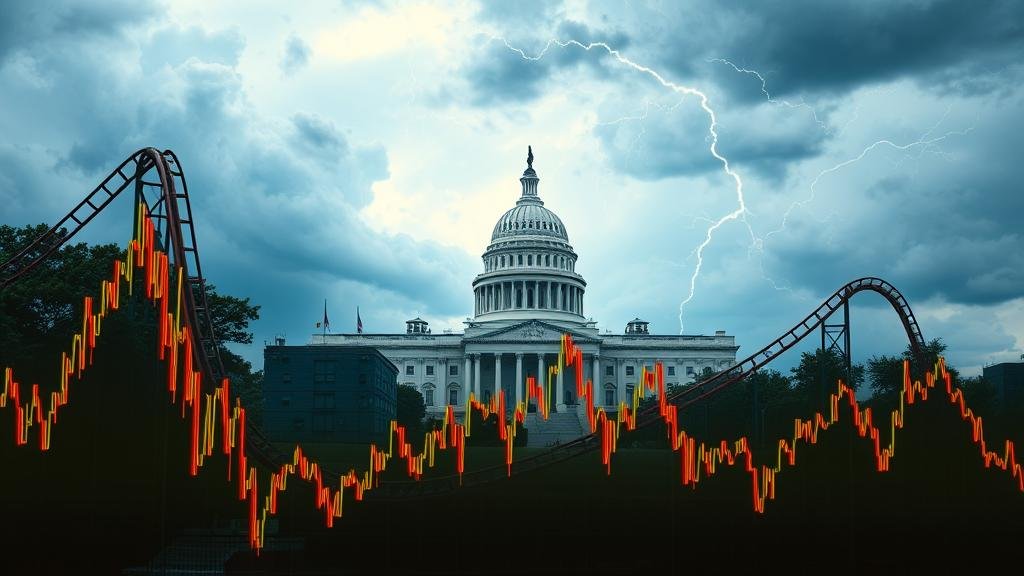
The High Cost of Unpredictable Governance
An administrative style defined by ignoring established norms and high staff turnover creates an environment of chaos and unpredictability—two factors that investors actively avoid. For instance, watchdog groups like Common Cause have filed numerous ethics complaints over actions such as allegedly using government resources for campaign events, a violation of federal ethics law.
The Impact on Market Certainty
For an investor, this level of unpredictability is more alarming than a portfolio heavily weighted in obsolete collectibles. It introduces significant questions:
- Are regulatory bodies making decisions based on established rules or on shifting political winds? This is a core component of regulatory risk.
- Will long-anticipated trade deals be derailed by sudden, impulsive announcements?
- Can we rely on the data and statements issued by government agencies?
This anxiety was particularly evident during the administration’s handling of trade policy. The abrupt implementation of tariffs, often announced with little warning, created shockwaves throughout global supply chains. Some analyses concluded that these policies, intended to protect U.S. industry, ultimately exacerbated inflation, hindered GDP growth, and created widespread uncertainty among investors. For companies engaged in long-term planning, such policy whiplash is like navigating a hurricane.
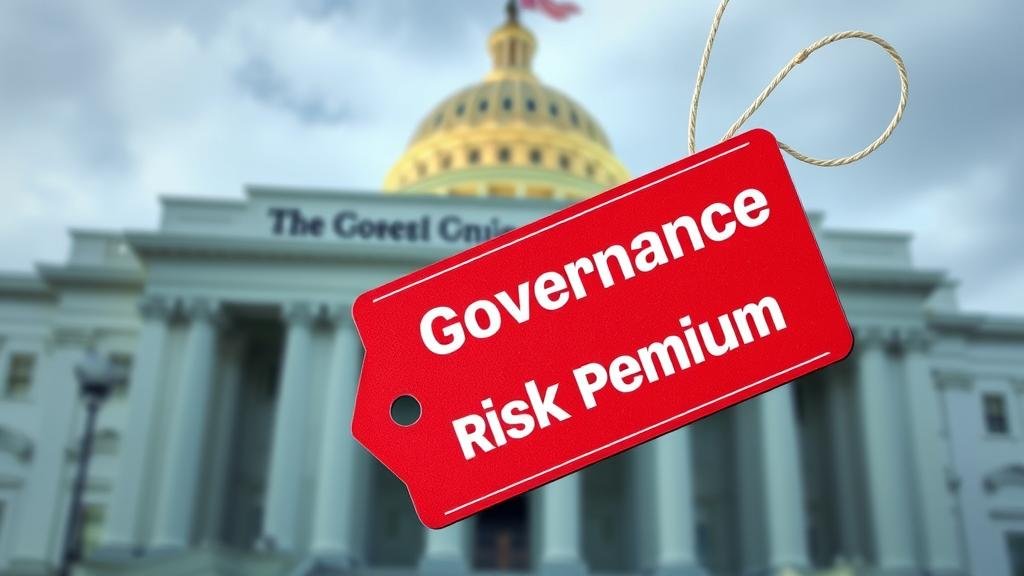
Introducing a “Governance Risk Premium” on U.S. Assets
The long-term consequence of this environment is the potential for the market to apply a “governance risk premium” to U.S. assets.
Think of it like buying a used car. One car is from a meticulous owner with complete service records, and the other is from someone who claims the check engine light is merely “decorative.” You would naturally pay less for the second car, pricing in the risk that it could break down.
The same principle applies to a country. If the U.S. appears to be the car with the “decorative” check engine light—less stable, predictable, and ethical—global investors may demand a discount to invest their capital here. This could manifest in several ways:
- Lower Stock Valuations: Higher perceived risk could lead investors to pay less for U.S. stocks.
- Higher Borrowing Costs: The U.S. government and American corporations might need to offer higher interest rates on bonds to attract buyers, essentially providing hazard pay for lenders.
- A Weaker Dollar: If global investors become unsettled, they may shift their funds to countries with more stable and predictable governance, putting downward pressure on the dollar.
While these shifts do not happen overnight, the precedents set in recent years demonstrate that the guardrails of government ethics can be fragile. This is a crucial consideration for any long-term investor.
Your Takeaway: Look Beyond the Market Charts
So, what should a diligent, risk-averse investor do? It is no longer sufficient to merely monitor market trends. The political and ethical climate has become a critical component of any comprehensive investment forecast.
Consider the following actions:
- Diversify Globally: While the U.S. remains a global economic powerhouse, portfolio diversification across different geographic regions, particularly those with strong and stable governance, is a prudent strategy.
- Incorporate Governance into Your Analysis: Pay attention to a country’s long-term health by tracking metrics on transparency and the rule of law. This is the “G” in ESG (Environmental, Social, and Governance) criteria and is becoming a key indicator of market stability.
- Adopt a Long-Term Perspective: Avoid making reactive decisions based on daily political drama. Instead, consider how today’s political landscape might impact the fundamental economic structures five to ten years from now.
Ultimately, a government that operates with transparency and predictability is one of a nation’s most valuable economic assets. When that asset is compromised, investors may be the ones who ultimately bear the cost.