What is an IPO Lock-Up Period?
An Initial Public Offering (IPO) is a company’s big debut on the stock market. But to prevent the initial excitement from turning into a chaotic sell-off, there’s a crucial mechanism in place: the IPO lock-up period.
So, what exactly is a lock-up period? It’s a contractual restriction that prevents insiders—like founders, employees, and early investors—from selling their shares for a set amount of time, typically 90 to 180 days. This forced waiting period is designed to create stability for the stock and build confidence among the public. Without it, a flood of insider selling could create intense selling pressure and make it look like they’re abandoning a sinking ship, causing panic in the market.

The Lock-Up Cliff: Why Share Prices Often Drop
The end of the lock-up period is a critical date for any new public company. When it expires, the market often sees a significant drop in the share price. This happens for a few key reasons:
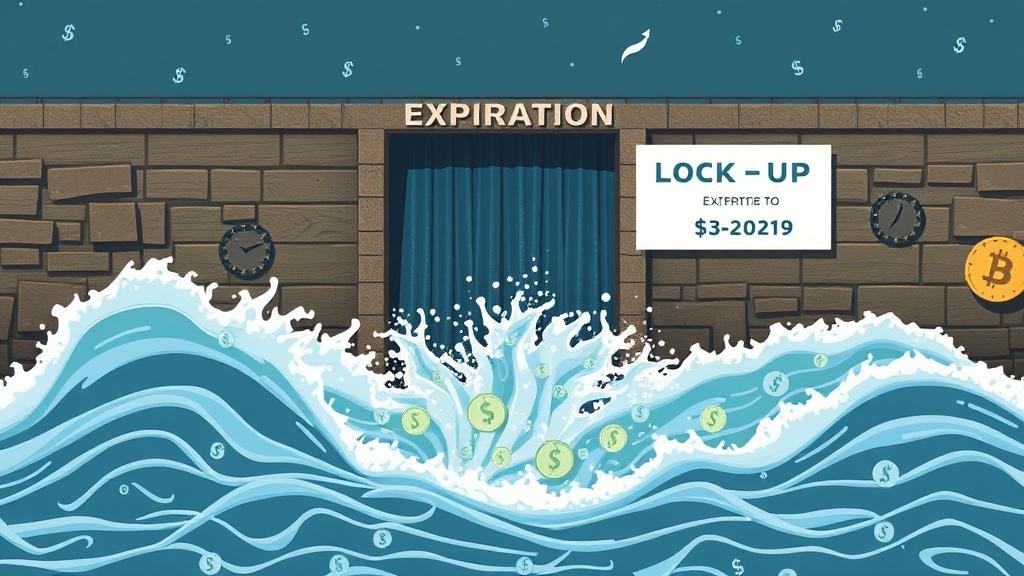
- A Surge in Supply: The end of the lock-in period unleashes a massive number of shares that were previously restricted. This sudden increase in supply, without a corresponding increase in demand, naturally drives the share price down. The number of tradable shares can even double overnight.
- Early Investors Cashing Out: Venture capitalists and other early investors have often been waiting years for this moment. The end of the IPO lock-up is their first real opportunity to cash in on their investment and deliver returns to their own backers.
- Employees Unlocking Their Wealth: For many employees, a large portion of their net worth is tied up in company stock. The lock-up expiration allows them to finally convert that “paper wealth” into tangible assets for major life purchases.
- Short-Sellers Circling: Experienced traders know that a stock’s price is likely to fall when the lock-up period ends. They often engage in short-selling, betting against the stock and adding to the downward selling pressure.
Real-World Examples of Post-Lock-Up Plummets
This isn’t just theory; history is filled with examples of stocks taking a hit after their IPO lock-up expires. For instance, Livemint reported that Kaynes Technology’s share price fell nearly 6% after its lock-in ended. This unlocked 11.6 million shares, or 20% of its total equity, creating immense selling pressure. This scenario is common, and even the most hyped IPOs aren’t immune.

What This Means for Investors
If you’re an investor, the end of the lock-up period can be a volatile time. Here’s how to navigate it:

- Know the Expiration Date: This is the most important piece of information you can have. Find the IPO lock-up expiration date in the company’s prospectus and be prepared for potential price swings.
- Focus on the Fundamentals: Look past the short-term noise. Is the company fundamentally strong? Is it growing and profitable? A solid company is likely to recover from the post-lock-up dip.
- Consider a Staggered Approach: If you see a buying opportunity, don’t go all-in at once. Use dollar-cost averaging to buy shares in smaller increments, reducing your risk.
- Beware the Hype: IPOs are often surrounded by a lot of excitement. The lock-up expiration can be a reality check that brings an overvalued stock back to a more reasonable price.
The Bottom Line
The post-IPO lock-up expiration is a predictable event that often leads to a temporary drop in a stock’s share price. It’s not necessarily a sign of a company’s weakness but rather a normal market mechanic. By understanding how the lock-up period works, investors can avoid panic-selling, make informed decisions, and potentially even find strategic buying opportunities. Knowledge is your best tool for navigating the market with confidence.