More Than Just Tariffs: The Rise of the Non-Tariff Barrier
Ah, the European Single Market. The crown jewel of economic unions. In theory, it’s a beautiful, frictionless wonderland where goods, services, and capital frolic freely between countries like they’re in a musical montage. Selling your artisanal cheese in Lisbon should be as easy as selling it in Dublin, right?
*Cue dramatic pause.*
Wrong. While the EU did a fantastic job yeeting big, scary tariffs into the sun, a new, more devious villain has emerged: the Non-Tariff Barrier (NTB). It’s like defeating the final boss only to be taken out by his surprisingly bureaucratic nephew. These NTBs are a major headache, creating what the European Commission calls “unnecessary regulation” and significant administrative burdens, hindering the free movement of goods.
NTBs aren’t taxes. Oh no, that would be too simple. They’re the death-by-a-thousand-paper-cuts rules that make trade a headache. We’re talking:
- Labyrinthine Technical Rules: “Sure, your widget is safe enough for Spain, but is it German safe? Please fill out these 87 forms to prove it.”
- Glacially Paced Admin: Paperwork so slow it makes the DMV look like a Formula 1 pit crew.
- The Great Labeling Debate: Needing 15 different labels for the same jar of pickles because every country has a slightly different opinion on font size.
- Varying Safety Standards: One country’s perfectly fine lawn dart is another’s “unregulated pointy missile.”
Look, I get it. These rules are usually made with good intentions, like protecting us from spontaneously combusting toasters. But when every country sings its own slightly off-key version of the same safety song, it creates a regulatory boy band where nobody is in sync.
The Curious Case of the Cuddly Elephant
So, about that elephant. Picture this: a shipment of IKEA’s beloved plush elephants arrives at a European border, ready to bring joy to children and serve as emergency pillows for adults. But the truck grinds to a halt.
The problem? An existential crisis. Was this fluffy boy a “toy” or a “stuffed ornament”?
I know, I know. It sounds like a philosophy question you’d be asked in a dorm room at 2 AM. But in the world of customs, this distinction is everything. Different classifications mean different rules, different paperwork, and a customs official in one country scratching their head while their counterpart 100 miles away waves the same product through without a second glance. This is a classic example of a non-tariff barrier in action.
For a behemoth like IKEA, this is a supremely annoying and expensive delay. As one of their execs basically said, all this red tape makes it pretty hard to keep those famously low prices low. Let’s be real, a stuffed elephant stuck in a warehouse isn’t making anyone happy.
Now, imagine you’re not IKEA. Imagine you’re “Uncle Piotr’s Wooden Trains” operating out of a garage in Poland. A delay like this isn’t an annoyance; it’s a potential business-killer. It could wipe out your entire profit margin and make you swear off exporting forever. You feel me? This is the reality for many SMEs trying to engage in cross-border activities.
The Big Guys vs. The Little Guys
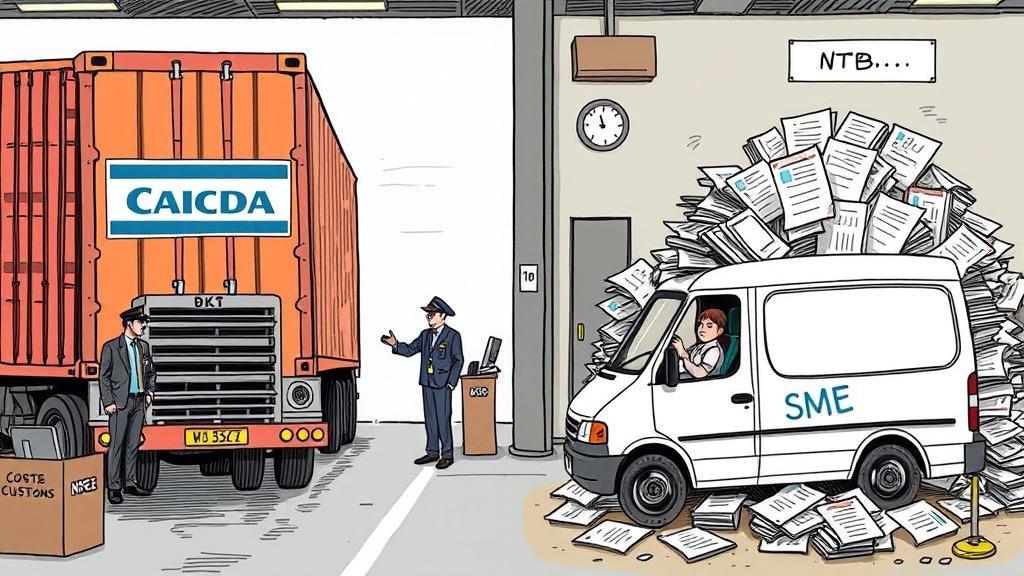
And here’s where the dad joke turns into a financial tragedy. This is a story about how the system unintentionally bullies the little guy. The European Parliament has even stated that SMEs and micro-enterprises are disproportionally affected by these barriers.
Large corporations like IKEA have what I like to call “Bureaucracy Bending Departments.” They have teams of lawyers and logistics wizards who eat customs codes for breakfast. As they put it, they’re “proactively strengthening their supply chains.” Translation: They can afford to throw money and people at the problem until it goes away.
Small and Medium-Sized Enterprises (SMEs)—you know, the supposed backbone of Europe’s economy—don’t have that luxury. For them, navigating 27 different regulatory whims is a nightmare. It means:
- Hiring consultants who charge more per hour than your therapist.
- Redesigning packaging so many times you start wondering if just shipping the product in a plain brown box is a federal crime.
- Paying for multiple certifications for the exact same thing.
Hot take coming in 3…2…1… Research shows these NTBs can act like a hidden tariff of over 10%. That’s not a hurdle; that’s a financial wall that stops small businesses from growing. And yes, that will be on the test.
So, Why’s This Happening in a Utopia?
At this point, you might be asking, “Doesn’t this defeat the whole purpose of a ‘single market’?” Still reading? Wow. You’re officially my favorite.
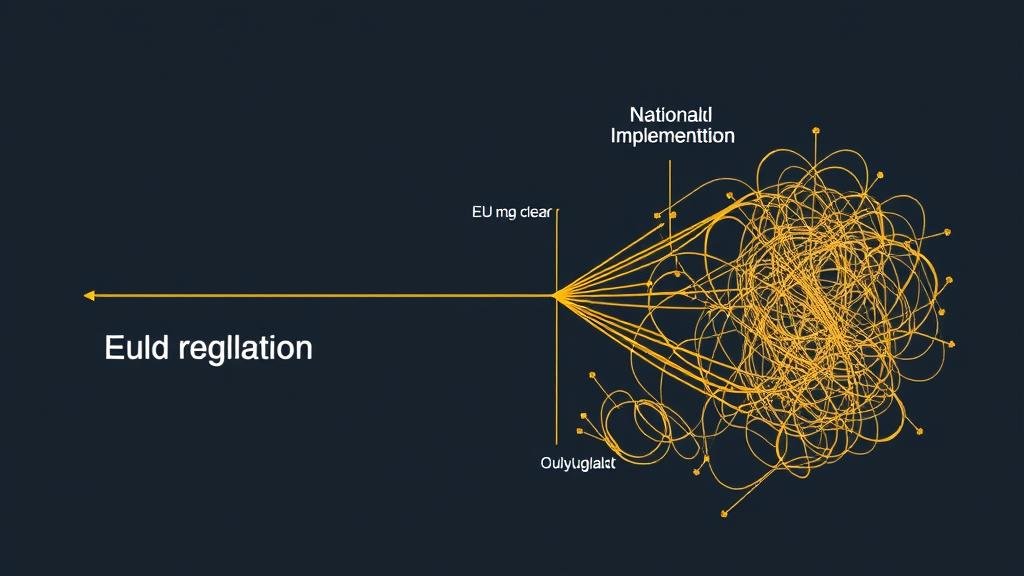
The problem lies in the delicate dance between EU-wide rules and national pride. The EU sets the overarching choreography, but member states get to add their own “creative” flair during implementation. This is where you get “gold-plating”—when a country adds its own extra, sparkly, and utterly unnecessary requirements on top of EU law.
The principle of “mutual recognition” (if it’s legal in one country, it’s legal in all) is supposed to fix this. But it often breaks down when some national official decides your product is a threat to their nation’s safety, security, or general vibe. A product can breeze through the Port of Rotterdam only to be quarantined in Hamburg for a week because someone didn’t like the comma placement on the label. That kind of uncertainty is poison for cross-border trade.

The Final Cost: Guess Who Pays?
Ultimately, the cost of all this bureaucratic nonsense lands squarely in one place: your wallet. Every euro a business spends on legal fees, redesigns, or just waiting around gets baked into the final price tag.
Before your eyes glaze over like a Krispy Kreme, let’s break it down:
-
Higher Prices: Companies aren’t charities. They pass the cost of compliance on to you.
-
Less Choice: That cool, innovative gadget from a small Estonian startup? Yeah, they gave up trying to sell it in your country after the third customs rejection. Enjoy your three state-approved brands.
-
Slower Innovation: Brainpower spent on paperwork is brainpower not spent on making cooler stuff.
The journey of that cuddly elephant isn’t just a fun story to tell at parties (trust me, I’ve tried). It’s a perfect symbol of the invisible friction gumming up Europe’s economic engine. A truly seamless market is one where the biggest challenge is making a great product, not defeating a three-headed monster made of paperwork. It’s better for every business, every consumer, and every plush elephant just trying to find a home. The EU is working on dismantling barriers, but for many SMEs, the change can’t come soon enough.