MI5 Wins Supreme Court Battle Over 1994 Murder Secrets
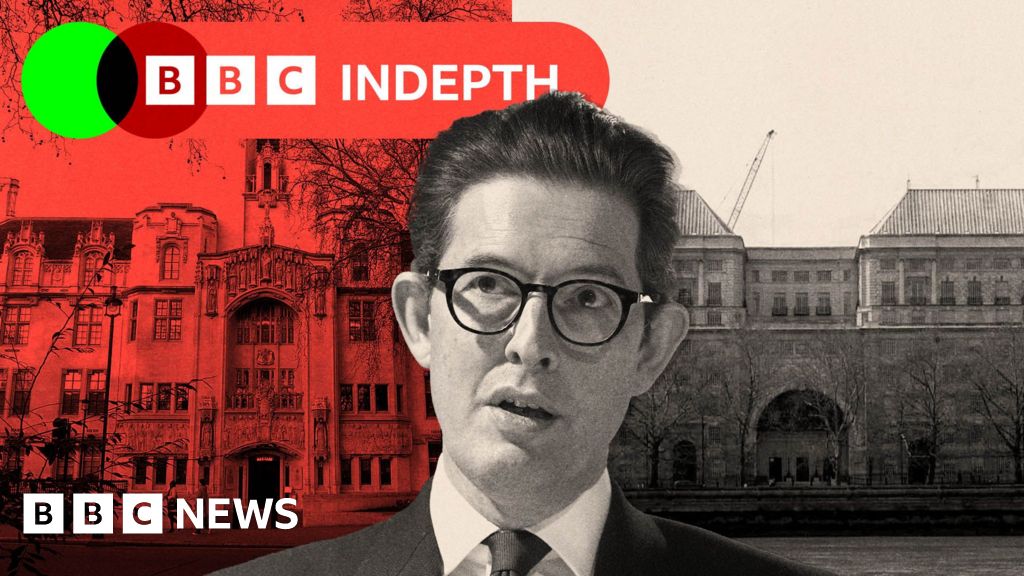
Murder and MI5: the extraordinary battle over what stays secretImage Credit: BBC News
Key Points
- •LONDON – A thirty-year-old murder case from the height of Northern Ireland's Troubles has culminated in a landmark Supreme Court ruling, pitting a grieving family and senior police against the UK government and MI5 in a profound battle over state secrecy. The case of Paul Thompson, a Catholic civilian murdered by loyalist paramilitaries in 1994, has become a major test of the state's power to conceal information in the name of national security, raising the critical question: who decides what the public can know when the state itself is implicated in a crime?
- •The Victim: Paul Thompson was a 25-year-old Catholic civilian. He was not the specific target of the attack; he was murdered simply because of his perceived religion after asking a friend, a taxi driver, for a lift home.
- •The Ambush: The killing was claimed by the Ulster Defence Association (UDA), a banned loyalist terror group using the cover name Ulster Freedom Fighters (UFF). The taxi had been dispatched to an address in the Springfield Park area, but the call is believed to have been a deliberate decoy by the killers to lure any taxi into their path.
- •A Critical Failure: Hours before the murder, local residents had warned police about a hole in the "Peace Line"—a physical barrier separating Catholic and Protestant communities. They feared it provided an access point for an attack. The hole was not repaired, and the killers used it to escape after the shooting.
- •No Accountability: In the three decades since, no one has ever been charged or held accountable for Paul Thompson's murder. An inquest opened in 1995 was never concluded, and a full investigation has never taken place.
Murder and MI5: The Extraordinary Battle Over What Stays Secret
LONDON – A thirty-year-old murder case from the height of Northern Ireland's Troubles has culminated in a landmark Supreme Court ruling, pitting a grieving family and senior police against the UK government and MI5 in a profound battle over state secrecy. The case of Paul Thompson, a Catholic civilian murdered by loyalist paramilitaries in 1994, has become a major test of the state's power to conceal information in the name of national security, raising the critical question: who decides what the public can know when the state itself is implicated in a crime?
The legal showdown was ignited when a coroner attempted to release a summary of secret police files to Thompson’s family. The government and MI5 intervened, arguing such a disclosure would cause grave damage to national security. In a decisive judgment just before Christmas, the UK's highest court sided with the government, reinforcing the state's authority to be the ultimate arbiter of its own secrets.
The 1994 Murder
On an April night in 1994, Paul "Topper" Thompson was shot dead in a taxi in West Belfast. The attack was a brutal example of the sectarian violence that defined the Troubles.
-
The Victim: Paul Thompson was a 25-year-old Catholic civilian. He was not the specific target of the attack; he was murdered simply because of his perceived religion after asking a friend, a taxi driver, for a lift home.
-
The Ambush: The killing was claimed by the Ulster Defence Association (UDA), a banned loyalist terror group using the cover name Ulster Freedom Fighters (UFF). The taxi had been dispatched to an address in the Springfield Park area, but the call is believed to have been a deliberate decoy by the killers to lure any taxi into their path.
-
A Critical Failure: Hours before the murder, local residents had warned police about a hole in the "Peace Line"—a physical barrier separating Catholic and Protestant communities. They feared it provided an access point for an attack. The hole was not repaired, and the killers used it to escape after the shooting.
-
No Accountability: In the three decades since, no one has ever been charged or held accountable for Paul Thompson's murder. An inquest opened in 1995 was never concluded, and a full investigation has never taken place.
A Family's Fight and Suspicions of Collusion
Left without official answers, Paul's mother, Margaret, and his brother, Eugene—both now deceased—embarked on a relentless campaign for the truth. Over the years, they came to suspect the murder was not just a paramilitary atrocity, but one involving collusion between the security forces and state agents, or informants, inside the UDA.
Their fight gained momentum in 2024 when a coroner, reviewing the case, determined that secret information held by the police was of "central relevance." The coroner supported releasing a summary of this intelligence to the family, a move backed by Jon Boutcher, Chief Constable of the Police Service of Northern Ireland (PSNI).
This decision triggered an immediate legal challenge from the UK government and MI5, escalating the family's private struggle into a national confrontation over state power and transparency.
The State's Wall of Secrecy
The government’s case rested on the long-standing and powerful "neither confirm nor deny" (NCND) policy, a doctrine that has become a cornerstone of its approach to sensitive intelligence matters.
- The NCND Doctrine: This is a default position used by the government and security services to respond to questions about intelligence, agents, or operations. It means authorities will not confirm, deny, or even acknowledge that requested information exists, arguing that any response could compromise sources and methods, thereby damaging national security.
During the Supreme Court hearings, which Eugene Thompson watched from a hospice as he neared the end of his life with cancer, his barrister, Monye Anyadike-Danes KC, argued the family believed the murder happened because authorities were colluding with the "very group that actually perpetrated the killing."
She urged the justices not to allow the NCND policy to be used as a shield to "conceal the involvement of state parties in the killing of an ordinary citizen," stating that the public must be able to trust that killers will be held accountable, especially when they may be state agents.
The Supreme Court's Ruling
The Supreme Court’s judgment delivered a clear and powerful victory for the government, fundamentally reshaping the balance of power between the judiciary and the executive on matters of national security.
-
Primacy of the Executive: The justices found that a coroner must accept the government’s assessment of potential harm to national security unless the government's position is "plainly irrational" or lacks any supporting evidence.
-
Sole Authority: The court clarified that it is "solely" for the government's executive branch—not a police chief constable or a coroner—to make binding submissions on what constitutes a national security risk. The PSNI chief's support for disclosure was deemed irrelevant in this context.
-
The Consequence: The ruling effectively states that when the government invokes national security, its judgment is paramount. The coroner had erred by challenging this and attempting to conduct his own balancing act between the family's right to know and the state's security concerns.
Implications for Truth and Justice
The Thompson case is more than a single legal dispute; it is a flashpoint in a wider battle over legacy, truth, and accountability in Northern Ireland and beyond. It highlights a deep-seated conflict that pits bereaved families and, at times, senior police officers against the central government and its security service, MI5.
The Supreme Court's decision sets a formidable precedent. For dozens of other families seeking answers about Troubles-era deaths where state collusion is suspected, the ruling fortifies the legal walls that have long concealed sensitive information. It confirms that the state, even when it is the party being accused of wrongdoing, remains the ultimate gatekeeper of the evidence.
As other legacy cases approach the courts, the Thompson ruling will loom large. The fight for the full story of Paul Thompson's murder is now stalled, and the central question remains unanswered: can a state ever be trusted to be the impartial arbiter of its own secrets? For now, the highest court in the land has decided that it must.
Source: BBC News
Related Articles
ARRY Stock Sinks Despite Market Gains: What to Know
Array Technologies (ARRY) stock declined 2.5% in the latest session, contrasting with market gains. Find out why the solar stock fell and what it means for inve
Jay Vine Wins Tour Down Under 2026 After Kangaroo Crash
Australian cyclist Jay Vine secures the overall victory at the 2026 Tour Down Under despite a dramatic final-stage crash involving a kangaroo.
Trump's New Defense Strategy: Allies Must Fund Own Security
The Trump administration's new National Defense Strategy realigns US policy, demanding allies assume primary responsibility for their own security and defense c
S&P 500's Flawless Forecaster Flashes Major Warning
A market indicator with a perfect 69-year track record, a surge in margin debt, is flashing its most serious warning of a downturn since the 2008 crisis.