NATO’s New Playbook: A Proactive Defense Strategy Against Russian Threats
In a significant shift for global security, NATO is signaling a move beyond its traditional defensive posture. A top military official has indicated that the alliance may adopt a more “proactive” stance in response to evolving threats, particularly from Russia. For decades, NATO’s core principle has been collective defense—a commitment that an attack on one member is an attack on all. However, Russia’s recent actions have prompted a strategic reassessment, forcing the alliance to consider a new doctrine focused on proactive deterrence rather than reaction.
The Evolving Nature of the Russian Threat
The current tension is not a sudden development but the result of years of escalating actions. Russia’s strategy has expanded beyond conventional military power into the realm of hybrid warfare, a multidimensional approach designed to destabilize and divide. This new battlespace includes:
- Cyberattacks: State-sponsored hacking operations aimed at disrupting critical infrastructure, stealing sensitive data, and creating widespread chaos.
- Sabotage: A pattern of “mysterious” fires and explosions at military and industrial sites across Europe has raised suspicions of covert operations designed to weaken NATO’s logistical and defense capabilities.
- Disinformation & Propaganda: Coordinated campaigns to spread false narratives, sow discord among allies, and undermine public trust in democratic institutions.
- Airspace Violations: Russian military aircraft frequently test NATO’s air defenses, a tactic designed to probe for weaknesses and maintain a state of constant pressure on the alliance’s borders.
These persistent actions have made it clear that Moscow is willing to continuously test NATO’s resolve, necessitating a change in the alliance’s defensive strategy.

From Reactive Defense to Proactive Deterrence
What does a more “proactive” NATO look like? The goal is not to initiate conflict but to fundamentally alter the cost-benefit analysis for any potential aggressor. This strategic shift involves moving from a reactive model to one of proactive deterrence. Key elements of this new approach could include:
- Pre-emptive Cyber Operations: Authorizing NATO’s cyber commands to disrupt hostile digital infrastructure *before* an attack is launched, effectively neutralizing threats at their source.
- Enhanced Intelligence and Surveillance: Increasing the use of spy planes, satellites, and other assets to gain a clear and early understanding of Russia’s military and strategic intentions.
- Assertive Military Posturing: Conducting larger and more frequent military exercises along NATO’s eastern flank, sending an unambiguous message of strength and readiness.
- Economic Countermeasures: Working in concert with the EU and other partners to prepare and swiftly implement sanctions against individuals and entities involved in Russia’s hybrid warfare activities.
The central idea is to make the consequences of aggression so significant and certain that it becomes an untenable option for Moscow.

Implications of a New Strategic Doctrine
This evolution in NATO’s doctrine is a major development with considerable risks. A more assertive posture could be misinterpreted by Moscow as a provocation, potentially leading to miscalculation and escalation. However, for allies on NATO’s eastern flank—such as Poland, Estonia, Latvia, and Lithuania—a stronger, more proactive stance is a welcome and necessary measure for their security.
From an economic standpoint, heightened geopolitical tension often leads to market volatility. Increased defense spending, potential disruptions to trade, and the overall uncertainty of a less stable Europe can have far-reaching effects on the global economy.
The Road Ahead: A United and Resolute Stance
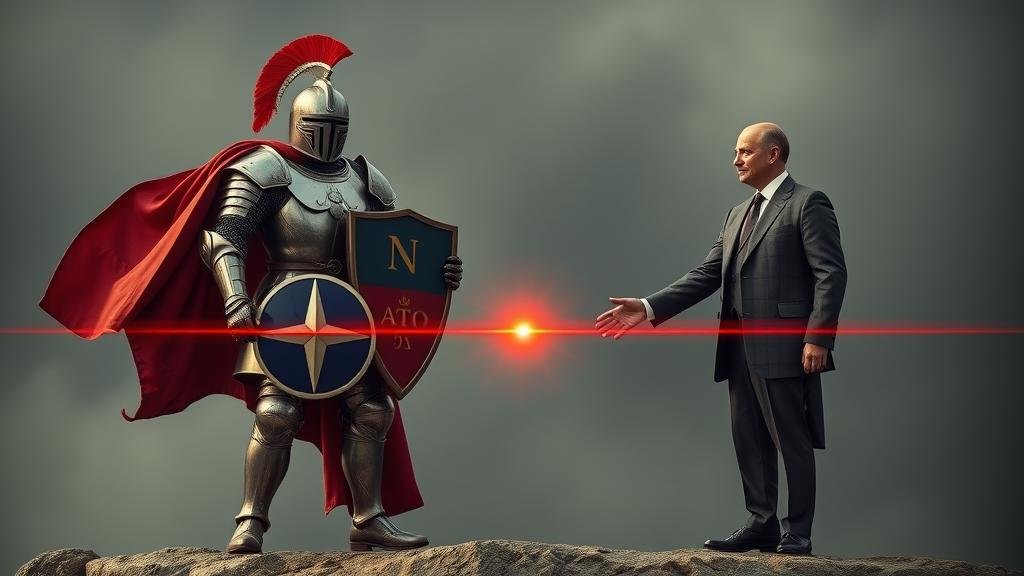
NATO’s signaled shift is a clear statement that the alliance holds a strong hand and is prepared to play it. The immediate future will be a critical test of this new strategy. The challenge is to project unwavering strength to deter aggression while maintaining open lines of communication with Moscow to prevent a catastrophic misunderstanding.
As this new chapter in European security unfolds, the rules of engagement are being rewritten in real-time. The decisions made by the alliance today will shape the geopolitical landscape for decades to come, marking a pivotal moment in the ongoing contest of wills.