Beyond Tariffs: How Hidden Trade Barriers Inflate Prices
The Unseen Hurdles: How Invisible Trade Barriers Are Secretly Costing You Money
Ever survived a trip to IKEA? You go in for a lamp and walk out hours later with a cart full of unpronounceable items, a belly full of meatballs, and a sudden urge to embrace Scandinavian minimalism. Maybe you even grabbed a JÄTTESTOR elephant, because who doesn’t need a giant, cuddly pachyderm in their life?
It seems simple: you pay, you go home, you struggle with assembly. But behind that soft toy is a saga of international trade regulations. It’s a world of “invisible” trade barriers that can inflate prices, cause frustrating delays, and complicate our fluffy friend’s journey from the factory to your living room.

More Than Just Taxes: The Hidden World of Non-Tariff Barriers
When you hear “trade barriers,” your mind probably jumps to tariffs—a straightforward tax on imported goods. But the real drama comes from their sneakier cousins: Non-Tariff Barriers (NTBs), also known as Non-Tariff Measures (NTMs).

So, what are these ghosts in the global trade machine? NTBs are the mountain of rules, regulations, and redundant forms that make importing goods an Olympic sport. Even with zero tariffs, these hurdles can stop a product in its tracks. They include:
- Technical Barriers to Trade (TBT): These are specific rules about product safety, packaging, and labeling. For instance, your phone might need a different energy efficiency rating in two different countries. It’s the ultimate form of nitpicking in international trade.
- Sanitary and Phytosanitary (SPS) Measures: These rules protect us from pests and diseases in plants and animals. They’re crucial, but sometimes a country might impose a lengthy quarantine on a product without scientific justification, creating a significant barrier.
- Administrative Barriers: Welcome to bureaucratic hell. This is the endless red tape: slow customs procedures, mountains of paperwork, and licensing requirements for almost everything.
- Rules of Origin: To qualify for lower tariffs, a product must prove where it “came from.” These rules can be so complex they make your family tree look like a straight line, adding another layer to trade compliance.
A Toy Elephant’s Journey: A Case Study in Bureaucracy
Let’s follow our IKEA elephant from a factory in Vietnam to a store in France to see how this works.
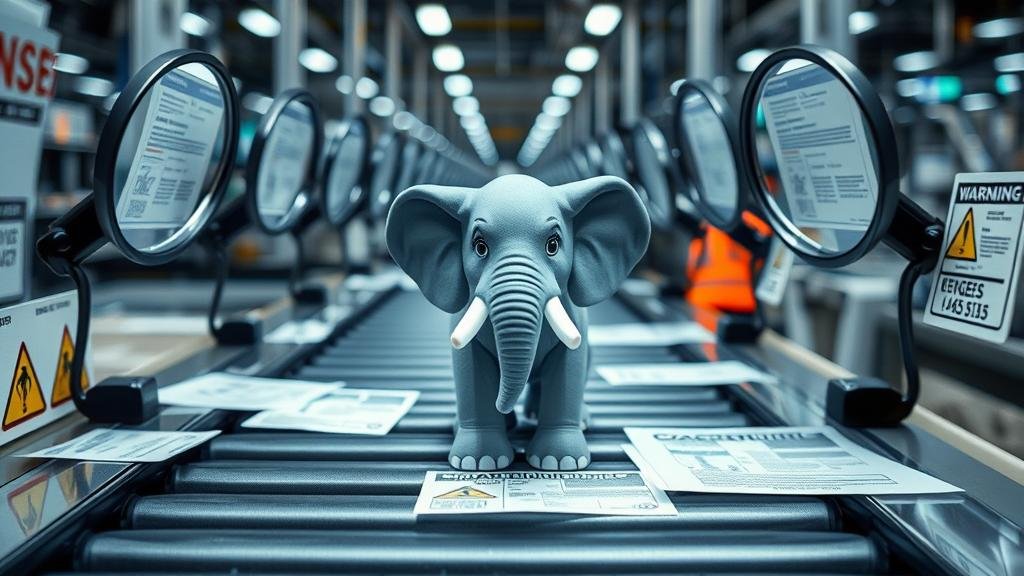
- The Stuffing: The synthetic fiber inside must be tested for flammability and allergens based on EU rules. However, one country’s interpretation might differ from another, potentially requiring multiple tests and increasing import costs.
- The Dye: The dye used for its stylish gray color might contain a chemical permitted in Vietnam but banned in France under an obscure environmental rule. This forces the manufacturer to create a special, more expensive version.
- The Labeling: The tag needs a CE mark (Europe’s stamp of approval) and warnings in multiple languages. If countries demand different font sizes or pictograms, the labeling process adds complexity to the supply chain.
- The Paperwork: At port, customs agents require a bill of lading, commercial invoice, packing list, and certificate of origin. A single typo can hold the shipment for weeks, leading to lost sales and warehousing fees. Our elephant has to defeat Form 27B/6 before it can find a home.
This maze of trade regulations affects more than just toys. Small businesses, in particular, struggle to absorb these costs.
The Impact on European Businesses and Your Wallet
Who gets squashed by this red tape? Large companies have legal teams to navigate this maze, but for Small and Medium-sized Enterprises (SMEs), it’s a different story. A report from the European Commission confirmed that for many small businesses, these invisible barriers are a bigger hurdle than tariffs.
“Okay,” you’re thinking, “but why should I care?” You should care because these invisible barriers directly impact consumer prices.
- Higher Prices: All the extra testing, paperwork, and delays get baked into the final price tag. You’re paying a “bureaucracy tax” on everything you buy.
- Less Choice: When it’s a massive headache for businesses to sell abroad, many don’t. That means quirky, innovative products from startups in other countries never reach your local shelves.
- Slower Innovation: When companies spend their budgets on trade compliance paperwork, there’s less money for developing cool new things.
What’s Being Done?
The good news is, policymakers know it’s a mess and are working on it. The bad news? Harmonizing rules across Europe, let alone the world, is a slow and frustrating process.
The Takeaway
Next time you’re shopping, think about the incredible journey that T-shirt or bag of coffee has been on. And if you see a cuddly IKEA elephant, give it a pat. It’s been through a lot.
These non-tariff barriers are more than a business headache; they’re a drag on the economy that costs you money and limits choice. Understanding them makes you a smarter consumer.