NRA, Feds Clash on Gun Rights After Minneapolis Shooting
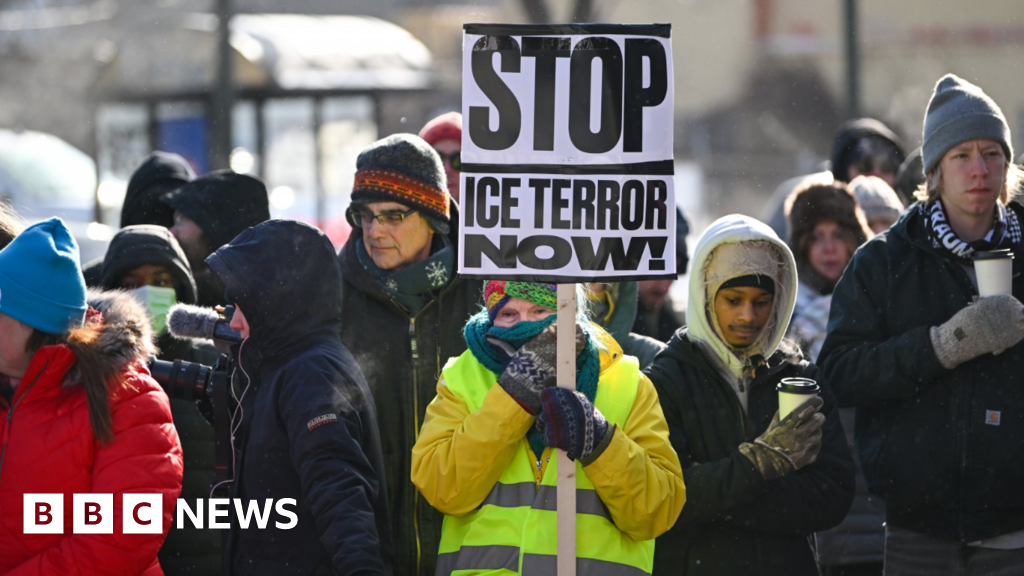
NRA stress right to carry weapons in wake of Minneapolis shootingImage Credit: BBC News
Key Points
- •MINNEAPOLIS – The National Rifle Association (NRA), one of President Trump's most steadfast political allies, has publicly diverged from the administration's narrative following the fatal shooting of a man by a federal agent in Minneapolis. The incident has ignited a fierce debate, pitting powerful gun-rights organizations against federal law enforcement officials over the constitutional right to bear arms during encounters with the police.
- •Why it matters: This rare public friction highlights a deep-seated tension within the conservative coalition. It forces a collision between "law and order" proponents and Second Amendment absolutists, creating a political fissure that the Trump administration must now navigate. The outcome could have significant implications for both gun policy and the relationship between armed citizens and federal law enforcement.
- •The Federal Position: The Trump administration has stated that Pretti was carrying a gun and "posed a danger to officers," justifying the use of lethal force.
- •The Visual Evidence: Multiple bystander videos captured the moments surrounding the altercation. However, officials have confirmed that no available footage shows Pretti holding a firearm.
- •A Pattern of Activity: This marks the second fatal shooting involving federal agents in Minneapolis this month, both linked to an ICE crackdown on illegal immigration, raising local tensions and scrutiny of federal tactics.
NRA Stress Right to Carry Weapons in Wake of Minneapolis Shooting
MINNEAPOLIS – The National Rifle Association (NRA), one of President Trump's most steadfast political allies, has publicly diverged from the administration's narrative following the fatal shooting of a man by a federal agent in Minneapolis. The incident has ignited a fierce debate, pitting powerful gun-rights organizations against federal law enforcement officials over the constitutional right to bear arms during encounters with the police.
Why it matters: This rare public friction highlights a deep-seated tension within the conservative coalition. It forces a collision between "law and order" proponents and Second Amendment absolutists, creating a political fissure that the Trump administration must now navigate. The outcome could have significant implications for both gun policy and the relationship between armed citizens and federal law enforcement.
The Incident: A Tale of Two Narratives
The controversy centers on the death of Alex Pretti, a registered nurse at a Veterans Affairs hospital, who was shot and killed by a border agent on Saturday in Minneapolis. The event, which occurred amidst a broader Immigration and Customs Enforcement (ICE) operation, has been defined by sharply conflicting accounts from state and federal authorities.
-
The Federal Position: The Trump administration has stated that Pretti was carrying a gun and "posed a danger to officers," justifying the use of lethal force.
-
The Visual Evidence: Multiple bystander videos captured the moments surrounding the altercation. However, officials have confirmed that no available footage shows Pretti holding a firearm.
-
A Pattern of Activity: This marks the second fatal shooting involving federal agents in Minneapolis this month, both linked to an ICE crackdown on illegal immigration, raising local tensions and scrutiny of federal tactics.
The Flashpoint: A Prosecutor's Warning
The catalyst for the gun lobby's unified response was a social media post from a high-ranking federal prosecutor, which was widely interpreted as a threat to law-abiding gun owners.
On Saturday night, Bill Essayli, the First Assistant U.S. Attorney for the Central District of California, wrote: "If you approach law enforcement with a gun, there is a high likelihood they will be legally justified in shooting you. Don't do it!"
This comment, coming from a senior figure in the federal justice system, was immediately seized upon by gun-rights advocates as a dangerous oversimplification of the law and a challenge to constitutional rights.
The Response: Gun Lobby Unites in Rebuke
The reaction from the NRA and other Second Amendment groups was swift, coordinated, and uncharacteristically critical of a perspective emanating from the federal law enforcement community.
The NRA's Stance
The NRA, which typically aligns with the Trump administration on matters of law enforcement, issued multiple statements condemning the prosecutor's remarks and demanding a thorough, unbiased investigation into Pretti's death.
-
A "Dangerous" Precedent: The organization labeled the suggestion that people who legally carry guns risk being lawfully shot by officers as "dangerous and wrong."
-
A Call for Patience: "Responsible public voices should be awaiting a full investigation, not making generalisations and demonising law-abiding citizens," the NRA said in a formal statement.
-
Lowering the Temperature: In a separate social media post, the group urged caution: "As we await these facts and gain a clearer understanding, we urge the political voices to lower the temperature to ensure their constituents and law enforcement officers stay safe."
A Broader Chorus of Criticism
The NRA was not alone. Other prominent voices in the gun-rights movement and the Republican party echoed the sentiment, framing the issue as a fundamental defense of the Constitution.
-
Gun Owners of America (GOA): The group focused on the intersection of protest and gun rights, stating, "The Second Amendment protects Americans' right to bear arms while protesting - a right the federal government must not infringe upon."
-
Republican Rep. Thomas Massie: The Kentucky congressman offered a fiery rebuke of Essayli's premise. "Carrying a firearm is not a death sentence, it's a constitutionally protected God-given right," Massie stated. "And if you don't understand this you have no business in law enforcement or government."
Context and Clarification
In the face of the backlash, Essayli returned to social media to defend his original comment, accusing critics of misinterpreting his intent.
- Essayli's Defense: "I never said it's legally justified to shoot law-abiding concealed carriers," he posted on X (formerly Twitter). "My comment addressed agitators approaching law enforcement with a gun and refusing to disarm."
This clarification, however, did little to quell the controversy, as critics argued his initial post failed to make such a distinction and dangerously blurred the line between a legally armed citizen and a criminal threat.
The Big Picture: A Constitutional Crossroads
The shooting and its aftermath expose a critical fault line in American law and politics, forcing a direct confrontation over the practical meaning of the Second Amendment in an era of heightened political tension.
-
The Right to "Bear" Arms: The core of the debate is whether the right to "bear arms" includes carrying a firearm in public spaces during interactions with police, even tense ones. Gun-rights advocates argue it is a protected activity, while some in law enforcement see it as an inherent officer safety threat.
-
A Strained Alliance: The NRA's decision to publicly challenge the administration's narrative is a significant development. It signals that its commitment to the Second Amendment can, in certain circumstances, supersede its loyalty to a political party or president, especially when the actions of federal agents are called into question.
-
The Role of Federal Enforcement: The incident occurs against a backdrop of increased federal law enforcement presence in major cities. The involvement of a border agent in a city far from any international border has also drawn criticism and questions about the scope of federal operations.
What's Next
The fallout from the Minneapolis shooting is only beginning, with several key developments to watch.
-
The Official Investigation: A "robust and comprehensive investigation" has been promised. Its findings—particularly regarding whether Pretti was armed and what threat he posed—will be pivotal in determining whether the shooting was justified and will shape the political and legal fallout.
-
The Political Fallout: The Trump administration now faces the delicate task of backing its federal agents without further alienating the powerful gun lobby. How President Trump and the Justice Department respond will be a major test of this crucial political alliance ahead of an election cycle.
-
The Public Debate: This incident will undoubtedly become a central case study in the ongoing national conversation about use of force, police reform, and the rights of armed citizens. It guarantees that the complex relationship between the Second Amendment and law enforcement will remain a volatile and central issue in American public life.
Source: BBC News
Related Articles
ARRY Stock Sinks Despite Market Gains: What to Know
Array Technologies (ARRY) stock declined 2.5% in the latest session, contrasting with market gains. Find out why the solar stock fell and what it means for inve
Jay Vine Wins Tour Down Under 2026 After Kangaroo Crash
Australian cyclist Jay Vine secures the overall victory at the 2026 Tour Down Under despite a dramatic final-stage crash involving a kangaroo.
Trump's New Defense Strategy: Allies Must Fund Own Security
The Trump administration's new National Defense Strategy realigns US policy, demanding allies assume primary responsibility for their own security and defense c
S&P 500's Flawless Forecaster Flashes Major Warning
A market indicator with a perfect 69-year track record, a surge in margin debt, is flashing its most serious warning of a downturn since the 2008 crisis.