From Pixels to Power: The Story of Nvidia’s AI Dominance
How does a company transition from enhancing your video games to exceeding the economic value of most nations? It sounds like a sci-fi plot, but for Nvidia, it’s just another day at the office. A brand once revered primarily by PC enthusiasts has become the powerhouse of the AI revolution, with its Nvidia stock at one point nearing a $5 trillion valuation.
Let’s be honest, that’s not just a number; it’s a statement. How did this happen? Did CEO Jensen Huang strike a deal with a tech-savvy genie? Let’s delve into the story of ‘The Thinking Machine’ and uncover the truth. Spoiler alert: it involves less magic and a lot more parallel processing.
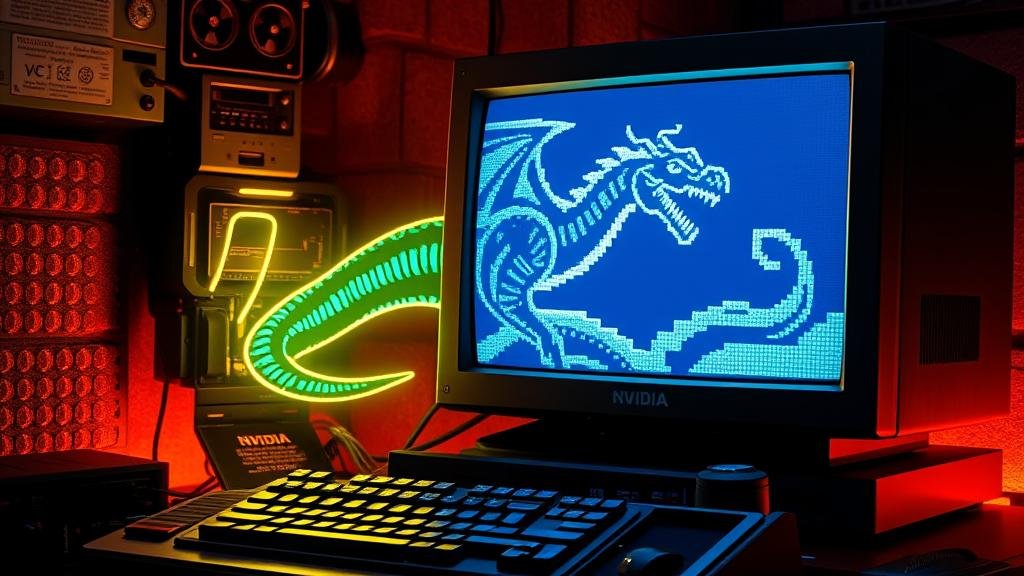
From Pixels to Power: Humble Beginnings
In 1993, when the internet was still a dial-up affair, Nvidia was founded with a clear mission: to make 3D graphics more realistic. For years, their GeForce GPUs were the gold standard for achieving smooth frame rates in gaming. Little did we know that the same technology making dragons in Skyrim look so lifelike would soon empower a computer to write poetry, becoming the foundation of their AI chip empire.

The AI Pivot: An Unintentional Stroke of Genius
The major shift wasn’t a grand, deliberate strategy. It was a moment of realization. The very feature that makes a GPU excel at rendering millions of blades of grass simultaneously—its ability to perform thousands of simple calculations at once, known as parallel processing—is also ideal for machine learning.
AI researchers had been struggling with traditional CPUs, which was like trying to assemble a LEGO castle one brick at a time. CPUs are sequential, but a GPU is a master of multitasking.
Jensen Huang and his team recognized this and had their “aha!” moment. They saw that their gaming chips were the key to unlocking AI’s potential. This led to the creation of CUDA in 2006, a pivotal moment for the company.
What is CUDA? And Why It’s Their Secret Weapon
CUDA is a platform that allows developers to harness the immense power of a GPU for non-gaming applications. It was a brilliant move. Instead of just selling the fastest race car, Nvidia built the entire transportation network—the roads, the gas stations, and the instruction manuals.
This created a powerful feedback loop:
- Developers use CUDA because it’s effective.
- They create incredible AI applications on Nvidia’s platform.
- This drives enormous demand for Nvidia’s AI chips and datacenter solutions.
- Nvidia reinvests the profits to develop even better GPUs and enhance CUDA.
This is what Wall Street calls a “moat.”

Riding the AI Tsunami
In the past decade, AI has evolved from science fiction to a daily reality. Every time you use a smart assistant or see a hyper-targeted ad, there’s a high probability an Nvidia GPU is doing the heavy lifting in a datacenter somewhere.
Tech giants are in an arms race, purchasing Nvidia’s AI chips in massive quantities. This insatiable demand has propelled Nvidia stock to unprecedented heights.
The ‘Thinking Machine’: More Than Just Silicon
Nvidia isn’t just a hardware company; they provide the entire AI infrastructure starter pack:
- Hardware: The powerful GPUs that everyone desires.
- Software: CUDA and its accompanying tools that make the hardware accessible.
- Ecosystem: A vast community of developers and researchers committed to the Nvidia platform.
They’re also expanding into the metaverse with their Omniverse simulator, a virtual world for industrial simulation.
Challenges on the Horizon
The path ahead isn’t without obstacles. Competitors like AMD, Intel, and even major customers such as Google are developing their own AI chips. The pressure is on for Nvidia to maintain its lead.
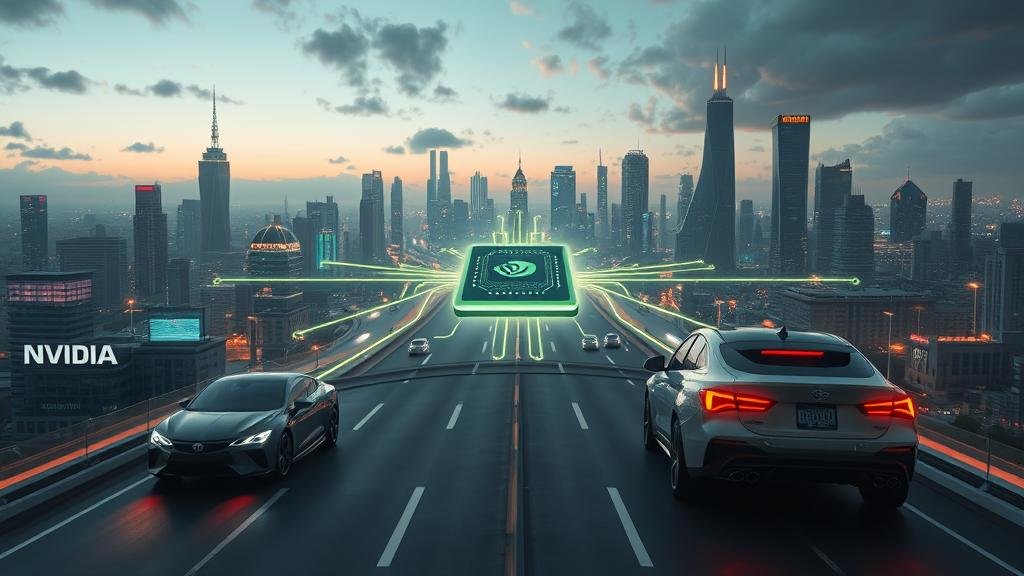
The Future is Accelerated
Nvidia’s journey is a testament to their vision. While others focused on pixels, they were building the foundations of artificial intelligence.
They continue to innovate, venturing into self-driving cars, drug discovery, and the metaverse. The story of ‘The Thinking Machine’ is far from over. They’ve evolved from a niche gaming company to a global powerhouse that’s constructing our AI-driven future. And if our future robot overlords all wear Jensen Huang’s iconic leather jacket? I, for one, welcome them.