“`html
Operation Sentinel of Commerce: Decoding the U.S. Military’s Middle East Strategy and Its Economic Impact
The intricate dance between military posturing and economic stability in the Middle East is once again in the spotlight. When the U.S. government makes significant policy announcements following a substantial military buildup in the region, it’s a clear signal that global economic interests are intertwined with geopolitical strategy. Understanding the connection between a formidable naval presence and your financial outlook is crucial.
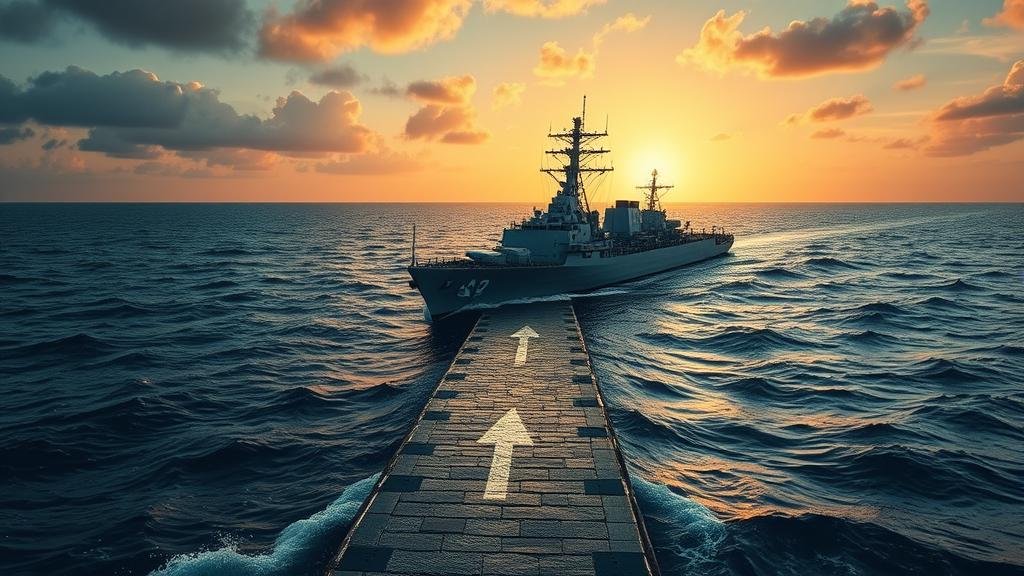
Strategic Military Deployment: Projecting Strength
Before any official declarations were made, the Pentagon initiated a powerful strategic deployment. In the weeks prior, a Nimitz-class aircraft carrier strike group was dispatched to the Eastern Mediterranean, accompanied by guided-missile cruisers and destroyers. This move serves as a clear projection of U.S. military advantages.
To reinforce this presence, squadrons of F-16 and F-35 fighter jets were also deployed, alongside advanced missile defense systems like the Terminal High Altitude Area Defense (THAAD) and Patriot battalions. Analysts identify the objectives of this buildup as:
- Deterrence: To discourage aggressive actions from Iran and its regional proxies, thereby preserving regional security.
- Force Protection: To safeguard U.S. personnel and assets in locations such as Iraq and Syria from escalating threats.
- Reassurance: To reinforce commitments to key allies, including Israel and Gulf states, bolstering their confidence in U.S. foreign policy in the Middle East.
This preemptive positioning established a dominant military posture, setting the stage for the subsequent policy announcement.
The Announcement: Operation Sentinel of Commerce
With its military assets in place, the White House, in coordination with the Department of Defense, unveiled “Operation Sentinel of Commerce.” This initiative is designed to create a multinational naval task force to ensure freedom of navigation for commercial vessels transiting the Strait of Hormuz and the Bab el-Mandeb strait—critical arteries for global trade.
“The global economy depends on the free flow of commerce through these waters… Operation Sentinel of Commerce is a defensive coalition of the willing, united to uphold international law.”
Key components of the operation include:
- A Multinational Coalition: The U.S. is collaborating with the U.K., France, Australia, and other partners, creating a unified front for Middle East security.
- Enhanced Rules of Engagement: Naval commanders are authorized to escort commercial ships, inspect suspicious vessels, and respond decisively to any attacks, ensuring a secure global operating environment.
- Intelligence and Surveillance: A comprehensive network of satellites, drones, and aircraft will monitor maritime activity to preempt and respond to threats.
This operation directly addresses the recent increase in attacks on oil tankers and cargo ships, which threatened to cause significant supply chain disruption.
The Strategy: Aligning Military Power with Policy
The “deploy first, declare later” approach is a modern application of the “speak softly and carry a big stick” doctrine. The military surge represented the “big stick,” giving weight and credibility to the diplomatic announcement.
By establishing escalation dominance, the U.S. aimed to deter potential adversaries from challenging the new policy. The visible presence of a high-tech flotilla and thousands of service members transforms a diplomatic initiative into a robust policy backed by credible force.
Economic Implications of Middle East Security
These geopolitical maneuvers have direct consequences for the economy. Understanding the financial impact is essential for investors and consumers alike.
Oil Prices and Energy Markets
Approximately 20% of the world’s daily oil supply passes through the Strait of Hormuz. Operation Sentinel of Commerce is intended to reduce the risk premium that traders factor into oil prices due to regional instability. In the short term, this could lead to more stable or even lower fuel costs. However, any direct conflict challenging the coalition could cause oil prices to skyrocket, impacting consumers globally.
Global Trade and Supply Chains
Beyond oil, these maritime routes are vital for a vast array of consumer goods, from electronics to automotive parts. Enhanced security lowers insurance premiums for shipping companies, fostering more reliable global trade and potentially leading to more stable prices for imported goods.
Defense Sector Investments
This long-term mission signals a sustained demand for naval assets, advanced missile systems, and surveillance technology. This translates into stable government contracts and positive investor sentiment for the defense industrial base.
Future Outlook: Deterrence or Provocation?
The critical question remains: will Operation Sentinel of Commerce be perceived as a stabilizing measure or a provocation? While designed to deter conflict and protect economic interests, it could also trigger an unintended escalation.
The coming weeks will be crucial in determining whether this strategic deployment successfully calms the volatile waters of the Middle East or becomes the catalyst for a new conflict. We will continue to monitor these developments and their financial repercussions.
“`