Political Risk and Your Portfolio: A (Slightly Snarky) Guide

The Bedrock of Markets: Trust, Predictability, and Your Portfolio
A modern economy is essentially a massive, global trust fall. We all fall backward, trusting that the rule of law, independent regulators, and fair contracts will catch us. For stock market investing, this trust is paramount. Investors need to believe that policy decisions are driven by sound economics, not a 3 AM social media whim.
This trust fosters predictability, the kale smoothie of stable investment markets. It might seem boring, but it’s the bedrock of a healthy financial system and a key mitigator of economic uncertainty.
But what happens when the lines between governance and personal business blur? Even the perception of corruption can spook investors. When it appears that decisions are for sale or swayed by private business interests, faith in the system erodes, increasing market volatility and geopolitical risk.
This can trigger several negative outcomes:
- Increased Volatility: An unpredictable leader creates chaos, leading to wild market swings. This is a classic example of political risk impacting investments.
- Capital Flight: International investors, wary of the drama, may pull their money in search of more boring, stable markets.
- An Uneven Playing Field: If politically connected companies get preferential treatment, it undermines fair competition and punishes well-run businesses, skewing investment strategies.
We’ve seen markets react to a single tweet. This isn’t a hypothetical; it’s what happens when the predictable rules of the game are ignored.

Policy by Tweet: The High Cost of Uncertainty
The “trade war” was ostensibly about protecting domestic jobs, but for many publicly traded companies, it created a chaotic environment of supply chain disruption.
Announcing major tariffs via social media caused significant problems for global corporations:
- Inventory Roulette: Planning for inventory became a guessing game, impacting the bottom line of tech giants and automakers alike.
- Paralyzed Corporate Planning: Would you commit to a multi-billion dollar, long-term investment if a single tweet could render it unprofitable? This kind of paralysis is a major brake on economic growth.
- Retaliatory Tariffs: The U.S. imposed tariffs, and other countries retaliated, creating a doom loop of instability that hurt American exporters and amplified economic uncertainty.
This created a “dual threat” for stocks and bonds: a toxic mix of slower growth and higher inflation. Effective risk management became nearly impossible.
The Elephant in the Room: Conflicts of Interest and Governance Risk
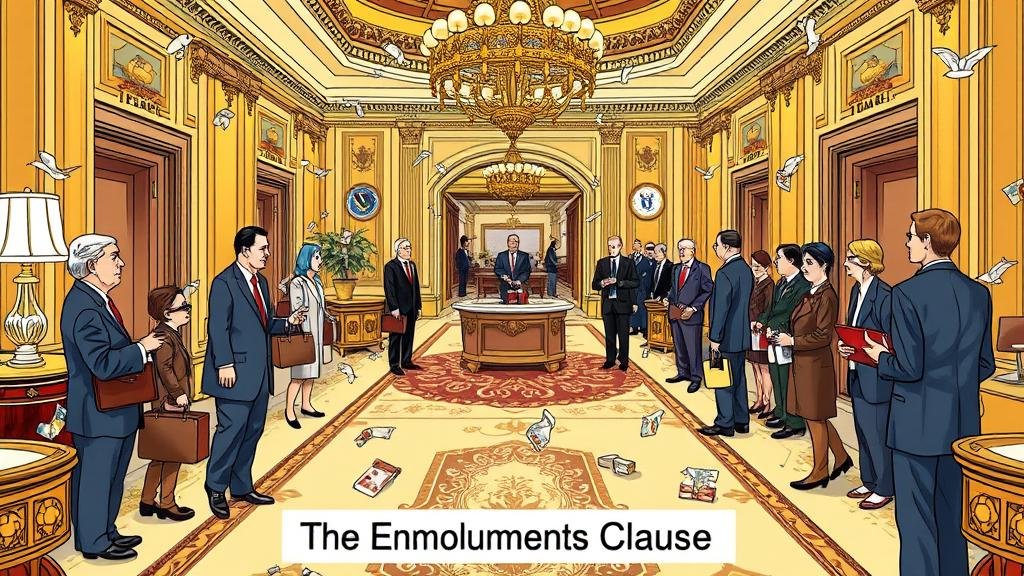
Let’s address the giant, gold-plated elephant: potential conflicts of interest. Retaining ownership of a global business empire while in office created a web of ethical questions that legal scholars are still untangling.
The U.S. Constitution has a quaint little rule called the Emoluments Clause, which prohibits taking cash or gifts from foreign governments. Yet, foreign dignitaries and lobbyists frequented Trump-branded properties, raising serious concerns.
For an investor, the political risk is obvious. Is U.S. foreign policy guided by national security, or is it influenced, even subconsciously, by where the President owns property?
The market hates that question. Any doubt about the motives behind foreign policy increases the risk premium on the entire U.S. market, chipping away at its reputation as a “safe haven” for international investing.
The Final Verdict: A Higher Long-Term Risk Premium
For a while, many investors chased short-term gains from tax cuts and deregulation, ignoring the structural risks building up. It was a classic case of ignoring the fire in the kitchen while enjoying a slice of cake. 📉
But here’s a crucial lesson for long-term investing: a country’s investment appeal isn’t just its GDP; it’s the integrity of its institutions. A commitment to the rule of law and ethical governance is a core part of its long-term value.
When that commitment is questioned, global money demands a higher return for the added risk—a “shadiness tax” on all U.S. assets. A higher required return means lower prices for stocks and bonds and higher borrowing costs for everyone.
What’s an Investor to Do?
So, how do you protect your portfolio in the face of geopolitical risk?
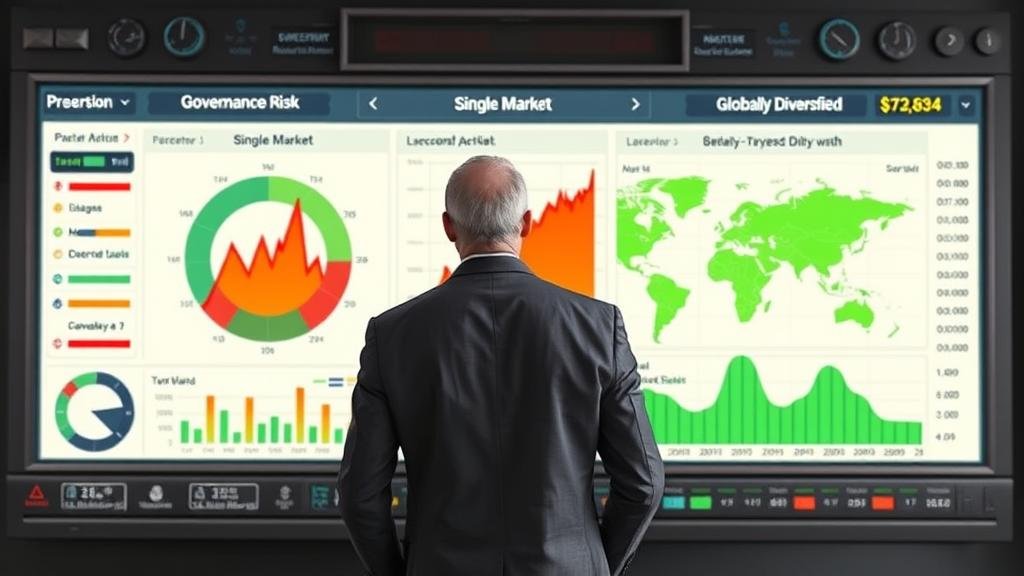
- Acknowledge Governance Risk: Start thinking of “Government Drama” as a real line item on your risk checklist, right alongside interest rates and market trends.
- Practice Global Diversification: Don’t put all your eggs in one politically chaotic basket. Portfolio diversification into markets with strong, transparent institutions is a smart move.
- Focus on Fundamentals: In uncertain times, “boring” companies with strong balance sheets, low debt, and clear business models become incredibly attractive. This is the essence of fundamental analysis.
Ultimately, ethics aren’t just a “soft” issue. They are the invisible steel beams supporting the entire market. Weakening those norms sows the seeds of a riskier future. The bull market may have been fun, but for a prudent investor, ignoring the cracks in the foundation is a peril you can’t afford.