Putin’s 5-Hour Meeting with Kushner & Witkoff: A New Era of Shadow Diplomacy?
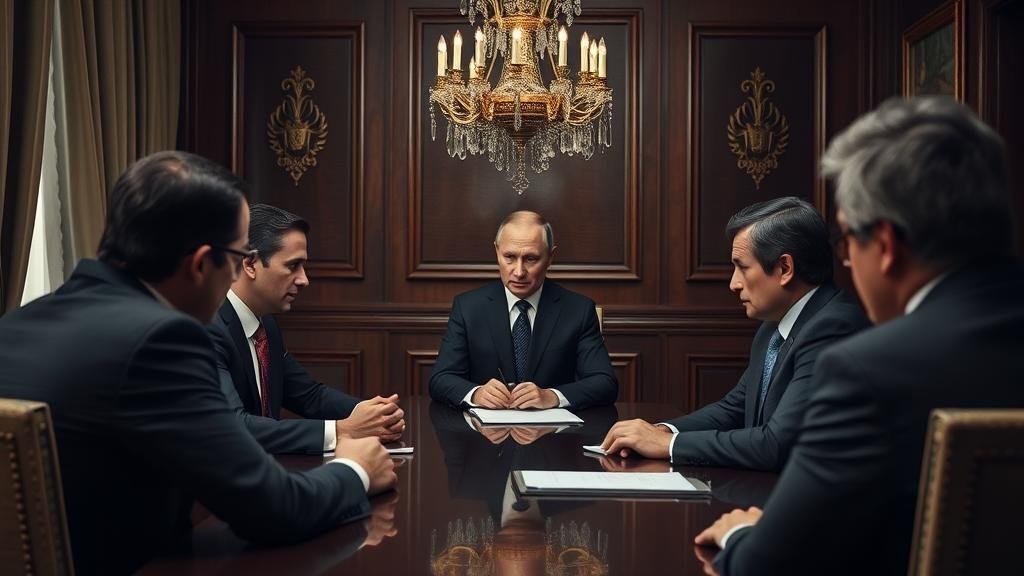
In a move that had international relations junkies choking on their morning coffee, Russian President Vladimir Putin held a five-hour meeting in Moscow. Five. Hours. The guests of honor at the Kremlin were not official diplomats, but real estate mogul Steve Witkoff (a friend of Donald Trump) and Trump’s son-in-law, Jared Kushner. This marathon discussion hints at a wild diplomatic ride if Trump returns to power.
This unofficial, back-channel “peace talk” raises spicy questions about the future of the Ukraine war. What was on the agenda for this lengthy gabfest? Was this a genuine shot at a peace plan, or just Putin playing 4D chess?
A High-Stakes Mission in Moscow
The fact that Witkoff and Kushner secured a five-hour audience with Putin at the Kremlin is a testament to the surreal nature of modern geopolitics. Witkoff’s mission, according to reports, was to float ideas for ending the brutal war in Ukraine. In the world of diplomacy, a five-hour commitment from a world leader for unofficial envoys is an eternity. It suggests that Putin was, at the very least, deeply curious about what these back-channel messengers had to say.
The timing adds another layer of drama. Russia has been boasting about recent military victories, which would seemingly make them less inclined to negotiate. However, the war is also a massive drain on their resources. This meeting was either a genuine opening for a peace plan or a calculated geopolitical PR stunt.

What Was on the Table?
While the specifics of the meeting remain under wraps, it’s understood that Witkoff and Kushner presented some form of a “peace plan” to Putin. The details are a closely guarded secret, but they likely revolved around ceasefires, territorial disputes, and other thorny issues at the heart of the Ukraine war.
This is a classic example of “shadow diplomacy”—negotiations that happen outside of official government channels. On one hand, this approach can be creative and bypass bureaucratic red tape. On the other, it can undermine official efforts and create confusion among allies. Russia’s PR machine was also in full swing, boasting about battlefield gains, which makes this five-hour chat even more intriguing. Was Putin genuinely considering a deal, or just using the meeting to project an image of being open to dialogue with the West?
The Kremlin’s Perspective: A Strategic Play?
From Putin’s perspective, simply taking the meeting with Trump’s unofficial envoys is a strategic win. First, it makes Russia appear open to dialogue, a classic PR move.
Second, it allows Putin to hedge his bets. By engaging with Trump’s inner circle, he’s exploring what a second Trump presidency might mean for Russia-US relations.
Third, it’s a classic “divide and conquer” tactic. The idea of a rogue American peace plan, negotiated outside of official channels, is enough to cause heartburn for European leaders and create cracks in the Western alliance.
The View from Ukraine and the West
Meanwhile, the rest of the world reacted with a collective “Uh, what?” Ukrainian President Zelenskyy has expressed a willingness to hear Trump out, but any deal that involves sacrificing Ukrainian territory would be a non-starter.
The official U.S. policy under President Biden has been “nothing about Ukraine without Ukraine.” This freelance diplomacy trip by Kushner and Witkoff directly challenges that principle. European allies are likely concerned about the prospect of a return to a unilateral American foreign policy that goes off-script.
“Peace Push Fizzles”? The Uncertain Outcome
The meeting concluded with Witkoff departing Moscow with “no sign of a deal.” It turns out that a five-hour chat isn’t enough to resolve a devastating, years-long conflict.
However, the lack of an immediate breakthrough isn’t the real story. The meeting itself is the headline. It’s a flashing neon sign pointing to the kind of foreign policy we might see in a potential second Trump administration—one built on personal deals and back-channels, even with adversaries like Russia.
The big takeaway? This was a serious, albeit unofficial, attempt at diplomacy that shows Putin is willing to listen, even if his motives are murky. The ripples from this one meeting will be felt for a long time, making it a fascinating and bizarre chapter in the ongoing Ukraine war.