Russia’s Shadow War: Sabotage, Hybrid Attacks, and the New Threat to European Security
A pattern of coordinated sabotage is emerging across Europe, prompting intelligence officials to shift their assessment from random incidents to a deliberate campaign of hybrid warfare. What were initially dismissed as isolated fires or damaged rail lines are now viewed as calculated acts in a broader geopolitical strategy, fundamentally altering the landscape of modern conflict.
For investors and business leaders, these developments are more than geopolitical curiosities. They represent a significant threat to supply chain stability and global market predictability. Understanding this escalating “gray zone” conflict is critical, as it has the potential to reshape international relations and economic risk without a formal declaration of war.
For months, critical infrastructure in Europe has been subjected to a series of damaging events, including warehouse fires, disruptions to railway lines, and the severing of communication cables. While initially attributed to accidents or local criminal activity, Western intelligence agencies now assert with growing confidence that these incidents are orchestrated by Russia. This strategy constitutes a “hybrid attack,” designed to sow chaos, disrupt economies, and test European resilience.
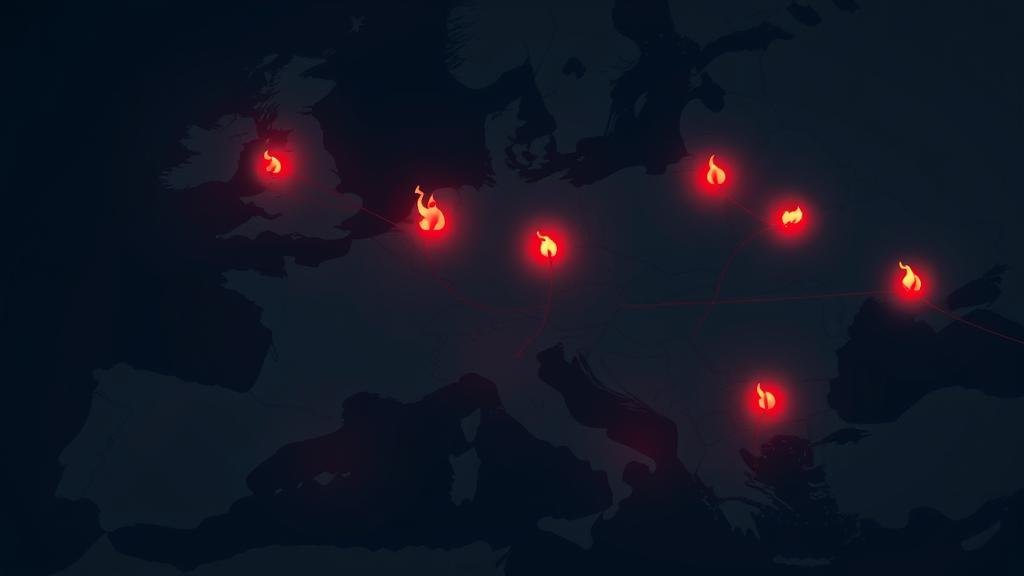
Strategic Escalation: A Coordinated Hybrid Warfare Campaign
The reclassification of these events from “opportunistic” to “strategic” marks a critical turning point. Officials are now operating under the assumption that these are not random acts but part of a centrally directed campaign.
According to recent intelligence assessments, European leaders believe the Kremlin is leveraging its spy agencies to conduct low-intensity, high-impact operations that fall just below the threshold of conventional warfare. The targets appear to be strategically chosen. For instance, damage to a railway in Poland directly impacts a primary corridor for aid destined for Ukraine. These are not acts of terror designed to inflict mass casualties but precise, deniable strikes intended to disrupt and destabilize.
This presents a complex challenge. From Russia’s perspective, it is already in a state of conflict with the West, making these actions a logical extension of its foreign policy. This “gray zone” warfare is intentionally ambiguous, making a unified and decisive response from NATO exceptionally difficult. How can an alliance retaliate against an attack when the perpetrator maintains plausible deniability?
The Arsenal of a Shadow War
The methods employed in this hybrid warfare strategy are designed for deniability and disruption. The primary tools include:
- Arson: A series of suspicious fires have occurred at critical commercial and industrial sites, including a major warehouse in the UK and a shopping center in Poland.
- Infrastructure Damage: Railway networks, communication systems, and energy grids have sustained targeted damage, affecting both civilian life and military logistics.
- Cyberattacks: Alongside physical sabotage, state-sponsored cyberattacks continue to target government bodies, financial institutions, and critical services, blurring the lines between cybercrime and military aggression.
- Disinformation: Each physical act of sabotage is amplified by sophisticated disinformation campaigns aimed at spreading fear, eroding public trust, and causing confusion.
This multi-faceted approach is engineered not only to inflict physical damage but to create a sustained atmosphere of uncertainty and anxiety.
The Economic Fallout: Why Your Wallet Should Be Nervous
The economic implications of this shadow war are significant and far-reaching.
1. Supply Chain Disruptions: Attacks on transportation and logistics infrastructure directly threaten the integrity of the global supply chain, leading to potential delays, price increases, and widespread economic disruption.
2. Increased Insurance and Security Costs: Businesses across Europe now face a heightened risk profile. The threat of sabotage translates to higher insurance premiums and necessitates massive investments in enhanced security measures—funds that are diverted from growth and innovation.
3. Market Volatility: Financial markets are inherently averse to uncertainty. The growing realization that a covert war is unfolding on European soil is likely to trigger significant investor anxiety and market volatility as this new geopolitical risk is priced in.
4. The Energy Sector on High Alert: Europe’s energy infrastructure remains a prime target. Having pivoted away from Russian gas, the continent relies on a fragile network of pipelines and terminals. A successful attack on these assets could trigger a severe energy crisis, with cascading effects across the entire economy.
The Challenge of Response: How Do You Fight a Ghost?
European leaders face the difficult task of formulating a response to these provocations. Their options include:
- Public Attribution: The initial and ongoing step is to publicly attribute these attacks to Russia, aiming to dismantle its claims of plausible deniability.
- Enhanced Security: A continent-wide effort is underway to harden critical infrastructure through improved surveillance, physical barriers, and increased intelligence sharing among law enforcement agencies.
- Counter-Hybrid Operations: NATO is actively developing new doctrines to counter “gray zone” tactics, focusing on cybersecurity, combating disinformation, and establishing protocols for responding to sabotage.
- The Dilemma of Retaliation: The most challenging question is how to retaliate. A direct military response is off the table, as it would lead to uncontrollable escalation. Further economic sanctions are an option, but their effectiveness is debated. The West must devise a strategy that imposes real costs without triggering a wider conflict.

Conclusion: Welcome to a New Era of Risk
The shift from viewing these incidents as random events to a coordinated campaign signifies a new and dangerous phase in the standoff between Russia and the West. This conflict is being waged not with tanks and trenches, but with fires, hacks, and targeted disinformation.
For businesses, investors, and global citizens, this is a critical moment. Geopolitical risk has evolved from an abstract concept into a direct threat to economic stability and security. The distinction between war and peace has become dangerously blurred, and the world is now a demonstrably more volatile and hazardous place.