The Evolution of Smoke Alarms for Modern Home Safety
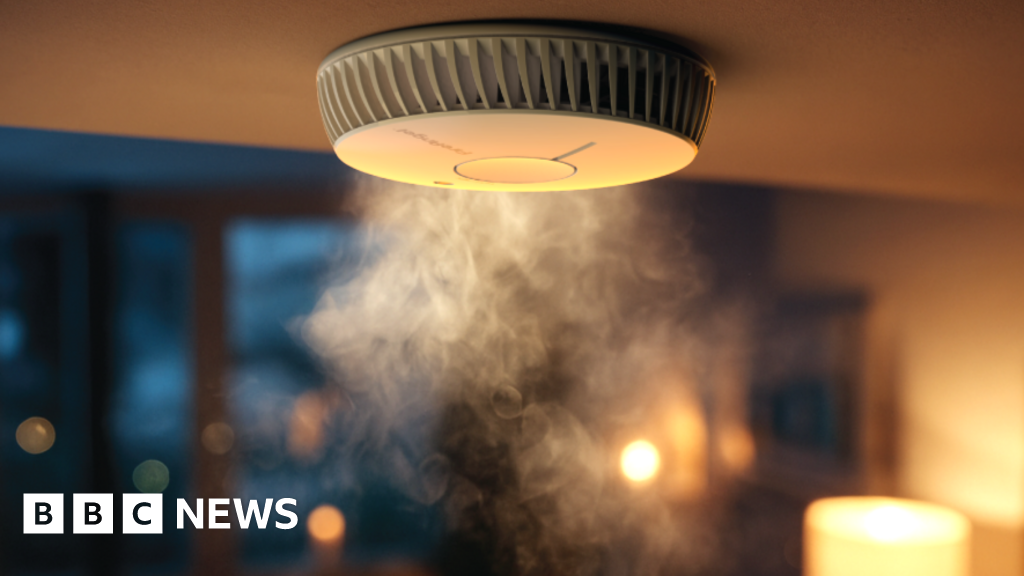
'They are essential' – how smoke detectors are evolvingImage Credit: BBC Business (Finance)
Key Points
- •The Life-or-Death Statistic: "People are about 10 times more likely to die in a fire if there isn't a working smoke alarm in the property," states Suzanna Amberski, head of customer and building safety at Kent Fire & Rescue Service.
- •UK Protection Gap: A December 2025 survey from insurer Direct Line suggested nearly four million UK adults may live in a home with no smoke alarm. Amberski's organisation alone found approximately 6,500 expired smoke alarms in Kent properties between 2022 and 2024.
- •The US Picture: The situation is similar across the Atlantic, where an estimated 16% of households do not have a functioning smoke alarm, leaving millions vulnerable.
- •Ionisation Alarms: These use a tiny, safe amount of radioactive material to ionise air particles that flow between two charged plates. When smoke enters the chamber, it disrupts this flow, triggering the alarm. They are particularly responsive to fast, flaming fires.
- •Optical Alarms: Also known as photoelectric alarms, these use a beam of infrared light. When smoke particles from slow, smouldering fires enter the chamber, they scatter the light onto a sensor, which activates the alarm.
'They are essential' – how smoke detectors are evolving
A routine September morning at Liz McConnell's Dover home was shattered by the piercing sound of a smoke alarm. The mother of four had just finished the school run and started a load of laundry when the alert drew her towards her tumble dryer. She found it hot to the touch, with smoke billowing out from a fire that had started inside. Acting on the advice of the fire brigade, she evacuated immediately, watching as the blaze developed "very, very quickly." While Kent Fire & Rescue Service spent hours battling the fire, the McConnell family home was left partially destroyed. "Had I not have heard [the smoke alarm], I would have just been in there," McConnell reflects. "They are essential, absolutely essential."
The humble smoke alarm, a staple of home safety for decades, is facing a pivotal moment. While its core technology has remained largely unchanged, the modern home presents new and faster-developing fire risks that are challenging the capabilities of these life-saving devices. The incident at the McConnell home underscores their critical importance, yet experts and innovators are now asking: is it time for an evolution?
The Unwavering Importance of a Working Alarm
Despite advancements in home technology, a significant portion of the population remains unprotected. The fundamental role of a smoke alarm cannot be overstated, a fact borne out by stark safety statistics.
- The Life-or-Death Statistic: "People are about 10 times more likely to die in a fire if there isn't a working smoke alarm in the property," states Suzanna Amberski, head of customer and building safety at Kent Fire & Rescue Service.
- UK Protection Gap: A December 2025 survey from insurer Direct Line suggested nearly four million UK adults may live in a home with no smoke alarm. Amberski's organisation alone found approximately 6,500 expired smoke alarms in Kent properties between 2022 and 2024.
- The US Picture: The situation is similar across the Atlantic, where an estimated 16% of households do not have a functioning smoke alarm, leaving millions vulnerable.
Understanding Current Technology
The technology inside most residential smoke alarms falls into two primary categories, explains Raman Chagger, principal consultant at the Building Research Establishment (BRE). While the standards for testing these devices date back to the 1980s, Chagger confirms their continued effectiveness. "They still respond to all the main fires we get today," he says.
- Ionisation Alarms: These use a tiny, safe amount of radioactive material to ionise air particles that flow between two charged plates. When smoke enters the chamber, it disrupts this flow, triggering the alarm. They are particularly responsive to fast, flaming fires.
- Optical Alarms: Also known as photoelectric alarms, these use a beam of infrared light. When smoke particles from slow, smouldering fires enter the chamber, they scatter the light onto a sensor, which activates the alarm.
- Heat Sensors: Often installed in kitchens, these devices are designed to avoid false alarms from cooking fumes. They typically trigger when the ambient temperature rises above a set threshold, usually around 50°C (122°F).
Chagger himself has first-hand experience with their efficacy, recalling when an alarm alerted him to a thin layer of smoke from his own tumble dryer. He now recommends placing a smoke alarm in any room containing such an appliance.
The New Challenge: Lithium-Ion Battery Fires
The proliferation of e-bikes, scooters, and high-powered electronics has introduced a new, volatile fire risk into homes: lithium-ion batteries. Detecting these fires poses a unique challenge for traditional alarms.
"When a battery fails, it doesn't necessarily ignite, it will often produce some off-gases," explains Stephen Welch, a senior lecturer at the University of Edinburgh's Fire Research Centre. "Those off-gases are toxic and flammable. If they accumulate, you can have an explosion risk."
This pre-ignition phase is the critical difference. In experiments, Chagger has observed the terrifying speed of these events. "It's just incredible," he says. "Nothing's happening, then: outgassing and boom-boom-boom – all these explosions." Conventional smoke alarms may not detect the initial off-gassing, only reacting once a fire is already underway and potentially explosive.
The High-End Market and Future Innovation
Advanced detection technology capable of identifying threats before they escalate already exists, but it comes at a significant cost, placing it out of reach for the average household.
Aspirating smoke detection (ASD) systems, for example, constantly draw air through a network of pipes to a central detection unit. This allows them to detect minute quantities of smoke long before it would be visible or trigger a standard alarm.
"A lot of stately homes will have that system," says Niki Johnson, a technical adviser for the UK Fire Association and owner of Derventio Fire and Security. These systems are common in high-value commercial settings like server rooms, but the price is prohibitive for residential use. "You could be looking at £3-4,000 just to do a corridor," Johnson notes, due to the extensive pipework and sophisticated hardware required.
What's Next: Bridging the Gap
The future of home fire safety lies in bridging the gap between today's affordable technology and the advanced detection needed for modern risks. The industry's challenge is to develop and commercialise sensors that can detect the specific off-gases from failing lithium-ion batteries or offer the sensitivity of aspirating systems at a consumer-friendly price point.
Furthermore, a key goal for manufacturers like FireAngel is reducing false alarms. When alarms are triggered by burnt toast or steam, residents can become complacent or disable the devices entirely, defeating their purpose.
For now, the message from fire safety professionals is unequivocal. While technology evolves, the single most important action is to ensure your home is equipped with certified, functioning smoke alarms. Test them regularly, replace them according to the manufacturer's date, and recognise that when it comes to fire, this essential device remains the first and most critical line of defense.
Source: BBC Business (Finance)
Related Articles
ARRY Stock Sinks Despite Market Gains: What to Know
Array Technologies (ARRY) stock declined 2.5% in the latest session, contrasting with market gains. Find out why the solar stock fell and what it means for inve
India and the EU clinch the 'mother of all deals' in a histo
Jay Vine Wins Tour Down Under 2026 After Kangaroo Crash
Australian cyclist Jay Vine secures the overall victory at the 2026 Tour Down Under despite a dramatic final-stage crash involving a kangaroo.
Trump's New Defense Strategy: Allies Must Fund Own Security
The Trump administration's new National Defense Strategy realigns US policy, demanding allies assume primary responsibility for their own security and defense c