Why 6,000 Airbus Jets Needed an Emergency Software Update to Avoid the Sun’s Wrath
You know that sinking feeling when you forget sunscreen and end up with a nasty burn? Well, it turns out that 6,000 of the world’s most popular airplanes are facing the industrial equivalent. Aviation authorities recently issued a memo that essentially said, “Psst, the sun might be trying to crash your planes.”
This isn’t a bad sci-fi movie plot. It’s a real-world warning that has airlines scrambling to give their Airbus A320 fleets a critical software update. Let’s break down why the sun is suddenly threatening our travel plans and what this means for aviation safety.
The Solar Flare Threat: What’s the Big Deal?
The sun is currently in a “solar maximum” phase, the celestial version of a toddler on a sugar high. During this period, the sun has more frequent tantrums, like solar flares and “Coronal Mass Ejections” (CMEs), which hurl charged particles across space.
When these particles collide with Earth’s magnetic field, they create the beautiful Northern Lights. But these geomagnetic storms also have a villainous side. They can disrupt power grids, satellites, and, as we’re now learning, the flight control software of certain aircraft models.
The Federal Aviation Administration (FAA) and the European Union Aviation Safety Agency (EASA) have flagged a specific vulnerability in the Airbus A320 family. We’re talking about the A319, A320, and A321 models—the workhorses of airlines like American, Delta, United, and easyJet. It’s the Toyota Corolla of the skies, and its dashboard is susceptible to the sun’s antics.
A Single Point of Failure?
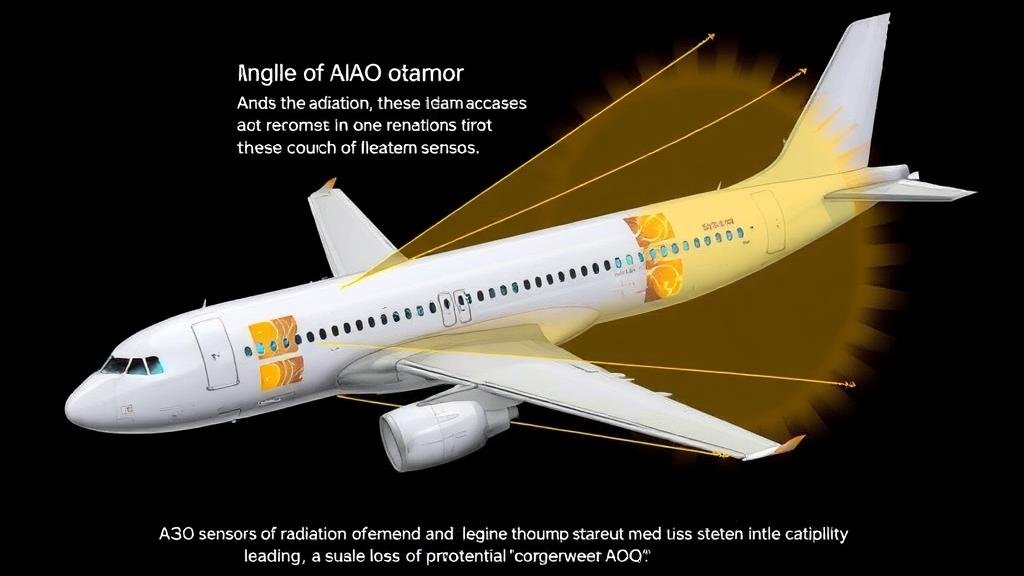
Let’s get a little nerdy. The concern is about the “Angle of Attack” (AOA) probes. These small sensors are critical for aviation safety; they tell the plane if its nose is pointing too high, preventing it from stalling and falling out of the sky.
A recent analysis revealed that a powerful burst of solar radiation could corrupt the data from these AOA probes. The official warning mentioned that this could lead to a “loss of controllability.” In other words, if the plane’s computer receives faulty data from the AOA sensors, it might mistakenly command a sudden, aggressive nosedive. This scenario would require pilots to be ready to disengage the autopilot and take manual control.
The Race for a Software Fix
Before you consider canceling your travel plans, there’s good news. This isn’t a “wings-are-on-backwards” kind of problem. The solution is a straightforward software update—an app patch for your plane. Airbus has already released it.
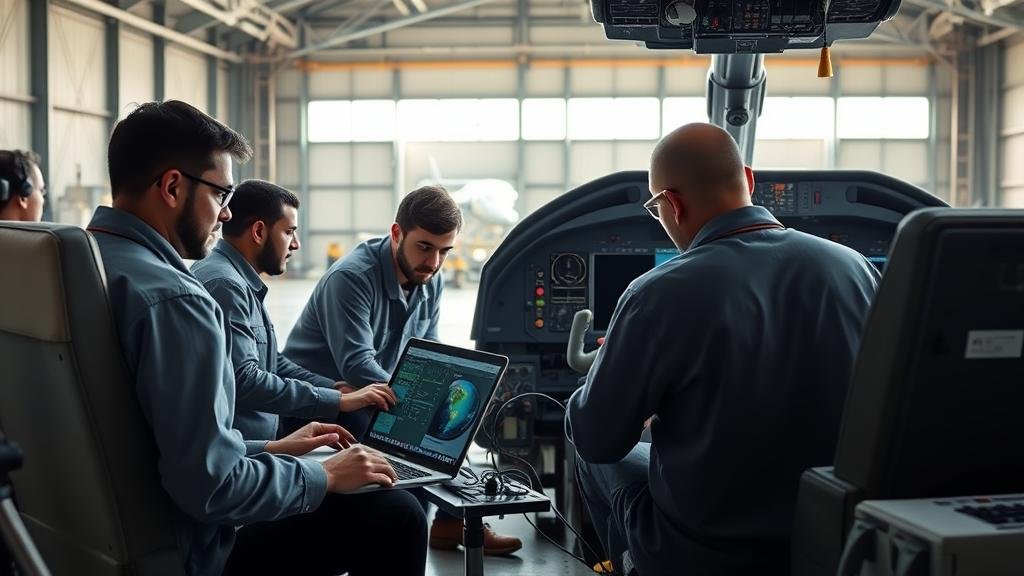
The challenging part? Rolling out this patch to over 6,000 jets worldwide. Airlines had to implement this fix immediately, right in the middle of the Thanksgiving travel rush, which is the Super Bowl of airport chaos. This is a prime example of the ongoing struggle in the aviation world: maintaining impeccable safety standards without causing significant travel delays.
So, Is It Still Safe to Fly?
Hearing phrases like “loss of controllability” can be alarming, but let’s put things in perspective. This is a story about the aviation safety system working as it should.
- Proactive Prevention: This entire situation is preventative. No aircraft has actually malfunctioned due to a solar flare. An analyst simply asked, “What if?” and the industry immediately moved to address the potential risk.
- Redundancy is Key: Airplanes are designed with multiple backup systems. Even if one system were to fail, pilots are trained to handle these exact situations.
- Global Collaboration: The coordinated response from Airbus, the FAA, and EASA demonstrates that aviation regulations and safety protocols are robust. They identified a potential threat and worked together to eliminate it.
The Bigger Picture: Living with a “Spicy” Sun
This incident is a great reminder that we live on a planet that is constantly exposed to a powerful and unpredictable star. As our technology, including “fly-by-wire” airplanes that rely heavily on computers, becomes more complex, it also becomes more vulnerable to space weather and CME impacts.
As we approach the peak of Solar Cycle 25 around 2025, we can expect to hear more about these issues. The next generation of aircraft will likely feature “space weather-proofing” as a standard feature.
So, what does this mean for you? In the short term, not much, other than a potential delay if your plane is undergoing a software update. Check your flight status, be patient, and remember that a maintenance delay is a positive sign that the aviation safety system is working to protect you.