SpaceX vs. OpenAI: The $800 Billion Battle for Startup Supremacy
Let’s talk about a number that makes a Powerball jackpot look like chump change: $800 billion. That’s the rumored new valuation Elon Musk’s SpaceX is targeting in its latest secondary share sale. In a move sending shockwaves through Silicon Valley, this staggering figure would solidify its position well above the AI powerhouse, OpenAI, in the race to become the most valuable private company in the US.
The rivalry between SpaceX and OpenAI is the tech world’s clash of the titans. In one corner, you have reusable rockets, missions to Mars, and global satellite internet. In the other, you have artificial intelligence that’s writing code and passing exams. But this latest news suggests the rocket company is about to pull into the lead.
The $800 Billion Gambit
So, what’s behind this astronomical number? SpaceX is reportedly arranging a secondary share sale. It’s not about raising new capital for the company, but rather letting insiders—like early employees and long-term investors—cash in on their shares.
This new $800 billion valuation is a massive leap from its previous figures, underscoring the immense investor confidence in the company. While most of us are happy to find a forgotten $20 bill in our pocket, SpaceX keeps finding tens of billions in its valuation. It proves that launching giant metal cylinders into the cosmos is a remarkably profitable venture.
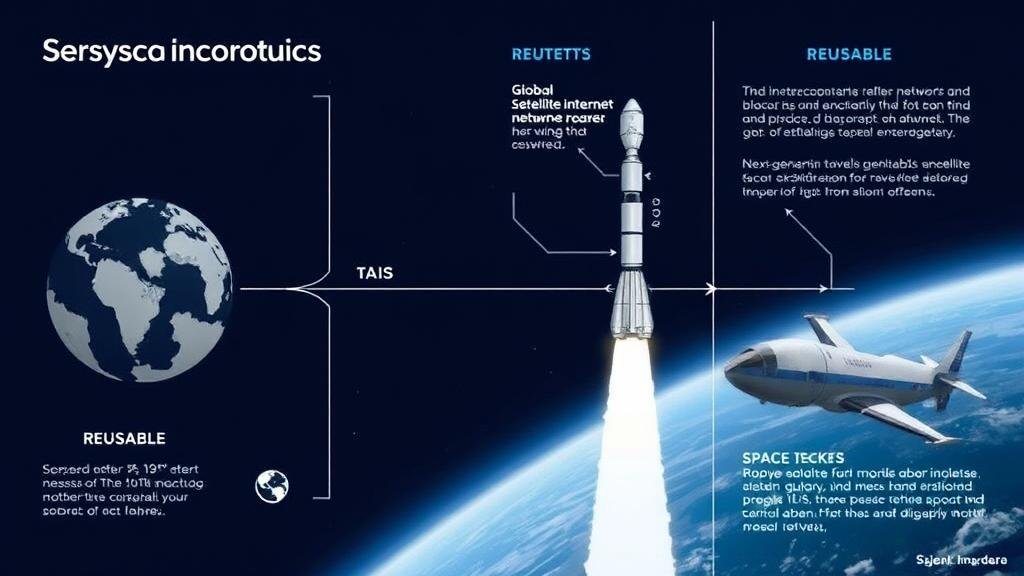
Deconstructing the Valuation: What’s Powering the Rocket?
How does a company justify a valuation that large? It’s built on a few key pillars of operational success and visionary ambition.
Starlink: The Global Wi-Fi Network
A primary driver of this valuation is Starlink, SpaceX’s ambitious plan to blanket the globe in high-speed internet via thousands of satellites. With a rapidly expanding customer base and over 5,000 satellites in orbit, Starlink is on track to disrupt the telecommunications industry. Analysts predict its revenue could soar into the tens of billions, making it a cornerstone of the company’s financial might.
Dominance in Launch Services
SpaceX’s Falcon 9 and Falcon Heavy rockets are the undisputed workhorses of the modern space industry. Their secret weapon? Reusability. By landing its rockets vertically after a mission, SpaceX has dramatically lowered the cost of accessing space, making it the preferred launch provider for NASA, commercial clients, and other governments.
Starship: The Future of Space Travel
A significant part of this valuation is pure, unadulterated potential, and that potential has a name: Starship. This fully reusable super-heavy-lift launch vehicle is designed to take humanity to Mars. Though still in its test-flight phase, the eventual success of Starship would revolutionize space travel and open up entirely new interplanetary economies. It’s a high-risk, high-reward venture that captures investors’ imaginations.

The OpenAI Comparison: A Tale of Two Titans
Until recently, OpenAI was the star of the U.S. startup scene, achieving a massive valuation of its own (recently reported to be as high as $500 billion) thanks to its groundbreaking AI models like ChatGPT.
The comparison is compelling. OpenAI’s value is rooted in the intangible world of artificial intelligence—brilliant, transformative, but still charting its long-term revenue model. SpaceX, in contrast, sells tangible, high-demand services: launching payloads into orbit and providing internet from space. It boasts concrete, profitable contracts and a clear path to generating immense cash flow with Starlink. Right now, it seems investors are showing a strong preference for a business that is already reaching for the stars.
A New King of the Startup Jungle?
While this share sale is not yet final, the mere discussion of an $800 billion valuation is a landmark event. If it comes to pass, it will crown SpaceX as the undisputed king of the private market.
The battle for the top spot is far from over, but the company building a highway to the heavens is clearly in the passing lane. And as we’ve seen time and again, when Elon Musk’s SpaceX sets its sights on a target, it has a remarkable habit of sticking the landing.